Hubbard defines measurement as the reduction of uncertainty; sometimes just five samples can turn "unmeasurable" into a numeric range.
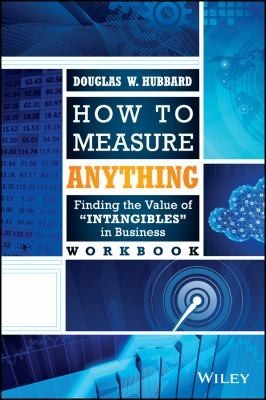
How to Measure Anything: Finding the Value of Intangibles in Business · Douglas W. Hubbard ·
Key Takeaways
- Hubbard defines measurement as the reduction of uncertainty rather than finding an exact number, so anything that matters can be measured
- The variables most worth measuring are often ones the customer has never measured; the variables customers measure most often often have an information value close to zero
- Take 5 random samples, and there is a 93.75% probability that the population median falls between the smallest and largest values
"Anyone can see it's useful, but there's no way to measure it." Imagine this scenario: you've deployed a support AI agent for the customer's customer service team, and a few weeks later, in your third meeting, the head of operations says this to you. If you nod and accept it, whether the project gets renewed or cut will depend on someone's gut feeling.
Douglas W. Hubbard wrote an entire book to refute that statement. How to Measure Anything: Finding the Value of Intangibles in Business was first published on August 3, 2007. Wiley released the third edition in hardcover in March 2014, with 432 pages. According to the author's company, Hubbard Research, the three editions have sold more than 100,000 copies combined.
For a Forward Deployed Engineer (FDE), this is not just a statistics book to flip through out of curiosity. It trains one of the most critical skills for the hardest phase of a project: proving value with numbers when the customer themselves considers what they care about "intangible"—such as customer satisfaction, technical risk, or return on investment (ROI) for technology.
"It can't be measured" usually means misunderstanding what "measurement" is
Wiley summarizes the book's argument this way: the belief that something cannot be measured stems from several common misconceptions about measurement. Against Hubbard's definition, one common misconception is that a measurement must yield an exact number.
Hubbard's definition is different: measurement is a quantitatively expressed reduction of uncertainty based on one or more observations.
This definition changes the entire course of the meeting. You don't need to know exactly how many minutes the AI agent saved; you just need to know more than you did yesterday. The tool for turning an "intangible" goal into something measurable is the clarification chain.
If something truly matters, it must be detectable or observable. If it can be detected as a range of possible values, it can be measured.
Applied to the earlier meeting, you could ask the head of operations: "If the AI agent were truly helping, what would you see differently?" The answers are usually quite specific: employees spend less time per ticket, fewer tickets get escalated to second-line support, and new hires become independent sooner. Each one is observable, and therefore measurable.
Estimating well is a skill that can be trained
With a list of signals in hand, the next step is to write down an honest estimated range for each signal. Untrained people tend to be overconfident: their 90% confidence intervals contain the true value only about 50% of the time. Fortunately, the book argues that calibration is a teachable skill, and progress can be measured.
This skill pays off immediately in interviews. When asked in an FDE interview "How much value did this project create?", giving a 90% range and then explaining how you would narrow it is far more persuasive than casually guessing a number.
When writing your resume, instead of writing "improved performance," spell out what you measured, how many samples you used, and which decision the results informed.
Measure what the customer has never measured
A range tells you how much you still don't know, but not what to measure first. That's where information value comes in. In a business case, most variables have an information value close to zero; according to Hubbard, a measurement is only worth doing when high uncertainty and high cost of being wrong exist at the same time.
While analyzing IT business cases, Hubbard also discovered a paradox, which he calls the measurement inversion: the variables with high information value are often precisely the ones the customer has never measured.
When Robin Hanson cited this idea on the Overcoming Bias blog, he emphasized the other half: the variables that receive the most measurement effort often have very low, or even zero, information value.
Returning to the customer service AI agent example, score three variables using Hubbard's two criteria:
| Variable | Uncertainty | Cost of being wrong |
|---|---|---|
| Daily ticket volume | Low, the ticketing system already tracks it | Low, doesn't determine renewal |
| Post-ticket satisfaction rating | Medium, a survey already exists | Low, doesn't change much month to month |
| Minutes saved per ticket | High, no one has measured it | High, renewal depends on it |
The first two are the ones the customer watches most closely, but measuring them more precisely won't change any decision. The third is both highly uncertain and costly to get wrong, so it should be measured first.
So don't simply accept the KPI list the customer hands you. Before building a dashboard, first draw a table like the one above for the variables that determine renewal.
Five samples are enough to get started
Once you've chosen a variable, you still don't need a massive measurement system. According to the Rule of Five, if you randomly draw 5 samples from a population, there is a 93.75% probability that the population median falls between the smallest and largest of those 5 values.
The logic is simple: the probability that all 5 samples fall on the same side of the median is only 1/16.
Try it with a set of illustrative numbers. You randomly pick 5 tickets handled with the AI agent's involvement and measure the time saved on each: 6, 9, 11, 14, and 22 minutes. Without a dashboard or a data pipeline, you already have fairly solid grounds to say: the median time saved is between 6 and 22 minutes.
One caveat: this rule guarantees a conclusion at the sampling level; it cannot correct bias in individual numbers. If you ask employees to estimate how many minutes they saved, their answers can easily be influenced by how they feel about the tool.
When conditions allow, directly time a few tickets with and without the AI agent, or pull the ticket-open and ticket-close timestamps from the ticketing system.
The resulting range is still wide, but if no one in the meeting room was willing to give any number before, the uncertainty has already dropped substantially. For an FDE, the lesson is: the first measurement should be cheap and fast—something you can finish in an afternoon—before proposing an instrumentation system that would take up an entire iteration.
Who should read it, and in what order
This book is for FDEs who need to prove ROI to customers, and for software engineers who want to move into that role. If you're preparing to change jobs, take a past project, walk it through the four steps above in full, and turn it into a portfolio case study.
The suggested reading order below follows the flow of this article, not the book's chapter order. Start with the definition of measurement and the clarification chain—they will immediately change how you communicate with customers. Then practice calibration, use information value to pick variables, and finally use the Rule of Five for quick measurements.
The next time a customer says "this can't be measured," don't argue. Ask "If it got better, what would you see?"—then go get five samples.
Was this article helpful to you?
Thanks for your feedback!
7 sources
- How to Measure Anything: Finding the Value of Intangibles in Business, 3rd Edition (Wiley)
- How to Measure Anything (Hubbard Research)
- 'How to Measure Anything' by Douglas W. Hubbard (Yevgeniy Brikman) · 2015-01-20
- The Cybersecurity Canon - How to Measure Anything: Finding the Value of 'Intangibles' in Business · 2017-07-19
- 94% confidence with 5 measurements (skeptric) · 2020-03-18
- How to Measure Anything (lukeprog, LessWrong) · 2013-08-07
- Missing Measurements (Robin Hanson, Overcoming Bias) · 2013-08-03