Reading the right chapters teaches you to trace synchronous call chains, treat API contracts as hard constraints, and diagnose why a system someone else built has slowed down.
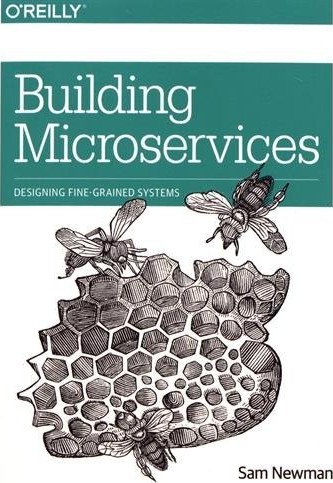
Building Microservices · Sam Newman ·
Key Takeaways
- The book is about 616 pages long; an FDE should start by closely reading five chapters: chapters 4, 5, 12, 10, and 2
- Three ideas worth remembering: overly long synchronous call chains are a risk, events may arrive twice, and slow-responding services are among the worst kinds of failure
- This book is a starting point; on its own it is not enough to run microservices in production
The second edition of Sam Newman's *Building Microservices* has 16 chapters and about 616 pages. A Forward Deployed Engineer (FDE) about to integrate a product into a customer's system of dozens of services has no time to read the whole book before the kickoff meeting. Still, to start making sense of someone else's system, closely reading five chapters is enough.
Most of the book is written for people building microservices. An FDE's job, however, is usually to understand and integrate with systems others have built—sometimes badly built ones. Reading the right chapters gives you the relevant vocabulary and a few rules of thumb, so you can locate problems faster from your first week on site.
What changed in the second edition, and how credible is it?
Newman says the second edition was a thorough rewrite: every page of the first edition was re-examined, and anything needing revision was rewritten. The original ideas remain, but most of the text is new.
He also devotes more space to the impact of containers, Kubernetes, and serverless. Helion, which resells O'Reilly Media ebooks, also lists the new content on its page: user interfaces, container orchestration, and security.
The book is divided into three parts. Part one, "Foundations," covers chapters 1 through 4: what microservices are, how to model services, how to split a monolith, and how services communicate.
Part two, "Implementation," covers chapters 5 through 13: communication, workflow, building, deployment, testing, observability, security, resilience, and scaling. Part three, "People," discusses user interfaces, organizational structure, and the role of the evolutionary architect—the person who helps the architecture evolve over time.
The book also does not paint microservices as all sunshine. One practitioner noted in a review that the book makes clear microservices are not a silver bullet and have drawbacks of their own.
As early as 2015, Newman wrote on his blog that getting service boundaries wrong can be costly. This caution suits FDEs well, because you will often encounter systems with misplaced boundaries.
Chapters 4 and 12: Why is a slow service more dangerous than a dead one?
Start with chapter 4. Dan Lebrero's notes on this chapter distill one rule: when using blocking synchronous communication, watch out for overly long call chains. The companion rule is: put logic in the endpoints, not in the middleware.
Imagine a retail customer's checkout flow: the checkout service calls the inventory service, the inventory service calls the pricing service, and the pricing service calls the payment service—every call synchronous. If each service takes 50 ms, the whole chain is 200 ms. But if the pricing service hangs for 3 seconds and no one has set a timeout, every upstream request holds its connection and waits.
Chapter 12 gives this phenomenon a name. According to Lebrero's notes, an extremely slow response is one of the worst failures you can encounter. A dead service errors out immediately; a slow service silently exhausts the resources of every caller.
On site with a customer, the first thing to do is redraw the call chain of the flow your product will touch, then ask the customer what the timeout is at each hop.
Chapter 5: Contracts and duplicate messages
Chapter 5 is the one you will use most when writing integration code. Lebrero's notes summarize two recommendations: use schemas to catch structural breaking changes, and avoid deployments that require both sides to release simultaneously.
For an FDE, this means asking the customer for the API's schema files early, then running automated checks against them, instead of guessing the data structure from a few sample responses.
The next recommendation is subtler: guaranteed message delivery is a tricky problem, so it is best to assume you will receive duplicate messages. Imagine one of your agents listening for an "order paid" event to send a confirmation email.
If the message broker delivers that event twice, the customer's customers get two emails; worse, loyalty points are awarded twice. The fix is to attach an idempotency key and check it before performing the operation.
Chapters 10 and 2: Diagnosing systems that are not yours
Chapter 10 renames monitoring as observability. According to Lebrero's notes on this chapter, observability is the degree to which you can understand a system's internal state from the information it outputs externally.
When debugging someone else's system, you cannot read all the code; all you have are logs, metrics, and traces. So before committing to a fix deadline, ask the customer whether they have distributed tracing.
Chapter 2 offers a simple boundary test, and Lebrero's notes show this idea reappears in chapter 7: if you always have to change several services at once, the boundaries are drawn wrong.
On site, ask how many code repositories the most recent feature change touched. The answer will tell you where the integration work will hit friction.
The three most common mistakes when integrating with customer systems
First, trusting a few sample responses instead of a schema. Samples only reflect what the data looks like today; once the customer changes a field, the integration code breaks without warning—a change a schema-based check would have caught.
Second, assuming every message arrives exactly once. The notes on chapter 5 already warn that message delivery is tricky, so every handler that receives an event or webhook should be written on the assumption that the same message will arrive again.
Third, calling the customer's services synchronously without setting timeouts. As in the checkout example above, your own calls can become yet another hop in the waiting chain.
Who should read it, and in what order?
If you are already comfortable writing APIs but have never debugged a large distributed system, these five chapters are the shortest path in. Read chapter 4 first, then chapters 5, 12, and 10, and finally chapter 2.
You can leave part three until you are leading an entire project. That practitioner considered chapters 2, 6, 9, and 10 the best written, so after the five chapters above, it makes sense to continue with chapter 6 on workflow and chapter 9 on testing.
The reviewer also cautions that finishing this book does not mean you are fully capable of building and running microservices in production. So after reading it, do something concrete and document it. Do not just write "distributed systems experience" on your resume.
Be specific: you redrew the call chain of a customer's system, set timeouts on calls, and added idempotent handling to an event-driven integration. When an FDE job description mentions integration or observability, put these items at the top.
These five chapters will not make you a microservices architect. They will help you do what customers most need an FDE to do in the first week: point out where a system might fail before it actually does.
Was this article helpful?
Thanks for your feedback!