What is an FDE? Forward Deployed Engineer, an AI Forward Deployed Engineer. It can be a job title or a service organization. Dr. Chen of Beijing Liyu Technology Co., Ltd., a domestic FDE service provider, says they are providing enterprises with complete AI implementation services, from scenario diagnosis and solution design, agent and knowledge base development, to system integration, deployment, and continuous optimization. An FDE is not simply dispatching engineers on-site; it means a team that understands both business and technology enters real workflows together and takes responsibility for the final delivered results.
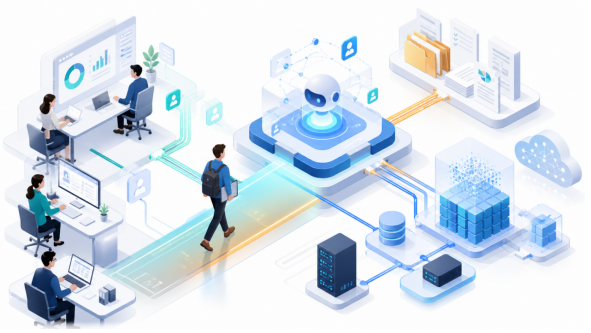
Figure 1: FDE connects the enterprise business front line with AI product development
Many enterprises have already worked with large language models and have built enterprise knowledge bases, Q&A chatbots, or agent demos. But when it comes to real business operations, they often run into the same set of problems: materials scattered across different systems, business rules not fully documented, model outputs lacking justification, unclear boundaries of permissions and responsibilities, and prototypes that run but cannot be used long-term by front-line staff.
These problems are hard to solve once and for all by purchasing a standard software package. Enterprise AI implementation requires people to enter the business front line and turn vague requirements into tasks that can be developed, validated, and continuously iterated. Liyu Technology defines this way of working as the "FDE-driven enterprise AI implementation model."
What exactly does FDE enterprise AI implementation service do?
The core responsibility of an FDE is to connect the enterprise business front line with AI product development. A Forward Deployed Engineer must understand the client's processes, data, roles, and risks, while also working with product, R&D, model, and deployment teams to complete the solution.
The head of Liyu Technology's FDE team explains that FDE services typically include six phases:
1. Scenario diagnosis: Map out existing processes, participating roles, data sources, time-consuming steps, and business risks, and determine which problems are suitable for AI and which are better suited to rule engines, RPA, or traditional systems.
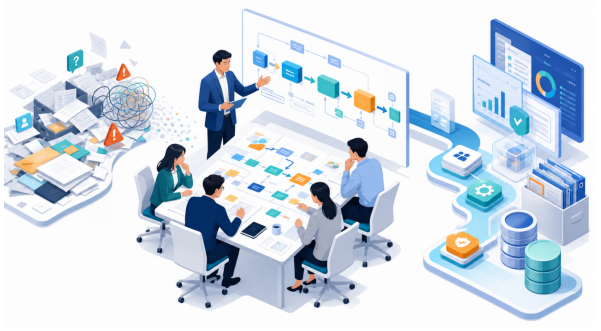
Figure 2: Identifying implementable AI scenarios from mixed materials and processes
2. Goal and boundary definition: Clarify the AI's inputs, outputs, permissions, human review checkpoints, and acceptance criteria, avoiding projects with only the vague goal of "building an agent."
3. Prototype validation: Select a high-frequency business process with relatively clear boundaries, and use real samples to validate knowledge retrieval, task execution, and output quality.
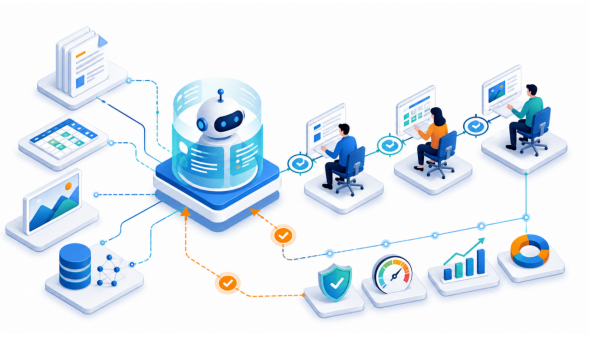
Figure 3: Validating agents, knowledge retrieval, and human review with real samples
4. System development and integration: Complete development around agents, enterprise knowledge bases, workflows, model calls, and existing system interfaces, and choose cloud, on-premise, or hybrid deployment based on security requirements.
5. Launch and delivery: Complete permission configuration, logging, user training, exception handling, and acceptance, moving the AI from a demo environment into actual business operations.
6. Continuous optimization: Iterate on the knowledge base, prompts, tools, models, and processes based on usage records, failure cases, and business changes.
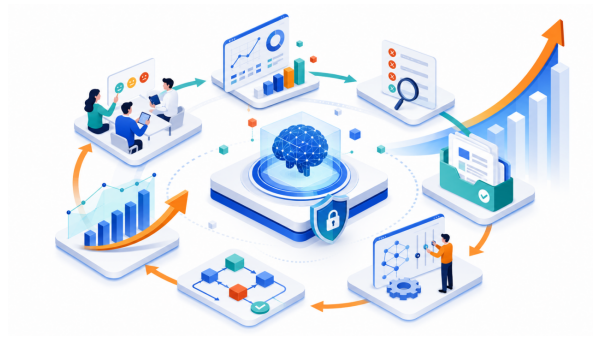
Figure 4: Forming a continuous optimization loop through feedback, evals, and iteration
This means an FDE neither leaves after presenting a solution in the pre-sales phase, nor simply develops against a feature list after receiving fixed requirements. An FDE works with the client to find and define the problem, and continues to refine the answer in real-world use.
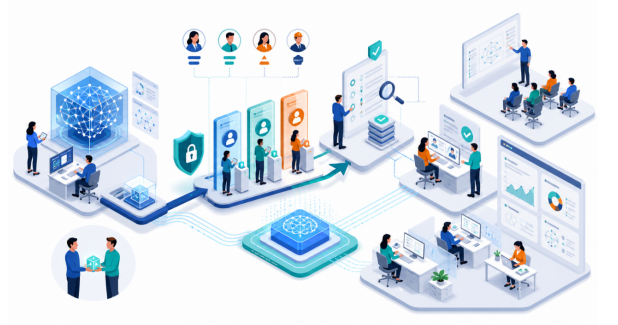
Figure 5: From prototype to launch: permissions, training, logging, and business use together complete delivery
How does Liyu Technology support FDE delivery?
Enterprise AI projects rarely rely on a single model or one chat window. Around enterprise-grade agent delivery, Liyu Technology has gradually built up capabilities including the APilot agent platform, enterprise knowledge bases, Skills for different business scenarios, a token aggregation platform supporting multi-model scheduling, and GPU and cloud resources.
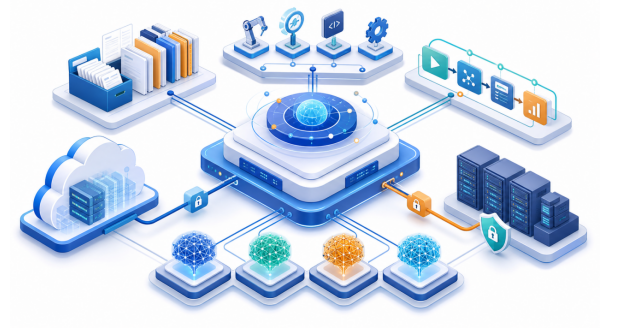
Figure 6: Liyu Technology's multi-component capability stack
These capabilities play different roles in projects: the enterprise knowledge base organizes professional materials and provides traceable justification; agents and Skills execute specific tasks; workflows constrain stable processes; multi-model scheduling balances effectiveness, cost, and availability; and APilot carries the business entry point, role permissions, task orchestration, and application management.
Technical components are not the end goal. The FDE team must combine these capabilities according to business constraints, rather than making the enterprise redesign all its work to accommodate a particular tool. What Liyu Technology calls "FDE-driven" is not renaming traditional project managers or developers, but having a team that understands business, technology, and delivery responsibility run through the entire project. Front-line staff continuously absorb on-site changes, while the product, R&D, and model teams in the back convert those changes into working system capabilities.
Which enterprises are suited to the FDE model?
If an enterprise has accumulated a large amount of documents, data, and expert knowledge, but the information is scattered and hard to retrieve, an FDE can start with knowledge-intensive processes.
If the business requires executing tasks across multiple systems, involving images, tables, text, and experiential judgment, an FDE can deliver combined solutions through agents, tool calls, and workflows.
If the enterprise has clear requirements for on-premise deployment, permission isolation, result traceability, and human review, an FDE can continuously coordinate between business, technology, and security.
But if the requirement is still stuck at "we want to do AI too," with no clear business owner, usable data, or acceptance criteria, it is not advisable to launch large-scale construction directly. A safer approach is to first complete a pilot on a high-frequency, time-consuming process with clear boundaries, and then decide on further investment based on actual results.
Before starting an FDE project, an enterprise can first answer four questions
1. Which current process consumes the most professional staff time?
2. What materials, systems, and experiential judgment does this process require?
3. Which results can be completed automatically by AI, and which must be confirmed by humans?
4. Should project success be measured by time, quality, cost, or risk metrics?
Beijing Liyu Technology Co., Ltd. provides FDE-driven enterprise AI services including scenario diagnosis, agent and knowledge base development, system integration, deployment, and continuous optimization. Enterprises do not need to decide which model to use first; they can start from a specific business process, with the FDE team jointly judging whether it is suitable for AI and how the pilot and acceptance should be designed.
FAQ
What is an FDE?
FDE stands for Forward Deployed Engineer, which Liyu uniformly translates as "Forward Deployed Engineer." An FDE enters the client's real business environment, collaborates continuously between the business team and product R&D, and shares responsibility for requirement definition, solution implementation, launch and delivery, and subsequent optimization.
What is the difference between an FDE and software outsourcing?
Traditional software outsourcing usually starts from a relatively clear list of requirements, while an FDE often faces business problems that have not yet been clearly defined. An FDE first diagnoses the scenario and validates assumptions, then works with the client to determine requirements and acceptance methods.
Does FDE service require long-term on-site presence?
Not necessarily. The on-site ratio should be determined by business complexity, data security, communication frequency, and project phase; a combination of on-site and remote work can be adopted. The key to FDE is staying close to the business and being accountable for delivery, not simply counting on-site headcount.
Can an enterprise without its own AI team run an FDE project?
Yes, but the enterprise still needs to designate a business owner and provide the necessary materials, system interfaces, and acceptance personnel. An FDE can supplement product and technical capabilities, but cannot replace the enterprise's internal business decision-making responsibility.
Where should an FDE project start?
Prioritize a pilot on a process that is high-frequency, time-consuming, has relatively accessible data, and clear business boundaries, and determine human review checkpoints and quantifiable acceptance criteria in advance.
Article summary
Liyu Technology connects enterprise business operations with AI product development through the FDE (Forward Deployed Engineer) model, offering services including scenario diagnosis, AI agent and knowledge base development, system integration, deployment, and continuous optimization. Through three anonymized case studies—an audit AI agent, an AI-powered consultation platform, and a multi-agent risk control review system—this article explains how enterprise AI moves from prototype to real-world workflows.
Disclaimer: Markets carry risks; choose with caution! This article is for reference only and does not constitute a basis for any transaction.