The protocol now sits under a Linux Foundation fund; write one server and you can expose a customer's database or ERP to multiple mainstream AI applications.
Key takeaways
- MCP was released on November 25, 2024. By December 9, 2025, public servers had exceeded 10,000, and on that same day Anthropic handed the protocol over to the Agentic AI Foundation under the Linux Foundation.
- An MCP server is written once and works with Claude, ChatGPT, VS Code, and Cursor, mirroring the pattern the Language Server Protocol (LSP) brought to editors.
- The spec treats tools as arbitrary code execution: hosts must obtain user consent, HTTP uses OAuth 2.1, and stdio takes credentials from the environment.
On November 25, 2024, Anthropic released the Model Context Protocol (MCP). A little over a year later, more than 10,000 public servers were running. Then on December 9, 2025, Anthropic handed the protocol over to the Agentic AI Foundation, a fund under the Linux Foundation co-founded by Anthropic, Block, and OpenAI. A connectivity standard that began as a blog post from one company now belongs to a neutral foundation.
For Forward Deployed Engineers (FDEs), this number is less market news than a job description. On-site customer work almost always comes down to the same question: the customer's data lives in internal databases, ticketing systems, or ERPs, and those systems were never designed to connect to LLMs, so how do you get the model to read that data? Until recently, every such situation required hand-writing an integration layer tied to a single chat application.
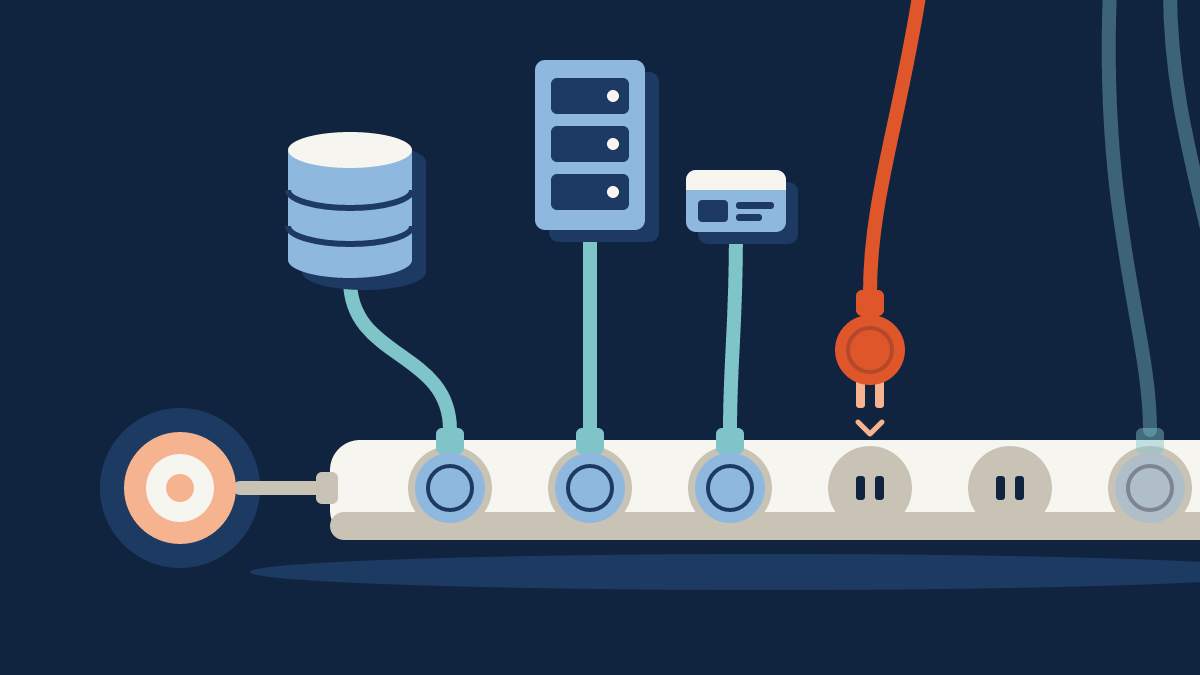
The official documentation defines MCP as an open standard for connecting AI applications to external systems, comparing it to a USB-C port for AI applications.
Three roles, three capabilities, and an idea borrowed from editors
The current spec (2026-07-28 version) is based on JSON-RPC 2.0 and defines three roles: host, client, and server. The host is the LLM application that initiates the connection. The server is written by you and exposes the customer's systems to the model. Servers provide three kinds of capabilities: resources, prompts, and tools. Tools are functions the model can execute.
宿主(LLM 应用,发起连接)
   客户端  ⇄  JSON-RPC 2.0  ⇄  服务器(由你编写)
                                  ├─ 资源 · 提示词 · 工具
                                  └─ 客户的数据库 / 工单 / ERP
(Diagram caption: the host is the LLM application that initiates the connection; the server is written by you; the bottom row shows the customer's database / ticketing system / ERP.)
The spec states that its inspiration comes from the Language Server Protocol (LSP), which also explains why it spread so quickly. LSP lets one language server work with all editors; MCP does the same for AI: one server, many hosts. The documentation lists Claude, ChatGPT, VS Code, and Cursor among its supporters, promising build once, integrate everywhere.
Take an example. You are assigned to a logistics company that wants its operations team to query order status in natural language. Instead of writing a plugin for one chat application, you build an MCP server running on stdio that exposes a single tool. The tool takes an order number and queries the customer's database. Database credentials are read from environment variables, which is also what the spec recommends for stdio.
Once the host connects, it lists the tools. When a user asks a question, the model decides to call the tool, and the host asks for user permission before executing it.
Now suppose the analytics team wants to call the same server while writing SQL in Cursor. According to the documentation, the connection part needs no rewriting. What exactly needs to change between the two hosts is best tested yourself. The hard part of enterprise integration is not getting it to work once, but keeping it working after the customer switches or adds chat applications, and that is precisely the problem MCP aims to solve.
The real constraints are permissions and responsibility, not the protocol
What FDEs should read most carefully is the spec's security stance. Tools are treated as arbitrary code execution, and hosts must obtain explicit user consent before calling any tool. With enterprise customers, this means tools should be designed narrow and independent, for example separate tools for reading and writing. That way, the authorization prompts the host pops up remain meaningful to users instead of degenerating into habitually clicking "Allow."
Authorization in MCP is optional, and how it works depends on the transport you choose.
| stdio | HTTP | |
|---|---|---|
| Authorization in the spec | The spec's authorization mechanism does not apply; credentials come from the environment | OAuth 2.1 |
| Typical on-site scenario | The server runs on each employee's machine | A centralized server serves the whole department |
| What to agree on with the customer's IT team | Who gets the environment variables and where they are stored | Which identity provider to use and which permission scopes to enable for each tool |
In practice, the same server can run stdio on employee machines or be deployed centrally as HTTP for a department, and each choice corresponds to its own authorization model. Settle this with the customer's IT team in the very first meeting.
MCP also makes no promises about data quality, how accurately the model picks tools, or how clean the customer's legacy schema is. It standardizes the socket, not the current. The spec and documentation are published on GitHub under the MIT license, so any question about what the protocol can do can be checked at the source rather than relying on secondhand interpretations.
If you are just starting out, a sensible order is: learn JSON-RPC 2.0 first, then understand the LSP mental model, then get a grasp of OAuth 2.1 basics, and only then start writing a server. When job hunting, a repository with an MCP server that runs against a simulated enterprise schema is more convincing than any line on a resume claiming "Agent experience."
If an FDE job description mentions "connecting LLMs to internal systems," building or operating MCP servers is very likely part of the job.
The protocol has passed from one company into the hands of a neutral foundation. The remaining work, turning those 10,000-plus public sockets into something customers actually want to enable, falls to the people on site.
Was this article helpful?
Thanks for your feedback!