Vaughn Vernon's 176-page *Domain-Driven Design Distilled* teaches FDEs to draw bounded contexts before writing code, and clients can understand it too.
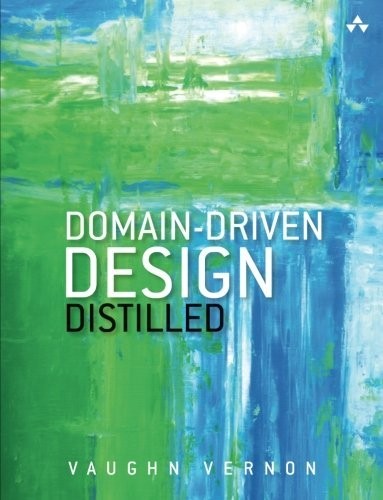
Domain-Driven Design Distilled · Vaughn Vernon ·
Key Takeaways
- The author is Vaughn Vernon, published by Addison-Wesley in 2016, 176 pages across 7 chapters. The readership includes not just developers but also consultants and clients.
- Chapter 2 covers bounded contexts and the ubiquitous language, which FDEs can apply directly in client requirements research.
- The most memorable idea: don't force a client's entire company into one model. Draw boundaries first, then sort out the relationships between them.
Sales says there are 420 orders today, the warehouse says 380, and finance says 350. All three are correct.
Imagine a Forward Deployed Engineer (FDE) in their first week at a logistics company, given the task of building an AI agent to answer "How many orders do we have today?" To sales, an "order" is a signed quote; to the warehouse, it's a picking list; to finance, it's an issued invoice. The three numbers here are hypothetical, but the situation is common: one word, three models, and picking the wrong one in code leads to errors.
Vaughn Vernon's *Domain-Driven Design Distilled* addresses exactly this problem in under 200 pages. If your job is to sit next to a client's domain experts and turn the way they speak into a working system, read this book before tackling the big tomes.
A thin book, also written for people who don't code
The book was published by Addison-Wesley Professional on May 23, 2016, as the first edition. The print edition is 176 pages, ISBN-13 978-0-13-443442-1. Vernon's writing draws on roughly twenty years of experience applying domain-driven design (DDD) in real-world settings. The publisher's description emphasizes that the book is concise, readable, and actionable, without drowning readers in detail.
The book's target audience is worth noting. Pearson explicitly states that the book is aimed at developers, architects, analysts, consultants, and clients. This is useful for FDEs: you can hand a chapter to the client's head of operations, giving both sides a shared vocabulary for meetings.
The book has 7 chapters, opening with "DDD for Me" and closing with "Acceleration and Management Tools," with subdomains, context mapping, aggregates, and domain events in between.
Idea 1: The ubiquitous language must be built together with the client
Chapter 2, "Strategic Design with Bounded Contexts and the Ubiquitous Language," is the most important part of the book for FDEs. The book's introduction states that the ubiquitous language takes shape within a clearly defined bounded context, and the book guides domain experts and developers in creating this language together.
The key word is "together." A glossary you write after a meeting is just your translation; a glossary that warehouse staff have edited line by line is a shared language. Back to the logistics example: when someone from the warehouse crosses out "order" and writes "picking list," you've found a boundary.
The first thing to do on-site with a client: in every requirements session, note down all business terms. Then follow up: who uses this term? At which step of the process does it begin, and where does it end?
Idea 2: Split the models; don't merge them at all costs
Many engineers' first instinct is to build a single
orders
table for the entire company. This book argues against that approach. It explains how to use the Bounded Context pattern to separate domain models, so each model only holds true within its own boundary.
Applied to the AI agent above, the correct answer is not one number but three: signed orders in the sales context, picking lists in the warehouse context, and invoices in the finance context.
The AI agent should either ask the user which context they mean, or automatically select one based on the user's role. This single design decision alone can save a week of arguments about "the numbers are wrong."
Idea 3: Draw the map first, then write the integrations
Once you have multiple contexts, the next question is how they exchange information. Chapters 3 and 4 cover subdomains and context mapping, which can directly help you map out the client's business boundaries. For an FDE, a context map is integration design: how a picking list is generated from a signed order, and where the invoice data comes from.
The final chapter introduces acceleration tools, including event storming. You can run a workshop with the client to sort out business events and boundaries, rather than guessing from database table schemas.
What are the two most common mistakes?
First, writing the glossary yourself and then sending it to the client for "approval." Busy people tend to just nod it through, so places where one word carries two meanings stay hidden until the AI agent gives a wrong answer. The fix is to have the client personally revise the definitions in the meeting, just like the warehouse employee crossing out "order."
Second, reverse-engineering the model from database table schemas. If there is only one shared
orders
table, its schema masks the fact that three departments understand it in three different ways. Table schemas should be used to verify what you've heard from users, not as a starting point.
In what order should you read it?
If you're about to start a new project, read chapters 1 and 2 first—you'll use them in your very first meeting. Read chapters 3 and 4 when you begin designing integrations, and the final chapter when you need to organize a workshop.
The chapters on aggregates and domain events can wait until you're actually writing core code. That's the tactical part: useful, but not urgent for someone still learning the business.
How do you get employers to see this capability?
When reading FDE job descriptions, look for requirements like business domain modeling, translating business requirements into systems, and working directly with client stakeholders. These are exactly the places to list the skills you learned from this book.
Don't write "familiar with DDD" on your resume; write something verifiable, such as: "Worked with the client's operations team to identify three bounded contexts, unified the definition of an order, and eliminated data discrepancies between the warehouse and finance." In interviews, tell a specific story about a time you discovered a word had two meanings.
Poorly written integration code can be rewritten. A boundary drawn wrong in the first week will follow you through the entire project.
Was this article helpful?
Thanks for your feedback!