In 196 pages, John Ousterhout teaches just one discipline: hide complexity behind small interfaces, because your client will have to live with the code long after you're gone.
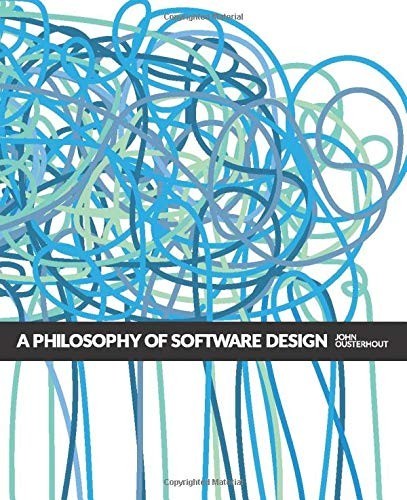
A Philosophy of Software Design · John Ousterhout ·
Key Takeaways
- Ousterhout argues that complexity is the real constraint in software, defining it as anything that makes code hard to understand or modify.
- He compares AI coding tools to "tactical tornados": fast at writing code and fixing code, but also generating new bugs and technical debt along the way.
- Three ideas worth remembering for FDEs: deep modules, strategic rather than tactical thinking, and comments that say what the code cannot.
In April 2025, John Ousterhout compared AI coding tools to "tactical tornados" on The Pragmatic Engineer podcast: fast at writing code, fast at fixing bugs, and just as fast at creating new bugs and technical debt.
For Forward Deployed Engineers (FDEs), this hits close to home. You build an integration with AI in a few days and hand it off to the client's engineering team; once you move on to the next project, they are the ones reading and modifying the code.
In the same episode, Ousterhout suggested that the AI coding boom may make software design more important than ever. His 196-page A Philosophy of Software Design is the most concise read for learning this kind of design.
196 pages, aimed at a single enemy
The second edition was published by Yaknyam Press in July 2021, ISBN 978-1732102217. The core of the book is how to decompose complex systems into modules, such as classes and methods. Ousterhout put it bluntly in an interview with Software Engineering Radio: complexity is the only limit on what software can do.
His definition is practical: complexity is anything that makes a project hard to understand or modify. FDEs can apply this definition immediately, because "hard to understand, hard to modify" is exactly what the client's engineers feel when they open the repository you left behind.
The most important idea to remember: deep modules
Ousterhout calls modules with many interfaces and little functionality shallow modules. Deep modules are the opposite: they hide complex functionality behind simple interfaces. Shallow modules make systems more confusing, because users must spend effort learning the interface and get little in return.
Consider a hypothetical example. You ask AI to write a connector that pulls contacts from a client's CRM, and it produces a version with six public functions: get token, refresh token, build request headers, retry requests, read next page, and normalize records. To use it, the client's engineers have to understand all six functions and the correct order to call them.
A deep-module version exposes just one function, such as
fetch_contacts(since)
, with authentication, retries, and pagination all tucked inside. What the person taking over has to learn drops from six things to one. When the CRM changes its pagination scheme, only one place needs updating, and nobody outside ever has to know.
So on-site with a client, before merging AI-generated code, count the public functions and ask which ones the client actually needs to call; fold the rest into internals.
Who is the tactical tornado on your team?
In Ousterhout's writing, the tactical tornado is the person who pushes for progress today at any cost, regardless of the damage done to the system. A summary of the book on freshman.tech points out that tactical programming is the default at most companies, where the goal is to get features working as quickly as possible.
Strategic programming is the opposite: taking the time to find a design that is both workable and the best it can be.
FDE work naturally pushes people toward tactical mode: the demo is next week, the client is waiting, and the AI agent can write code in seconds. When the tornado is AI, you are the only strategic engineer on the team. One habit is easy to keep: after each round of AI-generated code, set aside a short block of time just to tidy up the design, without adding new features.
Comments are written for the person who takes over
The third idea is short but valuable: comments should record what cannot be inferred from the code. What the client's engineers need to know is the reasoning behind it: why the connector skips records without an email address, and which constraint in the legacy system forced that approach.
Those reasons exist only in your head and in your meetings with the client. If you don't write them down before handoff day, they leave with you.
In what order should you read it?
If you're short on time, start with Software Engineering Radio episode 520 (July 12, 2022).
In that episode, Jeff Doolittle talks with Ousterhout about complexity, modularity, layering, abstraction, and information hiding. Then listen to the April 2025 Pragmatic Engineer episode to hear his views on AI coding, and finally read the book, prioritizing the chapters on deep modules and comments.
If you've ever inherited someone else's code, this book will give that pain a precise name, which is exactly why you should read it early. If you're new to the field, don't skip the ideas that seem obvious: as deadlines loom, they are the first things to be forgotten.
When job hunting, turn these ideas into evidence. In your resume or FDE interviews, describe a time when you streamlined a module's interface before handoff, after which the client's team could modify the code without needing to reach you. A story that specific is far more persuasive than a vague line about "writing clean code."
When Ousterhout discussed the tactical tornado on SE Radio in 2022, it was a human programmer. Today it runs inside your IDE, and whether the handoff is clean or a mess depends on who is at the helm.
Was this article helpful?
Thanks for your feedback!
5 sources
- A Philosophy of Software Design, 2nd Ed (Yaknyam Press) · 2021-08-25
- John Ousterhout on A Philosophy of Software Design (Software Engineering Radio episode 520) · 2022-07-12
- Book Summary: A Philosophy of Software Design · 2021-06-15
- The Philosophy of Software Design – with John Ousterhout · 2025-04-09
- SE Radio 520: John Ousterhout on A Philosophy of Software Design · 2022-07-12