This article comes from the WeChat official account: AI Story Project. Editor: Zhang Xia. Author: Zhong Chudi
"
While AI replaces people, it is also creating new jobs. The FDE (Forward Deployed Engineer) has become the hottest new AI job of the year.
The role's mission is to be stationed on-site at customers, solving the problems of putting AI into production. Companies that make money helping enterprises deploy large models have already made it a standard part of their business.
From overseas large model companies like OpenAI and Anthropic to domestic giants like ByteDance, Alibaba, and Tencent, everyone is fighting for talent. On social media, stories like "earning 100,000 yuan a month taking solo gigs" and "switching careers from zero experience to a million-yuan salary" are everywhere.
We found three solo contractors. Their feedback, however, was: this work is not easy. Clients can't articulate their pain points, the risk of switching systems is too high, and the room for cost reduction is limited. Projects often end up as one-off deals—switch to a new industry and you have to figure everything out from scratch.
What makes them even more anxious is that the solo FDE is only a transitional form; companies are incubating such roles internally.
Below are their stories.
100,000 yuan a month
Before taking his first FDE gig, Lawted had never seen such a "backward" company.
In April 2026, Lawted was invited to a freight forwarding company in Shenzhen to AI-transform its workflows. After walking in the door, he stood behind the nearest employee—whose screen was covered with WeChat chat windows and email pages in both Chinese and English.
He watched for a while and noticed that the employee kept opening shipping PDFs that clients sent via WeChat and email, extracting the port and sailing schedule, replying to the client for confirmation, and then manually typing all that information into the company system, entry by entry.
Lawted took a walk around the office. More than thirty employees were all doing the same thing.
"So outdated," Lawted grumbled to himself. The scene made him realize that using AI to transform traditional workflows had huge potential. That same day, he packed his bags and moved to Shenzhen.
At the time, he didn't know there was a specific name for what he was doing. Later, while chatting with an American friend, the friend blurted out upon hearing his story: "This is FDE." He searched it up and discovered that what he had stumbled into was precisely Silicon Valley's hottest job right now.
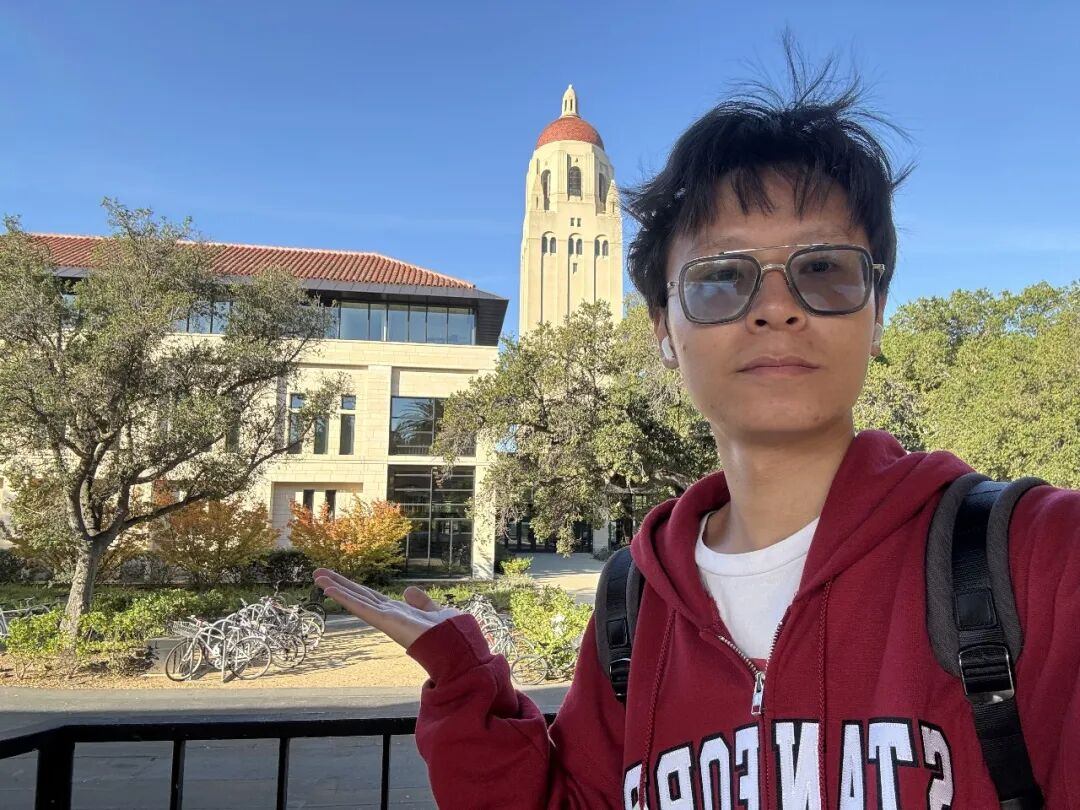
Photo | Lawted in the US
FDE is not a new concept. Twenty years ago, the data platform Palantir built its business on it. After taking on military contracts, it would send engineers directly to the frontlines in Iraq and Afghanistan. When a soldier said "this road looks suspicious," the engineer would turn it into an annotation tool on the map on the spot, folding useful features back into the platform.
In the traditional software industry, the closest equivalents are Sales Engineers and implementation consultants. The difference: pre-sales only pitch solutions, implementation just installs software following a manual, while an FDE writes code on-site at the client and personally delivers the system into production.
In the AI era, this role has come back into fashion. The reason is easy to understand: large models are standardized products, but every company's data, workflows, and systems are wildly different. Over the past year, many companies bought models and AI agents, but most stalled at the demo stage—once they hit production, they ran into walls of permissions, data, and compliance. Someone has to go on-site to pave over that "last mile" from demo to something that actually works.
OpenAI, Anthropic, and Google Cloud are all fighting for talent. This May, OpenAI teamed up with 19 PE firms to pour over $4 billion into a dedicated deployment company; the same day, Anthropic announced a $1.5 billion enterprise services joint venture with Blackstone, Goldman Sachs, and others. Domestically, ByteDance, Alibaba, Tencent, and Zhipu are following suit. On compensation: Silicon Valley FDEs generally start at $170,000 a year, with senior total packages reaching $500,000; domestic giants offer up to a million-yuan annual salary.
Demand for this role splits roughly into two tracks. One is AI companies serving governments, enterprises, and large clients, which set up dedicated positions—the FDE is the delivery component attached to selling models. The other track is individuals or small teams like Lawted, who almost all come from big tech engineering backgrounds, understand both engineering and business, and can work on-site, serving small and medium-sized enterprises and traditional companies that can't afford or properly use AI—charging up to 100,000 yuan per project.
Lawted's first deal came about rather dramatically.
He is 26 this year and took the standard tech career path. After graduating in computer science from BUPT, he joined Alibaba. In his second year of work, Cursor blew up, and he recommended it to everyone, while colleagues warned him not to use AI to write code—"your brain will atrophy."
At that moment he felt "this place doesn't belong to the future." After landing a research assistant position at Stanford, he resolutely quit and moved to the US, and started a company focused on an AI browser.
One day in October 2025, he had a 2 p.m. meeting with an investor to discuss the project. He had just opened his laptop to confirm the meeting location when a news alert popped up in the bottom right corner of his screen: OpenAI had released its AI browser, Atlas. That was exactly what he was building. A big AI company had entered the field to steal his business, and his project was dead.
Later, through an introduction, Lawted met the CEO of a listed company. Hearing that he wanted to give his AI browser to Stanford students to try first, the CEO laughed: "Do you know that a lot of people in China pronounce DeepSeek as 'Deepsuck'? Go back and make their money."
In April 2026, OpenClaw ("Lobster") went viral in China. That CEO found Lawted: "There's a deal to be done." Over drinks, he met the freight forwarding boss who made tens of millions a year.
"I found a Harvard master's grad to install Lobster for you," the CEO introduced him.
After a few rounds of drinks, Lawted asked the boss: "Have you ever used Doubao?"
The boss shook his head, bewildered. Lawted took his phone, downloaded it on the spot, and typed: "What is a freight forwarder?" Doubao quickly produced a string of specific answers. The boss leaned in, read them, took the phone back, and fired off several more industry questions—all answered correctly.
"Let's work together," the freight forwarding boss decided on the spot. And then came the scene at the beginning of this story.
Jolie Ni learned the term FDE early on. Now 27, she spent three years after college as a programmer at a major tech company in Silicon Valley. The urge to start her own business was always there, but the stable, high-paying job kept her from committing. Until this year, when she watched one AI startup after another rise, and friends around her who started companies turned three-person shops into unicorns. She finally decided to step out.
At first, she just helped a friend's moving company build an AI customer service agent for free. Unexpectedly, the friend was thrilled with the results. As soon as the first phase of the project ended, she went full-time as an FDE.
In June this year, she became an Anthropic Claude Partner.
This is a partner program Anthropic launched just this March. The company makes money selling AI services to enterprises and needs a corps of knowledgeable partners to help clients deploy Claude into their businesses, for which it has invested $100 million in training and certification.
The path to certification isn't complicated. Apply to join the Claude Partner Network as a company, self-study and prepare through the official academy, and finally pass a 120-minute, 60-question proctored online exam to earn the CCAF certificate. Jolie Ni reviewed for only three or four hours and passed with ease.
For her, it's a weightier professional endorsement. Since becoming an FDE, she and her team have signed three major deals in a row.
Her team has only three people, keeping labor costs very low. After becoming an FDE, Jolie Ni's average monthly income exceeded 100,000 yuan.
Xiao Tang, who also works as an FDE in China, faces a very different price structure.
Xiao Tang is 24, a humanities graduate with an economics background, doing data analysis at a state-owned enterprise. His feelings about AI are complicated—both excitement and anxiety. The first time he used Manus, watching the command lines flicker across the screen, he felt he could be optimized away at any moment. At the end of January this year, he started learning vibe coding and posted his learning process on Xiaohongshu along the way.
Three months later, a company that runs a booking platform messaged him privately, wanting to use AI to replace part of their workflows—offering a price well below the industry average.
Xiao Tang knew peers were charging 100,000 yuan a pop. But to get a real project for hands-on practice, he took it.
The hard part is communication
After the contract was signed, the client sent Xiao Tang their business documentation. It detailed the workflows he was to replace with AI: pre-sales and after-sales customer service, account managers who push projects forward, and the IT staff building their SaaS.
After that, every day after work, Xiao Tang would spend over an hour discussing with AI, over and over, how exactly to implement these workflows.
Two months later, the first phase was complete. Customer service and account management had been fully handed over to AI digital humans, with real people involved in only 5% of the entire workflow.
The boss was delighted. He used to have to show up in person to communicate with clinics and push projects forward. Now, between camping and cycling trips, he just glances at the data on his phone.
"This is amazing, so much freedom," the boss messaged Xiao Tang. Two days later, they signed the contract for the next phase, and this time Xiao Tang changed his pricing model.
Then new problems quickly emerged.
After the digital employee first went live, Xiao Tang thought the deal was pretty much wrapped up. One day, just as he was about to shut down his computer, messages from the boss started popping up one after another: "When I ask questions, which tools does the AI call? What data does it use?"
After Xiao Tang explained, the boss pressed further: "Why can't I see exactly what it did?"
He typed out a long explanation and sent it over, but the boss seemed somewhat disappointed. Only then did Xiao Tang realize that what the boss really wanted was to see with his own eyes what the AI was actually doing.
For people who don't understand AI, what can't be seen is always unsettling. So Xiao Tang added visualization to the workflow, letting the boss see which data the AI called, which steps it went through, what it did each day, and whether anything was abnormal.
After this version was delivered, the boss replied with a thumbs-up.
In her six months as an FDE, the most important lesson Jolie Ni learned was "educating the client."
Often, when a company comes knocking, their request boils down to three words: "improve efficiency." But when she asks, "What pain points does your business have?" they often mumble and say things that miss the point entirely.
Some processes are inherently unreasonable, but once she points out the problem and suggests redesigning them, the client gets defensive: "I've been in this industry for 10 years—what gives you the right to lecture me?"
After hitting walls a few times, she gradually understood that most clients don't actually know where their business is going wrong; they just want things better, faster, and cheaper.
So she changed her approach: do a demo first. When she took on a project for a law firm, she discovered that the firm's paralegals spent several hours a day deciding whether to take on a case. AI could finish that job in minutes.
She didn't say it directly. Instead, she used projects from other law firms to make a demo video. In the video, it was crystal clear how the AI judged whether to take a case according to rules, whether supplementary information was needed, and then automatically sent acceptance or rejection emails. The effect was far better than repeatedly explaining things to the client face to face.
As an FDE, technical skill is the entry barrier. Getting clients to actually accept your advice—that's the real skill.
Faced with communication problems, Lawted found a more "convenient" route. Having had the experience of teaching a freight forwarding boss to use Doubao, Lawted quickly understood that many bosses in traditional industries are still riding horses—talk to them about AI, and all they want is a faster horse. A large part of FDE work, he says, "is telling them that the automobile already exists in this world."
After joining the freight forwarding company, he quickly ran into problems. To be an FDE, you first have to understand the business processes. He went to the boss, who waved him off and told him to go ask the employees himself.
He went around the office asking one by one. The employees he questioned would think for a long time, then point at the send button on the screen and say, "This button is a bit too small." Another one pointed at the recall button: "I think this button should be red, more eye-catching."
He couldn't get anything about the processes. So he simply leaned over the employees' desks, went through their past work records, pieced the processes together bit by bit, and asked questions wherever something seemed off.
After a month of shuttling between the boss and the employees, Lawted got the hang of it.
When talking money with the boss, never mention "subscription fee." That word reminds people of video site memberships. Talk about the digital employee's annual salary instead—one digital employee can replace dozens of real people, requires no social insurance or housing fund, and only needs "meal money" in the form of token fees.
With employees, the line is "I'm here to help you." He did the math for them: they used to handle 100 orders a month for 5,000 yuan; going forward, they could handle 400 orders a month, quadrupling their pay. The employee nodded repeatedly, saying his order volume indeed hadn't gone up in ages, and neither had his salary. From then on, that employee came to report to him proactively every day.
At this point, Lawted had gotten his foot in the FDE door. But watching this employee talk with growing enthusiasm, he suddenly felt a pang of sadness—the more detailed the employee's account, the higher his chances of being laid off.
Cost reduction is a logic every boss buys into. Of the money saved by AI-driven efficiency gains, the bulk comes from labor costs, and FDE is no exception.
He knew before starting that AI would hit employees hard. His own company laid off customer service staff this year, and 80% of his own work has already been handed over to AI.
Profiting from anxiety
Two months after taking on the freight forwarding project, Lawted had built a complete AI system capable of integrating all of the company's processes for full AI-ization.
The boss was delighted. Upload Excel, PDF, and other files into the system, and it automatically completes the entire workflow—parsing, order creation, form filling, export—with no human intervention throughout, requiring only a final check and confirmation.
But switching systems takes time. Just then, the situation in the Middle East improved, and this export-oriented freight forwarding company was suddenly flooded with orders. At such a critical moment, employees had no time to learn how to use the new system.
Lawted wanted to wait a bit longer, but the boss told him the slow season wouldn't come until February next year. He was stunned. The original plan was to finish this deal this month, then roll the system out to other companies in the freight forwarding industry, and move on to the next industry after milking this one. Now that was completely impossible.
Soon, the boss dropped the straw that broke the camel's back: the company's gross margin was only 8%. Of the 300 million in orders shown in the system, only about 10 million actually landed in hand. One miscalculated order would wipe out a whole year's work. Switching immediately from an old system that had run safely for six years to a new one he had written in two months—the risk was too great.
The boss's enthusiasm dropped to freezing point. Lawted had to settle for second best: don't replace the system; use digital employees to plug into the old system and cut costs first. But when he ran the numbers, the digital employee's token consumption was significant, while the employees being replaced earned only 4,000 yuan a month. There was simply no point in replacing them.
Xiao Tang ran into a similar problem. After finishing his first deal, he realized that for an individual FDE, without productization, you're essentially trading time for money. Every new industry meant re-understanding the business, re-communicating with clients, and rebuilding the workflow from scratch.
The biggest predicament for FDEs is labor cost. Jolie Ni found that doing a project requires going deep inside a company, getting familiar with a completely unfamiliar industry, and afterward teaching employees how to use it. The time and energy costs in between are very high. If the positions being replaced don't pay much in the first place, optimizing all those people away doesn't mean much.
Another predicament is that requirements are too specific and change too fast.
Her team once built a marketing and customer acquisition workflow for a hardware startup; a later follow-up revealed that the company's target customer segment had changed, and the original workflow was completely unusable. With current technology, thoroughly reshaping a company's workflow isn't realistic. What's more, many companies' problems lie not in technology but in the processes themselves, which an FDE, as an outsider, can hardly fully navigate.
As for the future of FDE, Jolie Ni's judgment is that companies will eventually set up internal positions. Unlike today's big tech firms treating FDE as a bundled add-on service for selling products, it may become a role permanently embedded within a company, continuously running AI workflows. So she plans to steer her company toward training in-house FDEs for enterprises.
Lawted has found the same path. After completing two projects, he started building an FDE community: on one side, young people looking to try a new kind of work; on the other, traditional companies urgently in need of AI-ization. He wants to twist these two forces together.
"Right now, most bosses are just afraid of missing the AI wave, and this anxiety will eventually pass," Jolie Ni says. "Training talent who can be directly embedded on-site—that's the truly reliable FDE business."