National Business Daily 2026-11-18 21:08:36
NBD Reporter | Zheng Xinwei, NBD Editors | He Xiaotao, Wei Guanhong
Reporter | Zheng Xinwei
Editors | He Xiaotao, Wei Guanhong, Yi Qijiang Proofreader | Cheng Peng
This summer, Wei Quyun attended an FDE (Forward Deployed Engineer) industry conference. For three hours, the entire audience kept pressing on the same core question: what exactly is an FDE? Even when the event ended, there was still no answer.
Wei Quyun at the FDE industry conference. Image source: interviewee
But that hasn't stopped it from becoming the most sought-after role in the AI (artificial intelligence) circle.
The spark originated more than 20 years ago with Palantir's on-site delivery model. This May, the world's top AI companies Anthropic and OpenAI simultaneously set up companies betting on enterprise AI deployment, and the FDE flame "spread" from Silicon Valley all the way to China.
A report released by the job-hunting and recruiting platform Maimai shows that in the first seven months of this year, FDE job postings on the platform grew 1522.73% year over year, topping the list of expanded AI technology positions. According to statistics from Liepin Big Data Research Institute, the average annual salary for FDE-related positions is 408,000 yuan, with positions paying over 500,000 yuan accounting for 28.25%. Big companies like Tencent, ByteDance, and Meituan offer annual salaries as high as around one million yuan.
Behind the high salaries and expansion lies the complex reality of frontline implementation. Recently, National Business Daily reporters (hereinafter referred to as NBD reporters) spoke with multiple FDE practitioners, glimpsing the real picture beneath the glamorous hype: they handle miscellaneous technical tasks at companies, talk with CEOs (chief executive officers) to uncover needs, dive into frontline stores shaking milk tea to find implementation scenarios, and some small teams struggle to collect 70-80% of final payments after taking orders...

Wei Quyun once worked as an FDE for an AI startup. His work was very varied: helping companies build marketing automation workflows, iterating product AI capabilities, and connecting in-store AI monitoring systems—anything touching software or hardware. "In a not-so-mature company, an FDE is essentially an all-around technical outsourcer."
This is not an isolated case. Multiple interviewees frankly admitted that they are essentially like "technical outsourcing." FDE entrepreneur and founder of Yaohan Digital Technology, Zhou Ziyao, told NBD reporters that a large number of FDE teams have emerged in the market this year, and people in the industry often self-deprecatingly call themselves "makeshift crews"—everyone is crossing the river by feeling the stones.
With the rise of the FDE role, questions like "what exactly does an FDE do" and "how does it differ from product managers, pre-sales solutions engineers, after-sales customer engineers, and so on" have not reached a consensus. In the view of the multiple practitioners interviewed by NBD reporters, FDE work does indeed overlap with many traditional roles, but the greatest common denominator they offer is—someone who can translate AI capabilities into business results for enterprises and connect AI into real workflows.
Gan Yifan, co-founder of Rolling AI, doesn't even see the FDE as a specific job title, but rather as a "capability package." "Just like electrical engineers in the electrical age, whose core was using electricity-driven machines to replace human physical labor; the core of the FDE is using AI to replace repetitive intellectual labor," he explained to NBD reporters.
Gan Yifan broke down this "capability package" using Palantir's Echo-Delta pairing system (mainly referring to a pair of collaborative roles in the FDE model): Echo stays close to the business, finding opportunities on the frontline where AI can amplify value and making it run in both new and old workflows; Delta is responsible for technical implementation, using various engineering methods to turn opportunities into runnable systems. In addition, he proposed that Chinese enterprises also need a third capability role—the "knowledge governance officer"—because Chinese companies generally lack the organization and consolidation of explicit knowledge, processes, and expert experience.
Rolling AI's team is very flat; Gan Yifan also goes on-site and writes code himself. Everyone on the team is an "all-around super individual," while also having different emphases on the above capabilities. Several people form groups to serve enterprises, with a middle-platform team providing underlying technical support behind them.
"There are two thresholds for companies hiring FDEs," Gan Yifan told NBD reporters. First, being a small expert in a certain field who understands how the industry operates; second, having experienced transformation projects in the industry and knowing what happens when new productivity enters an enterprise. Compared to technical experts, business-savvy experts are more crucial: "The business expert is the '1,' and technology is the '0's that follow—without the '1,' nothing can be added."
Familiarity with industry business is indeed a widely valued quality for FDEs. Wei Lei, FDE entrepreneur and founder of OpenFDE, said in an interview with NBD reporters that to do FDE work long-term, one must focus on specific verticals—ultimately, it comes down to "understanding the customer." And "reading the customer" is often the first challenge FDEs encounter after entering a company.
Although many business leaders are anxious about AI applications, they don't clearly understand the actual effectiveness and pathways of AI implementation. Requirements are often vague, so consulting and research become the first step after entering.
Gan Yifan gave an example: the first thing the team does upon entering is to reach consensus with the client from a management consulting perspective on issues like AI capability boundaries, application expectations, the company's financial situation, and business goals. After aligning understanding, they go to the frontline: for fast-moving consumer goods, they follow the channels; for milk tea chains, they get health certificates and go to stores to shake milk tea. They spend two to three weeks on the business frontline forming hypotheses about how AI can optimize systems and improve processes, then two to three weeks building prototypes and testing and evaluating them. After confirming feasibility, they iterate quickly, promote during iteration, and expand from a small scope to the entire company within two months.
This process—from consulting and research to prototype design, implementation trial and error, and iterative maintenance—is the FDE work path described by most interviewees, but this long chain is not easy from the very beginning.

Wei Quyun's on-site workplace. Image source: interviewee
After the National Day holiday, Wei Quyun and five colleagues entered a subsidiary of a state-owned central enterprise for an FDE project. The team spent two weeks interviewing employees from 12 departments and compiled 800-900 issues. "You could feel that employees were more venting emotions than making constructive suggestions," Wei Quyun said. The interviews were mentally draining because 80% to 90% of the information was useless and couldn't help the team analyze the company's pain points or find the next direction.
"The core of FDE on-site work is becoming an expert who understands the customer's business." Wei Lei shared his experience serving a company with 7 billion yuan in annual revenue: "Including in-depth business discussions with the CEO, thorough communication with all levels of the company, uncovering needs, and gaining trust."
"Gaining trust" can be even harder than "uncovering needs." Organizational resistance is an obstacle consistently mentioned by interviewees. Gan Yifan's team once did AI-based store scheduling for a company, trying to save labor costs through refined operations. The results were significant, but implementation was hindered because employees' incomes dropped: "Without incentives, store managers simply won't push it forward."
Gan Yifan said that AI applications can't just run in an enterprise by simply building technical tools; they inevitably encounter organizational resistance and require going deep into the organization to do a lot of coordination and incentive work. "AI has difficulty understanding emotions and context between people. A change that is completely reasonable on paper may still fail to move forward—a certain business department may clearly be underperforming, but since they've been fighting alongside the boss since day one, they have to stay there."
To overcome resistance to change, the determination of the "top leader" is crucial. Multiple interviewees said they only take orders where they can "reach agreement with the top leader," because "without very strong determination from the boss, nothing can be pushed forward." Wei Quyun was deeply impressed by the kickoff meeting on his first day at the central enterprise subsidiary: "All the middle and senior management gathered—it was quite grand. The chairman spoke personally, requiring every department to cooperate with us."
"Real FDE implementation services are extremely delivery-heavy and results-oriented," Zhou Ziyao said. Developing a single pain-point scenario takes 1 to 2 months, and deeper transformation requires a year or even longer of accompaniment. "We do all the dirty and tiring work, earning hard-earned money, and clients often don't understand." He had just quoted 200,000 yuan for the first phase to a semiconductor company, and the young boss, who had originally been very determined, wavered a bit after hearing it.
There is currently no unified pricing standard in the market. Different teams serve different clients, in different forms, with different client standards, so pricing systems vary. Zhou Ziyao's team mainly serves medium-sized enterprises with annual revenue between 50 million and 300 million yuan. On-site pricing differs by city, averaging 1,800 yuan per person-day (a common workload measurement unit in the software and IT services industry).
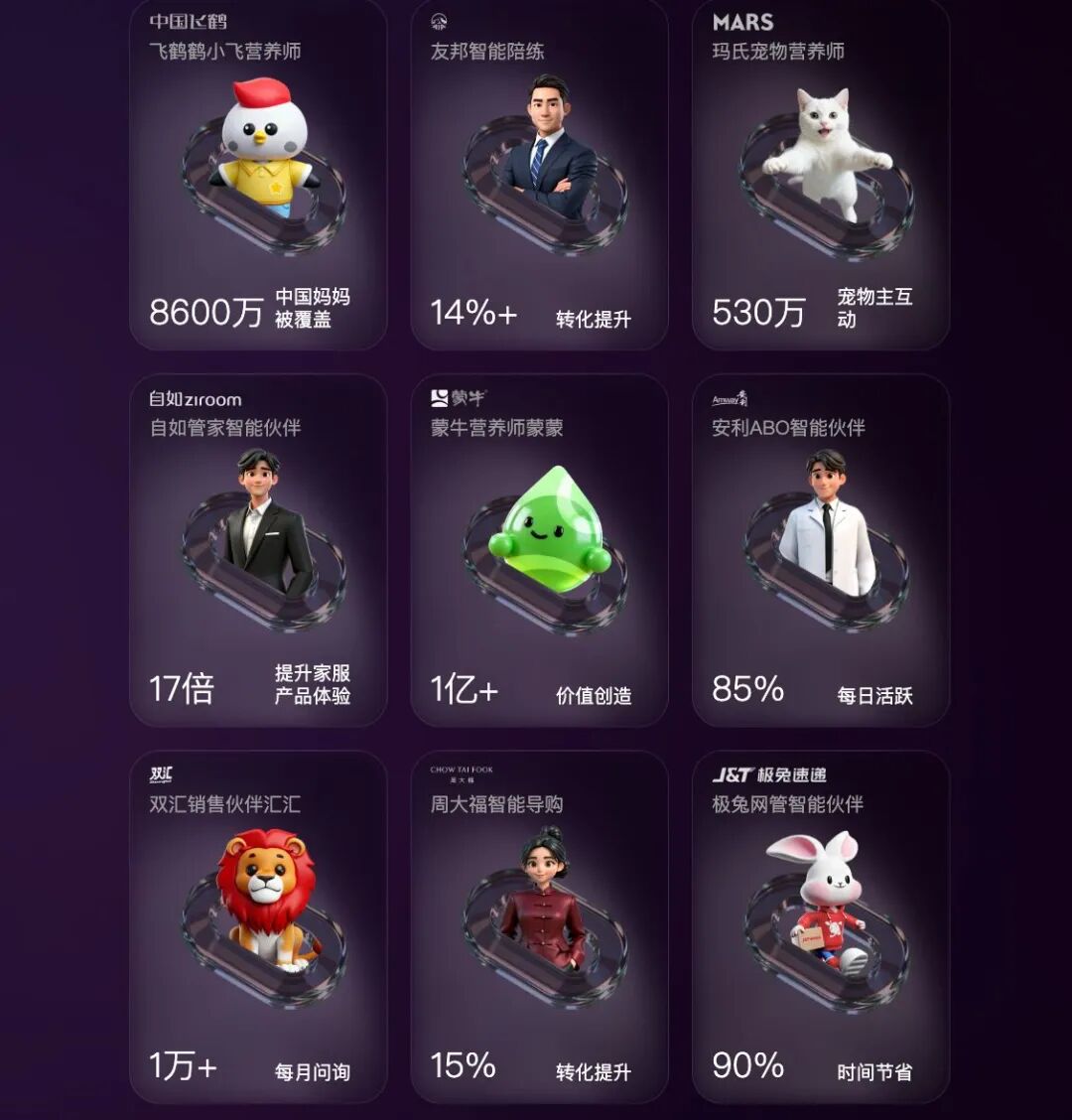
Rolling AI customer case. Image source: screenshot from Rolling AI's official website
RollingAI targets private enterprises with annual revenue above 500 million yuan. Customers subscribe monthly to a small team of several FDEs for services such as data analysis and causal inference, plus knowledge assets like AI employees and industry know-how accumulated from previous cases. "A company's annual subscription is roughly in the range of several million yuan," said Gan Yifan, adding that the team typically accompanies an enterprise for at least six months.
Gan Yifan has observed that this "heavy business" is facing real difficulties of varying degrees: more and more small teams and even individuals are taking on work as FDEs. Winning contracts is not hard, but "70 to 80 percent never collect the final payment." Several interviewees confirmed this problem. "The issue often lies in misaligned expectations—enterprises can't articulate their needs, and FDEs lacking capability are unable to judge this or over-promise just to sign the deal, leaving both sides unable to back down."
Gan Yifan expressed his concern: many people rush into the profession after seeing only the surface-level hype around FDEs. Without familiarity with an industry, they may actually use AI to amplify their own misconceptions when serving clients, producing the opposite of the intended effect. "Having reverence for an industry is a basic professional service ethic."
Market chaos doesn't stop there: pricing systems are chaotic, and practitioners without real-world case studies either charge exorbitant prices or undercut competitors with low bids, while the services they actually deliver don't match.
More consistent criticism is aimed at "exploitative" training courses. FDE entrepreneur and OpsGo AI founder Xie Yao categorizes these courses into three types: those targeting laid-off tech workers in their thirties and forties who want to become FDEs, claiming "enrollment guarantees employment"; those selling FDE certificates to fresh graduates, though the certificates have nothing to do with actual work; and "AI executive classes" for business owners, taught by instructors with no real-world implementation experience, promoting tools that are hard to put into practice.
the state of an FDE within an enterprise is like a maternity nanny":
Enterprises must learn to "raise the child" themselves
"The market does indeed have some rather hasty moves, and some low-quality FDE services have damaged the industry's reputation. But in an environment where enterprise management in China is not standardized, FDE will still be a fragmented market with enormous room for growth," Wei Lei told NBD reporters.
"AI transformation is like teaching people to use computers and Office 20 years ago," Xie Yao said. "Companies founded ten years from now will be born natively adapted to an AI-friendly business environment and won't need anyone to teach them how to use AI at all."
Gan Yifan also believes that FDE services that purely sell "person-days" or deliver by project cannot become a sustainable business model in China. In the future, every enterprise will have native FDE teams grown out of its own business. "It may not even be a formal organization—it could just be certain people who possess the FDE capability package, becoming the key players driving AI transformation within small business units. This will happen at scale in the next six months." In his vision, external FDE companies in the future may no longer live on service fees, but instead ride the capital-driven asset transformation logic, working with venture capital firms to transform companies and industries with AI capabilities and earning a share of equity appreciation.
What kind of enterprise can truly succeed at AI transformation? Gan Yifan's answer: openness, willingness to learn, and initiative.
"An FDE's state within an enterprise is very much like a maternity nanny," he said by way of analogy. The enterprise has given birth to a child called AI, which is extremely "disruptive" and upends many household routines. A good "nanny" must have professional skills and also be able to read the room—knowing who makes decisions on what matters and who can cooperate. Moreover, the "nanny" won't stay forever; the goal is to teach the family to raise the child themselves.
And for the "parents," what matters more is proactively learning how to raise the "child," rather than dumping everything on the "nanny." Gan Yifan has met many owners of billion-yuan-level enterprises. "We also 'force' them to learn cutting-edge tools, so they can form an accurate judgment of AI's effectiveness," Gan said. "But business owners who can truly succeed at AI implementation must have a sense of ownership."
A "maternity nanny" who grows alongside the "parents"—this may be the truest portrait of the FDE business at its current stage: what it sells is not a technical tool, but a period of time accompanying an enterprise through the transition of AI-driven productivity.

| Original article by National Business Daily nbdnews |
Reposting, excerpting, copying, and mirroring are prohibited without permission
For republication, please contact the National Business Daily. Without authorization from the National Business Daily, reposting or mirroring is strictly prohibited, and violators will be held liable.
Reader hotline: 4008890008
Special notice: If we have used your images, please contact this site to request payment. If you do not wish your work to appear on this site, you may contact us to request its removal.
 As the food delivery war's smoke clears and market competition returns to rationality: crowdsourced riders never saw the "midsummer" order surge
- Food delivery war "ceasefire"
- Crowdsourced riders never saw the "midsummer order surge"
- Feng Zhenyu, founder of Sichuan Embodied Technology: Rather than chasing Unitree, better to build another "Changhong"
- Where will Sichuan's state-owned assets and enterprises invest during the "15th Five-Year Plan"? The key lies in "focusing on core business, real industry, and real sectors"
- Turning emerging fields into new investment products: Sichuan issues 21 measures to boost private investment
- 2026 Sichuan Platform Economy Industry Chain Partner Conference and the 8th Sichuan Goods E-commerce Festival to open in Chengdu on November 18
- Chengdu intelligent connected vehicle industry "1+N" matchmaking event held; Zeng Qinglin: the Yijing X9 pure electric version to debut at Guangzhou Auto Show
- Turkish Airlines launches Chengdu-Istanbul passenger route
Follow the National Business Daily APP