Save this! Even beginners can understand it: FDE roles offer million-yuan salaries—a new opportunity in the AI era awaits you!

·
Demand for FDE (Forward Deployed Engineer) roles has surged due to advances in AI technology, with annual salaries reaching the million-yuan level. This article introduces the responsibilities, required skills, and career prospects of FDEs, making it a great read for beginners and programmers looking to enter the AI field.
AI has created a new job that pays a million yuan a year. According to data from one platform, the number of FDE (Forward Deployed Engineer) positions has surged 42-fold over the past two years. On social media, many users call the FDE "the hottest job in the AI world."
On recruitment platforms, job postings from some large companies show annual salaries for this role reaching over one million yuan. What exactly does an FDE do? Can you really easily land a million-yuan salary?
1. Surging hiring demand, salaries up to a million yuan
FDE stands for Forward Deployed Engineer. Yasha (a pseudonym), who works in Los Angeles in the US, has eight years of product manager experience, later transitioned into software development, and became an FDE two years ago.
She told Jiemian News that two years ago, the role was still "extremely niche." "At the time, on LinkedIn, only the company I now work for and one other company were hiring."
She said the FDE role fully combines her product manager business experience with her technical skills as a programmer, without requiring her to give up the accumulated experience of either side.
Nowadays, Yasha frequently receives messages from headhunters. With two years in the field, she is already considered a "very senior" FDE in their eyes. She revealed that headhunters have offered her an annual salary of $400,000 (about 2.71 million yuan) plus "fully remote" work arrangements to lure her into switching jobs.
According to a global labor market trends insight report released by LinkedIn in January 2026, over the past two years companies have added at least 1.3 million AI-related positions, including data labelers, AI engineers, and Forward Deployed Engineers. These roles did not exist five years ago, yet they have now become an indispensable part of the digital economy. Among them, the number of new Forward Deployed Engineer positions grew 42-fold from 2023 to 2025, compared with 13-fold growth for AI engineer positions.
Jiemian News found on platforms such as Liepin and BOSS Zhipin that companies including ByteDance and Ant Digital Technologies are recruiting for FDE roles.
ByteDance's posting for a "Doubao AI Large Model FDE" shows a salary range of 35,000 to 70,000 yuan per month, paid over 15 months a year—meaning a maximum of 1.05 million yuan. Ant Digital Technologies is hiring a B2B FDE with a monthly salary range of 40,000 to 60,000 yuan, with 15 months of pay per year. Zhipu Huazhang is recruiting an FDE lead with a monthly salary range of 60,000 to 80,000 yuan.

Screenshot source: recruitment platforms
However, interviewed industry insiders believe that million-yuan salaries in China are concentrated among top-tier core talent, not the industry average.
Lai Juncheng (a pseudonym), a post-90s professional at an AI company in Shanghai, told Jiemian News that at his company, FDEs at lower job levels earn between 20,000 and 30,000 yuan per month, while higher-level FDEs are mainly paid annual packages, mostly above 400,000 yuan.
According to Yasha, FDE is not an entry-level position in the US. "Fresh graduates can't do this job; it generally requires several years of experience as a product manager or developer. So the starting salary isn't low either—around $200,000-plus in the first year. In Silicon Valley, there's no ceiling. I've heard of packages of $500,000 (about 3.38 million yuan) a year, or even higher."
OpenAI's official job listing shows that its FDE role involves working with its most important strategic customers, leading the complex end-to-end deployment of frontier models in production environments, with an annual salary of $162,000 to $280,000 (about 1.1 million to 1.9 million yuan) plus equity incentives, based in New York. Anthropic is also hiring FDEs, with annual salaries of $200,000 to $300,000 (about 1.36 million to 2.03 million yuan).
2. What does this role actually do?
Lawted (a pseudonym), based in Shenzhen, was once a programmer at a major tech company. Not long ago, a logistics company approached him hoping he could use AI to optimize their business processes, so he transitioned into entrepreneurship and became an FDE.
"I found that their daily work consisted of repeating one task: a customer sends over a PDF, and they manually extract the tracking numbers and shipping/receiving addresses, then enter them into Excel," Lawted said. The company has 40 to 50 employees, 20 to 30 of whom do this kind of repetitive work.
He used AI coding tools to build a demo. A PDF that previously took a person several minutes to process was parsed by AI in seconds. He said that after seeing this efficiency gain, the logistics company signed a letter of intent with him.
Nowadays, Lawted's day basically goes like this: in the morning, he visits various companies to research whether their business processes are suitable for AI transformation; in the afternoon, he stays on-site to observe, seizing moments when staff take water breaks to ask questions; in the evening, he organizes the day's requirements and does system development. "Before, I just sat in the office waiting for others to bring me requirements. Now I'm all over Shenzhen, looking for companies and bosses," he said.
Lai Juncheng, meanwhile, defines himself as the "all-around manager at a software development company who handles everything except writing code and administration." He has worked as an implementation engineer, in pre-sales, as a product manager, and as a project manager, having gone through the entire process of a product from template to final delivery. "This role perfectly integrates the three stages of pre-sales, product, and project management," he said.
In Yasha's view, an FDE is a special kind of programmer. This role is not responsible for any specific functional module of the product; rather, it requires a comprehensive understanding of about 70% of the entire product, then using that understanding to engage with customers, deeply learn their workflows and data structures, and ultimately integrate the product with the customer so that it truly lands and gets used.

3. What are the barriers to entry?
"In the past, enterprise software was often a standardized product—I build it, and you use it as is. But now, in the AI era, most products must be deeply embedded in the customer's business processes," Yasha said. This requires someone who understands technology and can write code to work on-site (or online) with the customer to analyze: which requirements can be implemented directly, which need to be worked around, and which can be turned into win-win solutions.
Yasha said this means an FDE cannot be a product manager who only communicates and then relays things back to the programmers—that's too inefficient and prone to distortion. "You must have technical depth yourself, be able to make judgments, and even solve some on-site problems with your own hands."
In her view, the most important qualities for an FDE are strong analytical skills and patience. "Every day you face ambiguous requirements, like a tangled mess of threads. The customer is already anxious, and you need to calm down, untangle the threads one by one, guide them to articulate the real problem, and then push the implementation forward step by step."
Lai Juncheng is currently also responsible for recruiting new FDEs for his company. When hiring, he values two things most: learning ability and the ability to see the essence of things. As for educational requirements, he said that employees on his team with backgrounds in design and foreign languages have all performed excellently.
On recruitment platforms, taking the aforementioned Doubao position as an example, the job requirements include a bachelor's degree or above, with preference for majors in computer science, communications, artificial intelligence, and related fields; a solid programming foundation (Python/Java, etc.), the ability to independently complete code development and debugging, and full-stack development capability; familiarity with the technical principles of large models, mastery of methods for evaluating large model effectiveness and performance, and familiarity with various Post-Training techniques; and familiarity with API calls for large model-related products.
Regarding the prospects for FDEs, Lai Juncheng believes one can look to the trajectory of the "product manager" role when the mobile internet took off a decade ago. "It was hot for about five to ten years, then gradually cooled down. I think FDE will go through a similar process. But along the way, top 'super individuals' like Zhang Xiaolong and Zhang Yiming will surely emerge, profoundly influencing our lives."
Yasha, on the other hand, values the role more as a stepping stone to entrepreneurship. "FDEs have seen too many success and failure cases and deeply understand user pain points and the details of project implementation. The barrier to starting a business in the AI era is getting lower and lower. If you have FDE experience, you'll know exactly what the market lacks and what product you should build."
Lawted, who had already received an admission offer from Harvard University, decided to temporarily focus on his entrepreneurial practice and seize the one-to-two-year window of opportunity for AI transformation of traditional enterprises. "Because AI moves too fast. It used to take one or two years and several million yuan to build an enterprise management system. Now, using AI coding, we can deliver a custom system in two months."
Yasha says she is currently very optimistic about the prospects of the FDE role. But she also knows that AI is evolving so fast that no one can accurately predict the future of any profession. "What we can do is see clearly the direction it's heading and jump onto the next wave at the right moment."
Finally
If programmers are already a high-paying profession, then programmers working in AI are the highest paid among the high paid.

The market today has already shown programmers the way with data: learning AI large models is the optimal path to a high salary!

Watching more and more peers around them transition to large models and land high-paying offers, many people are tempted—but then the real challenges arise: complete beginners don't know where to start? Programmers with some foundation can't find a systematic learning path? No way to get hands-on practice with real projects? Don't know what interviews will test?
Don't panic! Today we've put together a [2026 Latest Edition] free AI large model learning resource package, covering the entire journey from beginner to hands-on practice, from theory to interviews, from fundamentals to advanced topics. All materials have been organized and archived—no fluff, no gimmicks—shared for free with every programmer and beginner who wants to catch the AI wave!
👇👇Scan the code to get everything for free👇👇
1. Systematic large model learning roadmap
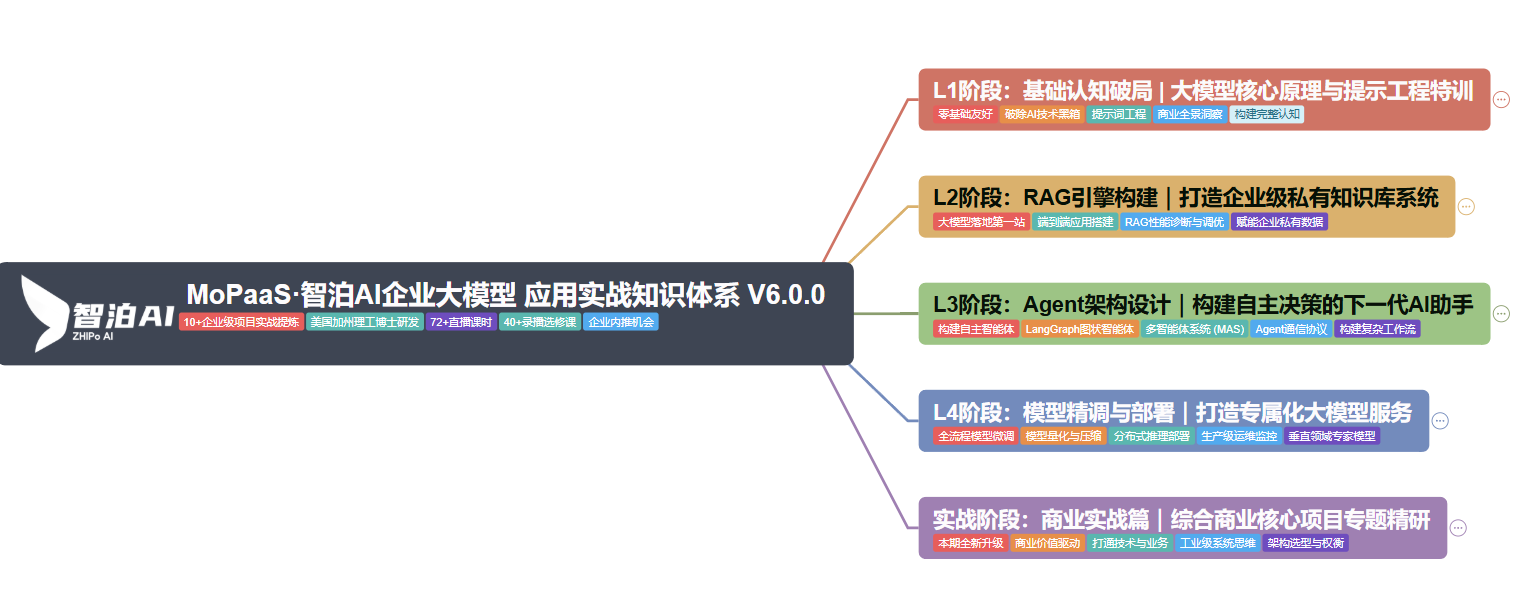
2. Large model learning books & documents
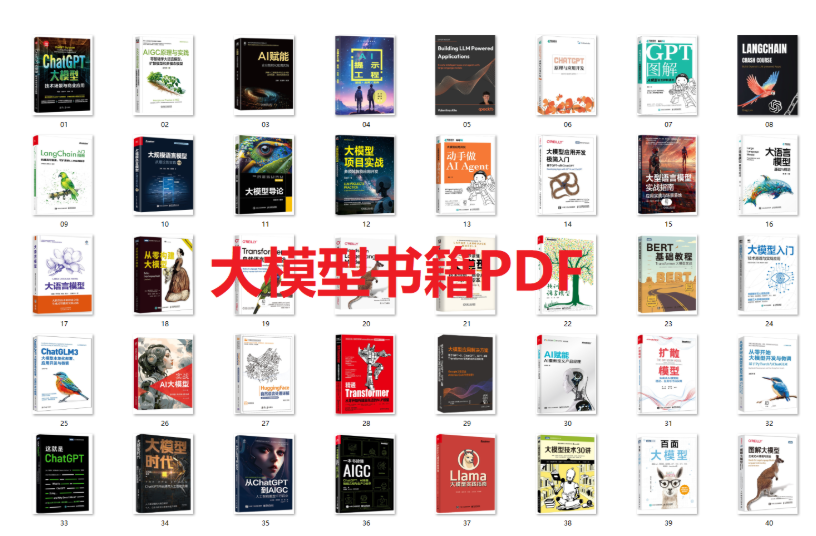
3. Latest AI large model industry reports

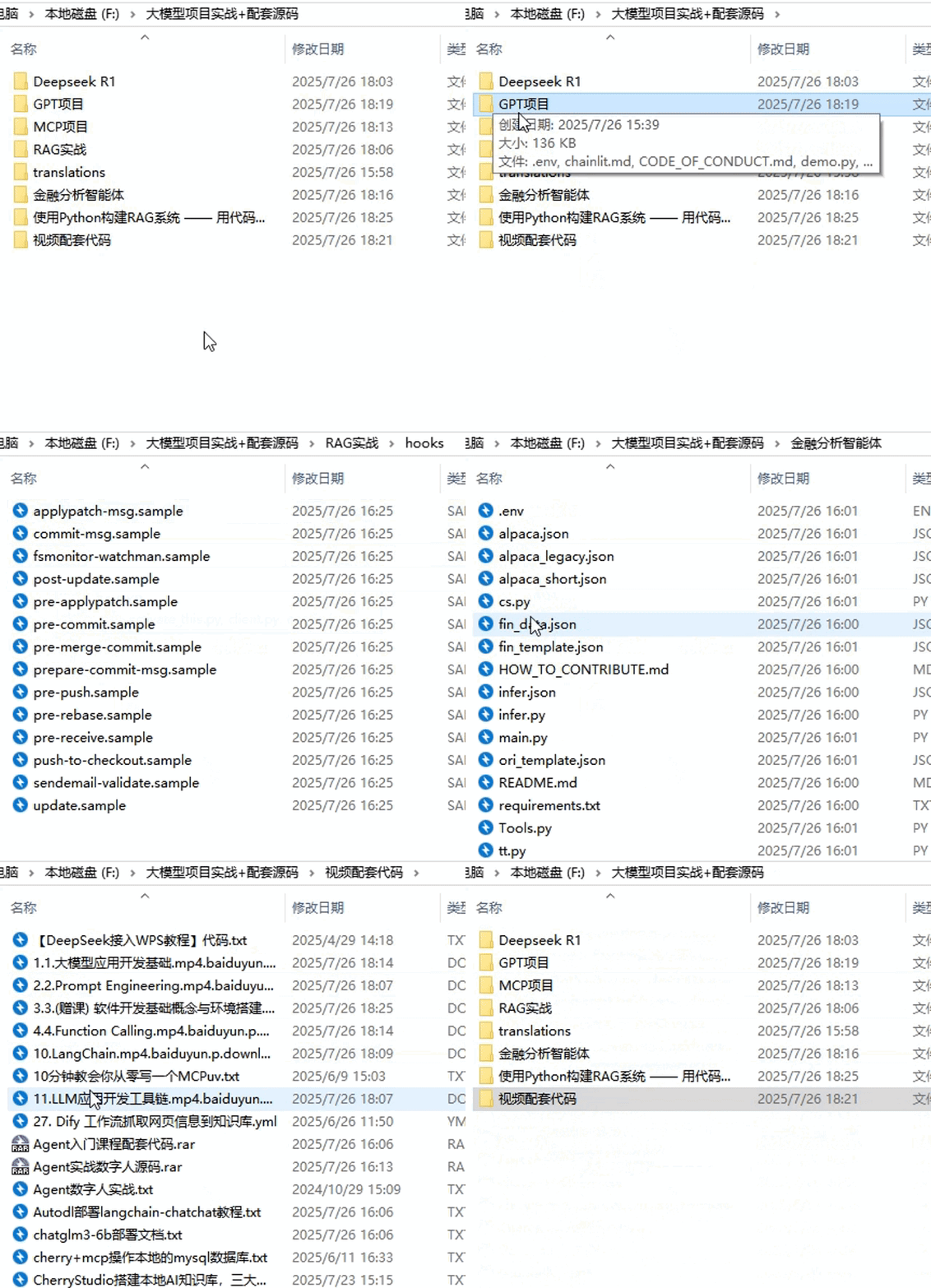
4. Large model hands-on projects & accompanying source code
5. Large model interview questions from major tech companies

A four-stage, finely structured learning plan (with timelines you can follow directly)
Combining the resources above, we've put together a practical four-stage learning plan with a total duration of about 2 months. Beginners can progress step by step, while programmers can adjust the pace based on their own foundation, efficiently mastering core large model skills and quickly making the leap from "getting started" to "being able to ship and pass interviews."
Stage 1 (10 days): Beginner applications
This stage gives you the most cutting-edge understanding of large model AI, so that your grasp of it surpasses 95% of people. You'll be able to offer advanced, non-bandwagon, down-to-earth insights in relevant discussions. While others can only chat with AI, you'll be able to train AI and use code to connect large models with business.
- What can large model AI do?
- How do large models acquire "intelligence"?
- The core mindset for using AI well
- Business architecture for large model applications
- Technical architecture for large model applications
- Code example: feeding new knowledge into GPT-3.5
- The meaning and core ideas of prompt engineering
- Typical structure of a Prompt
- Instruction tuning methodology
- Chain of thought and tree of thought
- Prompt attacks and defenses
- …
Stage 2 (30 days): Advanced applications
In this stage, we officially move into advanced hands-on learning with large model AI: learning to build a private knowledge base and extend AI's capabilities, and quickly developing a complete agent-based chatbot. You'll master the most powerful large model development frameworks and keep up with the latest technical advances. Suitable for Python and JavaScript programmers.
- Why build RAG
- Building a simple ChatPDF
- Basic concepts of retrieval
- What are vector representations (Embeddings)
- Vector databases and vector retrieval
- RAG based on vector retrieval
- Extended knowledge for building RAG systems
- Introduction to hybrid retrieval and RAG-Fusion
- Local deployment of vector models
- …
Stage 3 (30 days): Model training
Congratulations—if you've made it this far, you can basically land a large model AI-related job, and you can even train your own GPT! Through fine-tuning, you'll train your own vertical large model, independently train open-source multimodal large models, and master more technical approaches.
At this point, about 2 months have passed. You've become an "AI kid." So, do you want to keep exploring?
- Why build RAG
- What is a model
- What is model training
- Introduction to solvers & loss functions
- Mini experiment 2: hand-writing a simple neural network and training it
- What are training/pre-training/fine-tuning/lightweight fine-tuning
- Introduction to the Transformer architecture
- Lightweight fine-tuning
- Building experimental datasets
- …
Stage 4 (20 days): Closing the business loop
Gain a solid understanding of global large models in terms of performance, throughput, cost, and more; deploy large models in a variety of environments, both cloud and local; find the project/entrepreneurial direction that suits you; and become an AI-armed product manager.
- Hardware selection
- A guided tour of global large models
- Using domestic large model services
- Setting up an OpenAI proxy
- Warm-up: deploying Stable Diffusion on Alibaba Cloud PAI
- Running large models on your local computer
- Private deployment of large models
- Deploying large models with vLLM
- Case study: how to elegantly deploy an open-source large model privately on Alibaba Cloud
- Deploying an open-source LLM project
- Content safety
- Internet information service algorithm registration
- …
👇👇Scan the code to get everything for free👇👇
6. Are these materials really useful?
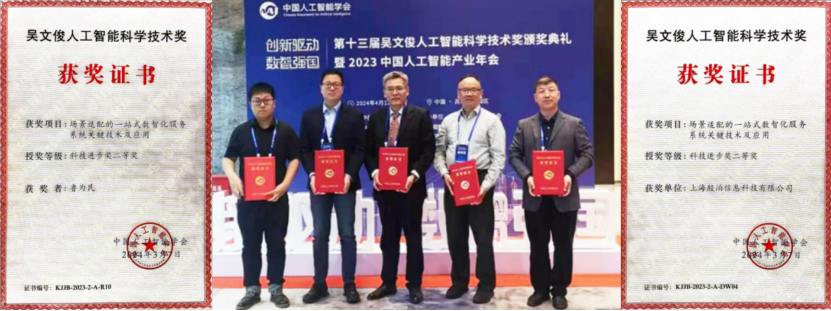
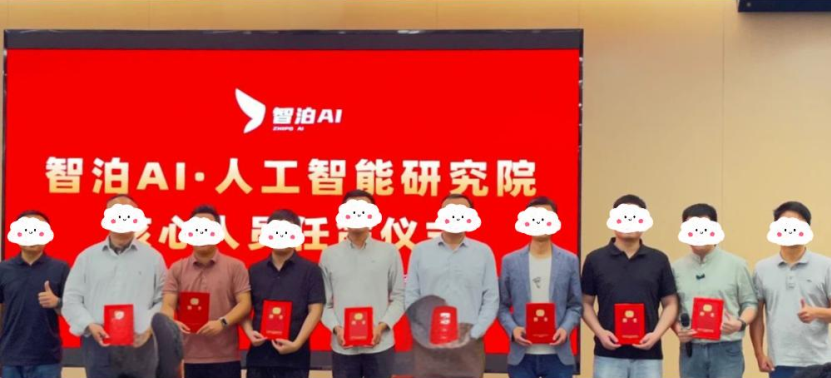
These materials were jointly compiled by me and Dr. Lu Weimin (Bachelor's degree from Tsinghua University in Beijing and PhD from Caltech in the US), currently CEO of Shanghai Yinbo Information Technology. The MoPaaS cloud platform he founded has received Forrester's global "Strong Performer" certification and serves 1,000+ enterprises including CASIC and State Grid. He has published 50+ papers as first author in IEEE Transactions and holds 35 Chinese and American patents, including a reinforcement learning patent for NASA JPL's Mars exploration system. This AI large model course was developed under the leadership of Professor Lu Weimin, a Tsinghua-Caltech dual-degree PhD and winner of the Wu Wenjun AI Award.
 The materials cover all kinds of video tutorials and hands-on projects from beginner to advanced. Whether you're a complete beginner or a technical person with some foundation, these materials will absolutely help you boost your salary and transition into a large model role.
This complete version of the large model AI learning materials has been uploaded to CSDN. If you need them, scan the official CSDN-certified QR code below via WeChat to get them for free [guaranteed 100% free].
保证100%免费
】

AtomGit is a new-generation open-source and AI collaboration platform jointly launched by the OpenAtom Foundation together with ecosystem partners such as CSDN. Adhering to the principles of "openness, neutrality, and public benefit," the platform integrates code hosting, model sharing, dataset hosting, agent development experience, and computing power services, providing developers with a one-stop experience from development and training to deployment.
More recommendations