The sharpest line in the book is that no algorithm can save bad training data—it's practically a job description for an FDE, and four chapters are devoted to exactly how to deal with it.
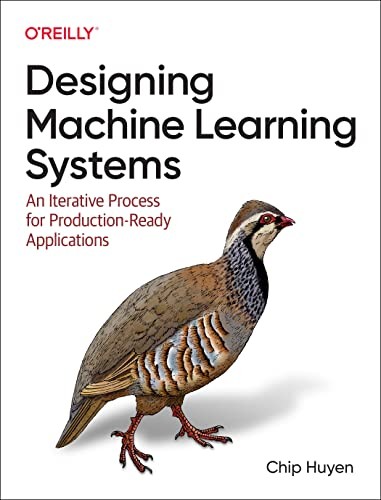
Designing Machine Learning Systems · Chip Huyen ·
Key Takeaways
- Chip Huyen's book (O'Reilly, 2022) grew out of Stanford's CS 329S course and treats ML systems as a whole.
- For FDEs, the core is Chapters 3, 4, 9, and 10: data, training data, continual learning, and MLOps infrastructure.
- Three points worth remembering: even the best algorithm can't save bad data; class imbalance is the norm; and build vs. buy is a recurring question.
This is a book about machine learning, yet its most memorable line is: the algorithm can't save you. If the training data is poor, no algorithm can perform well. For a Forward Deployed Engineer (FDE), this line is practically a job description.
The book is Designing Machine Learning Systems by Chip Huyen, published by O'Reilly in 2022. It grew out of the CS 329S course Chip Huyen taught at Stanford, whose goal was to provide an iterative framework for building ML systems that run in the real world.
You don't need to start from page one. FDEs in the field typically have to solve four things: ingesting the customer's data, getting training data that's good enough, keeping models from going stale, and deciding whether to build or buy infrastructure. Chapters 3, 4, 9, and 10 map exactly to these four things.
Why is a "holistic view" book a good fit for FDEs?
In the book's introduction page, the author says the book takes a holistic view of designing ML systems. From how to process and construct training data to which features to choose, every decision should be weighed against the goals of the whole system rather than considered in isolation.
The book's official GitHub repository opens by stating that ML systems are both complex and heterogeneous, and the goal is to build systems that are reliable, scalable, and maintainable. An FDE's work revolves precisely around this "heterogeneity": every customer has their own data types and constraints, so systems thinking is more valuable than any tuning trick.
Data formats are a promise to the customer
Chapter 3, "Data Engineering Fundamentals," contains a line worth copying down: for structured data, the code that writes the data must assume its structure. So when integrating customer data, choosing a storage format is not a minor matter—it's a contract between your system and theirs.
The chapter also distinguishes two paths. Data processed in batches produces static features; data flowing through real-time transmission, usually handled by stream processing engines, produces dynamic features.
Imagine a delivery company that wants to predict which orders will be canceled. "Average orders per buyer per month" changes slowly, so recomputing it nightly from an export file is enough—that's a batch feature. "Number of times the buyer has changed the address in the past 10 minutes" would be meaningless if computed the next morning—that's a streaming feature.
It's best to develop the habit of classifying features this way in your first week, because the answer determines what architecture you propose. If all the important features are batch features, you may not need to touch streaming infrastructure for now.
95% accuracy might catch nothing
Chapter 4, "Training Data," points out that the quality of training data determines model performance, and no clever algorithm can compensate for it. It also highlights an unsettling fact: in real-world data, class imbalance is the norm, not the exception.
Do a quick calculation. Suppose a customer hands over 1,000 transactions, of which 950 are legitimate and 50 are fraudulent. A lazy model that predicts every transaction as "legitimate" gets 950 out of 1,000 right—95% accuracy—but catches none of the 50 fraudulent ones.
That 95% looks great on a demo slide, but the customer hired you precisely for those 50 fraudulent transactions. So in the first working meeting, ask for the label distribution before discussing which model to use; and when reporting results, break them down by class rather than giving a single number.
The real work begins after the demo
Chapter 9 discusses continual learning and testing in production, arguing that these are ML-specific problems but are mainly solved through infrastructure. The author also pushes back on the concern that "stream processing is hard and expensive": stream processing technology is already quite mature.
Chapter 10 covers MLOps infrastructure and tooling, noting that the ML platform is an emerging team. When building infrastructure, the build-vs-buy question troubles engineering managers and CTOs alike, and the book admits there is still no consensus on what an ML platform should include.
This gap is exactly where an FDE can have a voice, because you're the first to see with your own eyes what the customer lacks. A one-page build-vs-buy analysis grounded in the customer's actual situation is often more persuasive than any generic architecture diagram.
When should you turn to which chapter?
Reading once isn't enough—the value of these four chapters lies in knowing which page to return to when a project gets stuck. The table below is a suggested checklist you can pin next to your desk.
| Situation in the project | Which chapter to turn to | What to do immediately |
|---|---|---|
| Customer sends data exported from a legacy system | 3 | Write down the structure the data-writing code assumes; settle the format before building the data pipeline |
| Some features need minute-level updates | 3 | Route static features through batch processing; separate out the dynamic features that need stream processing |
| The demo model looks good, but the customer finds it making wrong judgments | 4 | Compute the label distribution and report results by class |
| The model needs frequent updates after launch | 9 | Treat it as an infrastructure problem; don't dismiss stream processing just because it seems hard and expensive |
| The CTO asks whether to build or buy | 10 | Write a one-page build-vs-buy analysis based on the customer's actual situation |
What reading order gets you productive as an FDE fastest?
A reasonable order is Chapters 3, 4, 9, and 10, with the rest saved for when a project calls for them. Before opening the book, skim the chapter summaries at github.com/chiphuyen/dmls-book so you have a map in mind.
The author's book page is at huyenchip.com/books, and the course materials are at stanford-cs329s.github.io. If you do backend or data work and are familiar with data pipelines, these four chapters will connect naturally with your existing experience.
When reading an FDE job description, try sorting each requirement into these four chapters: requirements related to data and training data map to Chapters 3 and 4; requirements related to model operations and infrastructure map to Chapters 9 and 10.
On a resume, a small project that includes both batch and streaming features, plus a note on how you discovered and handled class imbalance, carries more weight than a line saying "familiar with machine learning."
After reading these four chapters, your algorithm skills may not improve much. But you'll ask customers the right questions earlier—and for an FDE, that's the real advantage.
Was this article helpful?
Thanks for your feedback!