TL;DR
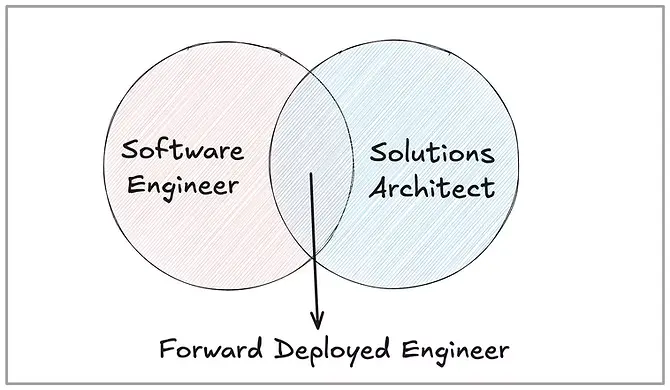
What Is a Forward-Deployed Engineer?
How Does the Forward-Deployed Engineer Model Work Within Palantir Technologies?
Key Skills Required for a Forward-Deployed Engineer to Bring Great ROI
| Capability | Primary Language or Tool | Business Value |
| Data Engineering | SQL, Python | Builds data pipelines and schema connections |
| Systems Engineering | C++, Java | Optimizes backend performance and client APIs |
| Web Development | JavaScript, React | Crafts client-facing tools and user interfaces |
| Business Discovery | Stakeholder interviews | Uncovers operational bottlenecks and maps workflows |
Forward Deployed Engineer vs Solutions Engineer
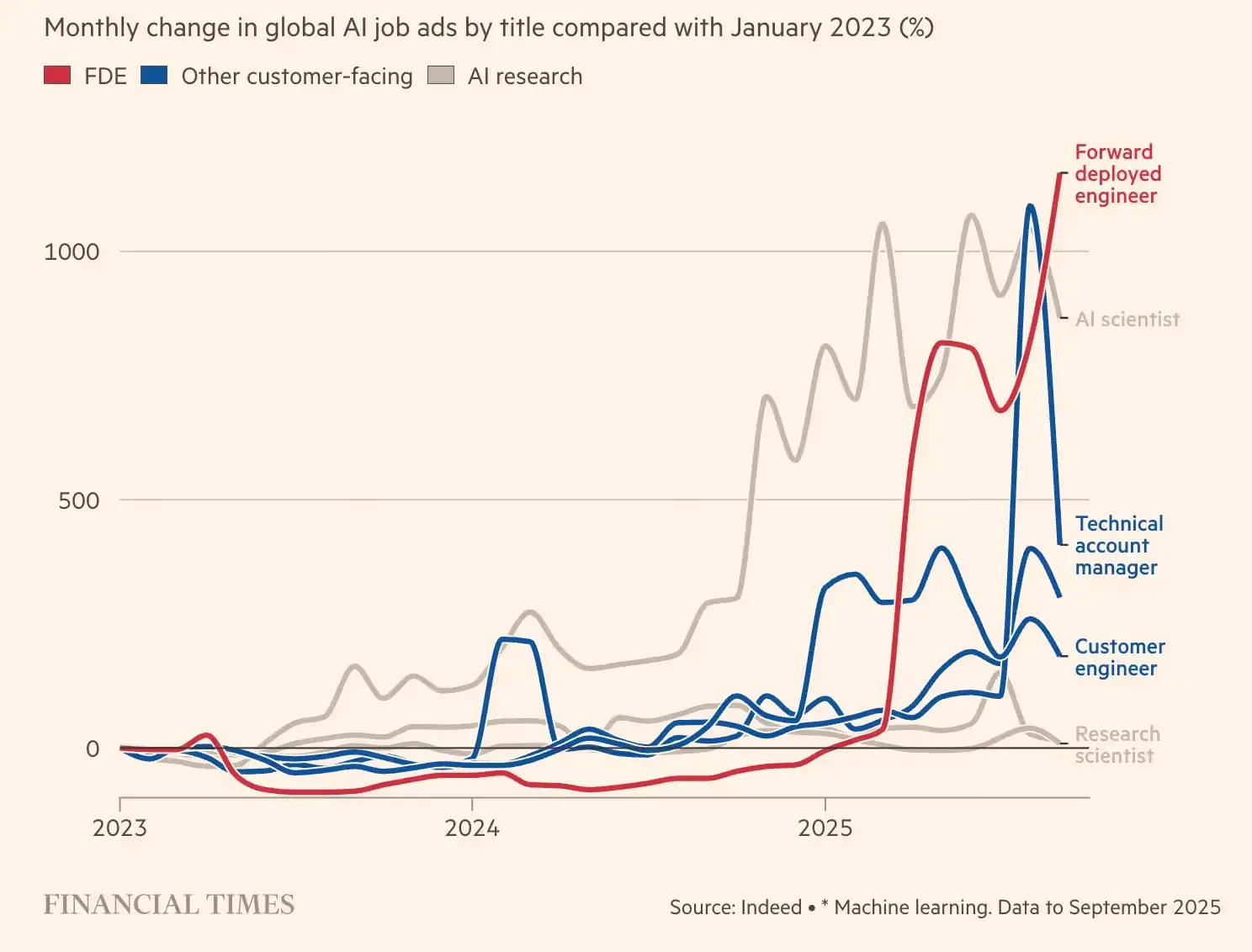
Why Is the FDE Model Gaining Traction in Enterprise AI Tech and Professional Services?
When Do You Actually Need an FDE?
| Indicator | Deploy Embedded Engineers | Stick to Standard Support |
|---|---|---|
| Contract Value (ACV) | High ($150,000 to $1M+) | Low to Medium (Under $50,000) |
| Data Environment | Chaotic databases, legacy schemas | Clean, standardized APIs |
| Regulatory Requirements | High (Finance, Healthcare, Defense) | Low (General productivity tools) |
| Delivery Complexity | High (Requires custom models, pipelines) | Low (Out-of-the-box installation) |
When Should a Startup Hire a Forward-Deployed Engineer?
Challenges of Working With an FDE
The first challenge is cost.FDEs are typically highly experienced engineers with specialized technical skills, making their involvement significantly more expensive than conventional implementation or IT resources. When an enterprise requires an FDE to work closely with its teams for several months, the total cost can become substantial. Organizations therefore need to ensure that the expected operational, financial, or strategic value of the deployment justifies the investment.
Second, companies can fall into the feature garage trap.Because FDEs are capable of building highly customized solutions, internal teams may continuously request one-off scripts, integrations, dashboards, or workflow modifications. Over time, this can create a growing layer of customer-specific technology that becomes difficult to maintain and creates dependency on the FDE. Enterprises should therefore distinguish between temporary implementation work and capabilities that should ultimately become part of the vendor's core product.
Organizational integration is another challenge.FDEs frequently operate between the vendor's engineering organization and the customer's internal teams. If responsibilities are not clearly defined, they can overlap with internal developers, architects, data engineers, or IT teams. Establishing clear ownership, communication channels, and escalation processes is essential to prevent duplicated work and ensure that the FDE complements rather than replaces internal technical capabilities.
Knowledge retention can also become a concern.FDEs often develop an unusually deep understanding of the customer's infrastructure, data, workflows, and business processes. If that knowledge remains concentrated in one or two individuals, the customer can become dependent on specific engineers. Organizations should therefore require sufficient documentation, knowledge transfer, and internal enablement throughout the engagement.
Security and governance present additional complexity.FDEs may require access to sensitive data, production environments, internal systems, and proprietary infrastructure. Customers must establish appropriate access controls, monitoring, data-isolation policies, and offboarding procedures while still giving the engineers enough access to perform their work effectively.
Finally, FDE engagements can create organizational dependency.This happens if the customer begins relying on external engineers for capabilities that should ultimately reside within its own technical organization. The goal should not be to permanently outsource critical technical knowledge, but to use the FDE as an accelerator: helping internal teams deploy the platform, solve complex integration problems, establish best practices, and eventually operate the resulting system independently.
Comparative Analysis of Post-Sales and Engineering Roles
| Operational Dimension | Field-Embedded Developer (FDE / FDSE) | Core Software Engineer (SWE) | Solutions Architect (Pre-Sales SE) | Implementation Consultant |
| Primary Structural Alignment | Single customer environment and workflows | Foundational platform architecture and multi-tenant reusability | Sales pipeline validation and proof-of-concept development | Project timeline management, checklists, and basic setup |
| Production Code Authority | Yes; extends platform capabilities and writes custom code | Yes; develops and optimizes core platform features | Minimal; constructs temporary demonstrations and scoping blueprints | No; confined entirely to declarative software configurations |
| Customer Proximity | Highly embedded (frequently on-site with client teams) | Low (isolated behind internal ticketing systems) | Moderate (focused on technical buyers and sales cycles) | High (focused on business user onboarding and coordination) |
| Integration Focus | Unifying legacy schemas, data cleansing, and API mapping | Scaling distributed microservices and infrastructure stability | High-level system scoping and contract validation | Tracking implementation checklists and coordinating schedules |
| Core Success Metric | Direct customer business outcomes and long-term retention | Feature velocity, code coverage, and platform uptime | Deal closure rates and technical scoping accuracy | On-time project delivery and onboarding satisfaction |
Key Compensation Models for Forward-Deployed Engineers
| Role or Employer | Compensation Range (Total) | Key Structural Driver |
| Palantir FDSE (FDE) | $189k – $431k (Median: $215k) | Cash base with standard equity |
| OpenAI or Anthropic FDE | $350k – $550k | Heavy premium equity grants |
| Palantir Deployment Strategist | $110k – $170k | Operational focus rather than engineering |
| Staff-Level FDE (Big Tech) | $630k+ | High strategic ownership of enterprise deals |
| InterCode Embedded FDE | $85k – $120k | Flexible contract model, global technical talent |
Why InterCode Is the Optimal Forward Deployed Engineering Partner

Talk to InterCodeabout getting a forward-deployed engineer in front of your client this week.
Conclusion
- Designate a clear separation of labor between pre-sales technical scoping, relationship management, and post-sales custom implementation.
- Establish tight, automated programmatic synchronization between front-line developers and core platform R&D teams to ensure client-specific discoveries are systematically baked back into the multi-tenant core platform.
- Treat the embedded technical division as a high-margin productization strategy rather than a low-margin professional services cost center, aligning hiring processes and equity-heavy compensation structures to attract elite engineering talent.
- Implement dedicated professional services automation and delivery infrastructure to eliminate administrative friction, maximizing the time forward-deployed developers spend on active systems programming.
- Structure core platform software architectures with robust API boundaries, dynamic ontologies, and decoupled extension layers to enable rapid front-line customization without accumulating technical debt in the core codebase.