This article comes from the WeChat public account AI Humanist by杉森楠, author: 杉森楠, original title: "A 10,000-Word Explanation of Why FDE Is Nonsense in China"
It has been a long time since I last wrote a 10,000-word article. Recently, the term FDE has become very popular, and quite a few friends have asked me to talk about it.
Over the past six months, I have been closely following the FDE model. Two months ago, OpenAI and Anthropic almost on the same day each established new deployment companies.
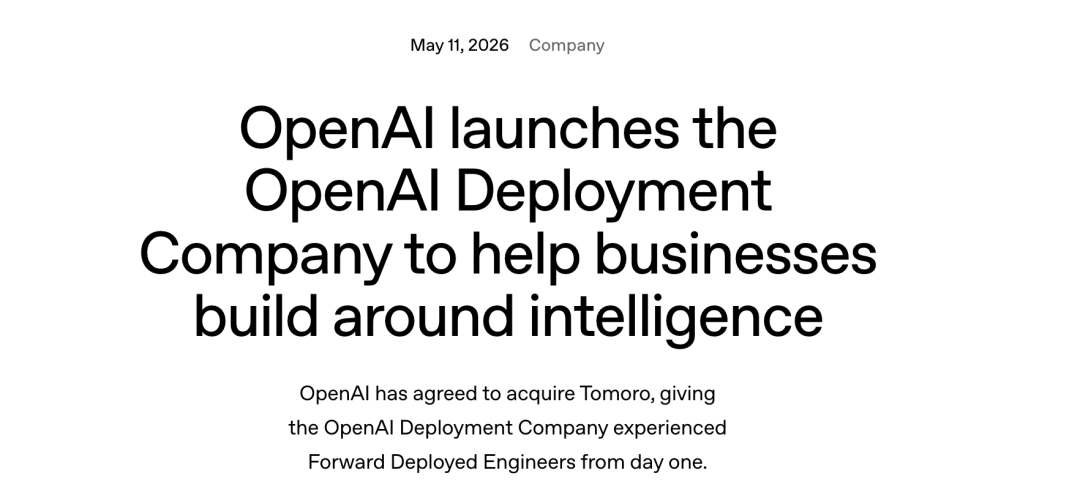
Anthropic, together with Blackstone and Goldman Sachs, founded an AI-native enterprise services company. OpenAI's newly established deployment company has an initial investment of over $4 billion. Reuters also disclosed that OpenAI promised the private equity investors in the joint venture a 17.5% annual return over five years.
The CEO of Google Cloud personally posted FDE job openings on LinkedIn, releasing 59 positions in one go. Accenture, together with Microsoft, set up an FDE team, and EY and McKinsey's QuantumBlack are also following suit.
Major companies are all vigorously promoting the FDE model, and this wave of enthusiasm has crossed the Pacific to China, becoming a hot topic. But I have found that discussions of FDE in the Chinese community have seriously deviated from its original definition.
What exactly is FDE
OpenAI has a clear definition of the FDE role on the Careers page of its official website.
🔍Info
The Forward Deployed Engineering team works with customers to turn research breakthroughs into production systems, working at the intersection of customer engagement and core platform development.
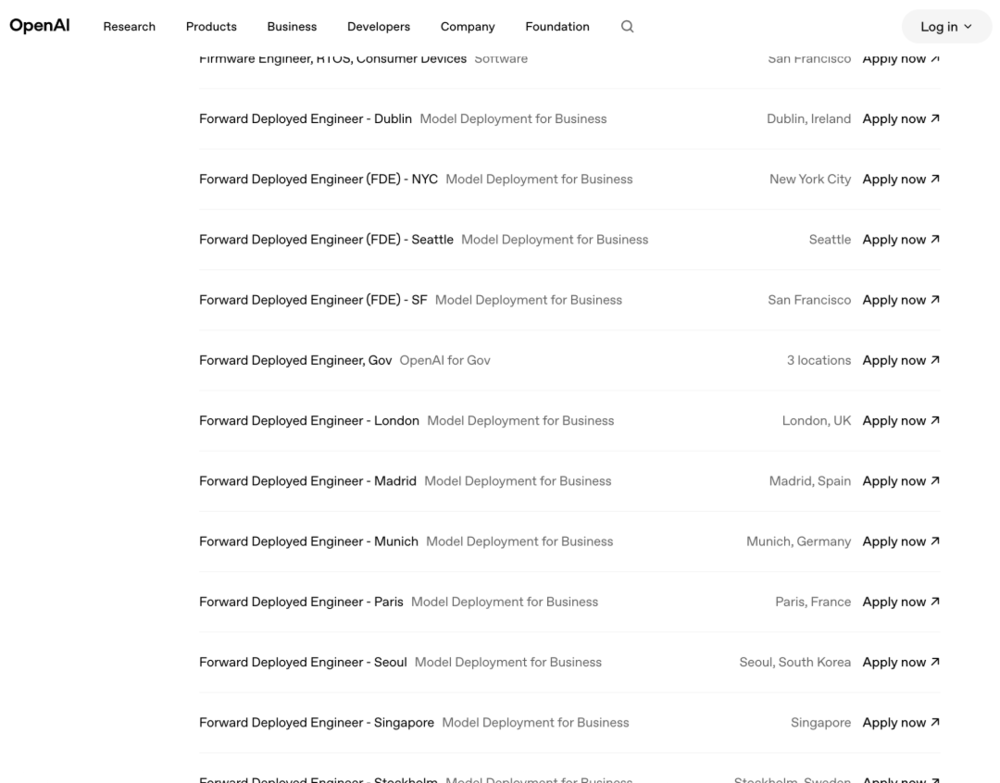
The core of the current debate about FDE is that this role has existed for a long time, and many people believe it is just a rebranding in the AI context. When talking about FDE, you inevitably have to mention Palantir.
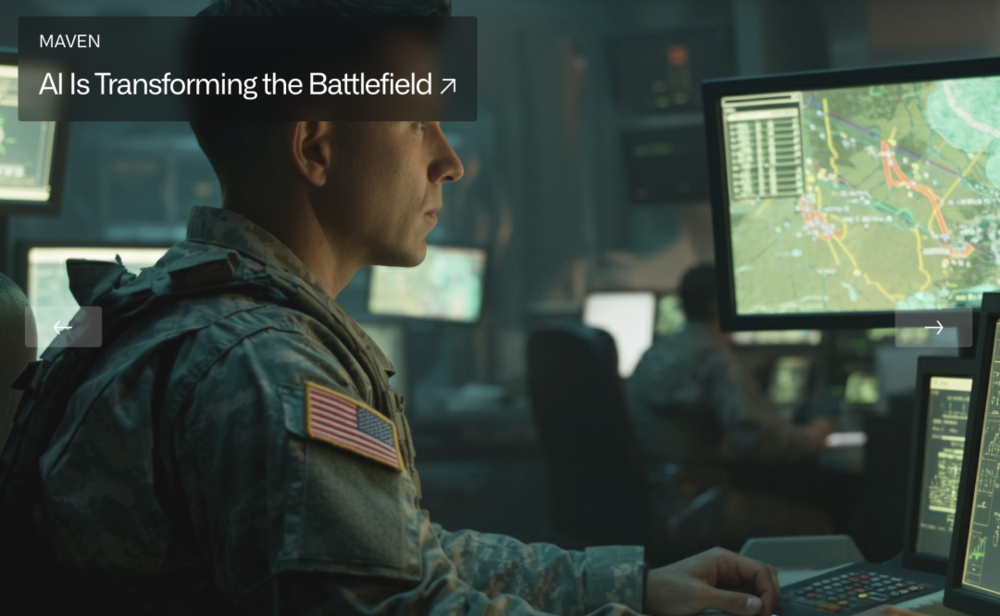
Palantir is an American big data integration and analytics platform software company that originally handled classified data for intelligence and defense agencies such as the CIA and the military. Its co-founder is Peter Thiel, the founder of PayPal and a godfather-level figure in Silicon Valley.
Palantir has three major products, and its core business model is acquire→expand→scale: first have FDEs embed at customer sites, then productize and consolidate the on-site experience into the platform, and finally achieve profitable scale through software subscriptions.
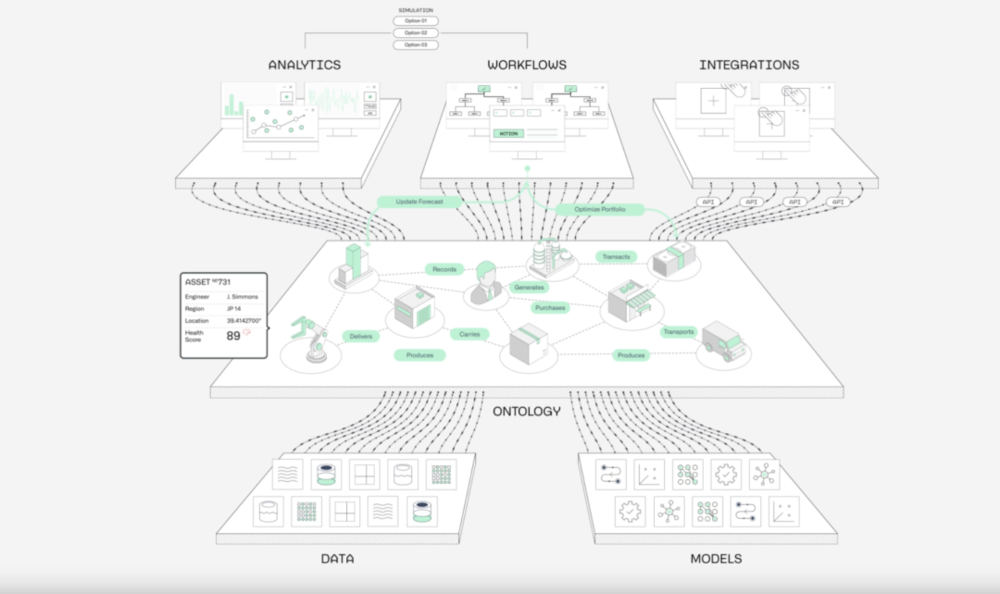
Overall, FDE is Palantir's on-site embedding model from more than a decade ago.
And this model originated from a real predicament Palantir was forced into in its early years.
Palantir was founded in 2003, and its earliest clients were intelligence and defense agencies such as the CIA, the FBI, and the military. These clients have a notable characteristic: they cannot and will not spell out their requirements clearly. The data is classified, the workflows are classified, and even the problems they encounter are themselves classified.
In this situation, it is impossible to build the software the way ordinary SaaS does—send a requirements document and hold a few remote meetings. Palantir's solution was to send engineers directly to the client for long-term on-site embedding, analyzing workflows on site, finding bottlenecks, and solving problems step by step.
In this process, two classic role divisions formed within Palantir: Echo and Delta. Echo is the embedded analyst, responsible for understanding the language of the client's professional domain and uncovering the real pain points.
Delta is the deployment engineer, responsible for quickly building prototypes on site, completing data ingestion and integration, and transforming Palantir's platform into a system the client can use.
The title FDE, which formally appeared later, mainly evolved from the Delta role, meaning deploying engineers to the "customer front line."
On the surface, this model is just on-site work, seemingly no different from outsourcing or traditional consulting. But Palantir has a key design: a loop between on-site customization and productization. The FDE customizes a solution at the client site to solve specific problems; this experience and knowledge are brought back to Palantir headquarters, where the product team determines which are common requirements and consolidates all of them into the platform.
By the time the next client comes in, the platform already has these capabilities built in, and the FDE only needs to handle the remaining special customization needs. In this way, marginal costs decrease with each engagement.
Internally, Palantir calls this process "acquire, expand, scale": in the early stage, spare no expense on on-site embedding to win lighthouse clients; in the middle stage, expand the collaboration; in the later stage, achieve profitable scale through the products consolidated along the way. As a result, its financial statements show a gross margin at the level of software companies.
But this model is a typical heavy model, and extremely difficult.
Back then in Silicon Valley, this model was almost mocked by investors, who believed Palantir was not a software company at all. The reason is simple: it requires a large number of engineers and expands very slowly. An FDE on-site cycle can be as short as 2 to 3 months or as long as 2 to 3 years; each client requires cultivating an on-site team, which looks just like outsourcing.
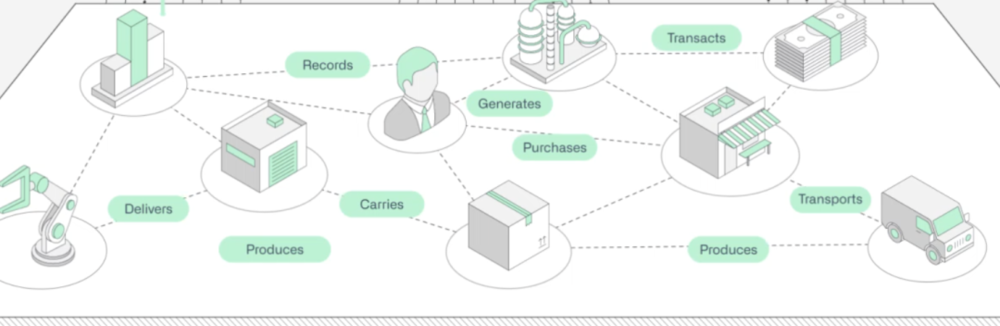
The FDEs themselves also work very hard—frequent business trips, living in the cities where clients are located, and work spanning a wide range, possibly involving engineering, consulting, and even dining with clients.
In 2026, this concept became hot again in the AI context because AI implementation has run into almost the same problem Palantir faced when serving CIA clients back then: model capabilities are ready-made, but every enterprise's data, permissions, workflows, and unwritten rules are black boxes. The clients themselves may not be able to articulate them, and remote meetings cannot get to the bottom of them at all—the only option is to send engineers on site.
So in many people's view, what OpenAI, Anthropic, and Google are doing now is simply repackaging Palantir's Echo and Delta roles in the AI context.
And now, when AI companies recruit FDEs, the most ideal resume background has shifted from the past 985/211 universities to former Palantir FDEs.
But FDE in the AI context, especially FDE in the Chinese environment, is a very absurd thing, and has been criticized by many as over-marketing.
I have organized it comprehensively, and there are roughly five reasons.
Some are problems with the FDE model itself in the AI context, and some are additional obstacles brought by the Chinese business environment.
📝Note
1) Clients simply won't pay for the "exploration process"
2) FDEs can't make money
3) FDE-type versatile talents almost don't exist
4) FDE is essentially about quickly selling models to monetize them, which contradicts the essence of AI companies
5) Enterprise clients don't trust AI
Clients simply won't pay for the "exploration process"
The core value of the FDE model lies in its labor intensity: engineers need to embed on site, spending a lot of time in the client's workshops to first thoroughly understand the business, then sort out workflows based on the business, find pain points and bottlenecks, and finally build a complete system.
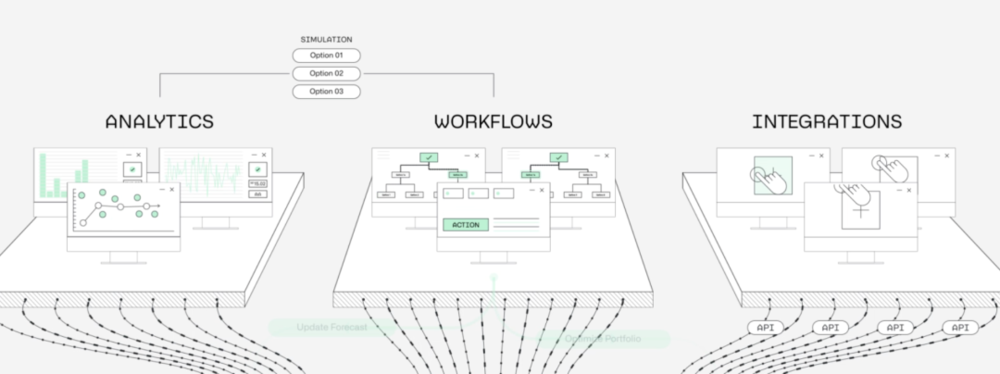
In Palantir's contracts, this period of exploration by the FDE together with the client is billable.
But China's logic is completely the opposite. The client's expectation when signing a contract is that you directly build the complete product and hand it over to me, and I just plug it into my existing processes. As for the vendor's time spent understanding the business, trial and error, and iteration, in the client's eyes it is all the FDE company's own cost, with nothing to do with the contract's value.
Under China's bidding system, the client basically only looks at the features and product capabilities you can provide. When all features can be satisfied, the lowest bidder wins—that is, the lowest evaluated price method. The FDE working with the client to understand how the entire business operates simply does not appear in the bidding contract, nor could it be written into the feature list.
The time an FDE invests is worth nothing at all in the bidding documents.
A very realistic scenario is that the client's and the FDE's expectations are completely misaligned. The FDE believes at least 3 months are needed to understand the business, but the client often thinks 3 days to 3 weeks in a few specific scenarios is enough.
The FDE believes the system needs many iterations to become stable, but the client thinks all iterations after the first version are costs the FDE side should bear on its own. Your first version must be perfect.
This is the fundamental reason why the FDE concept falls apart in the Chinese context.
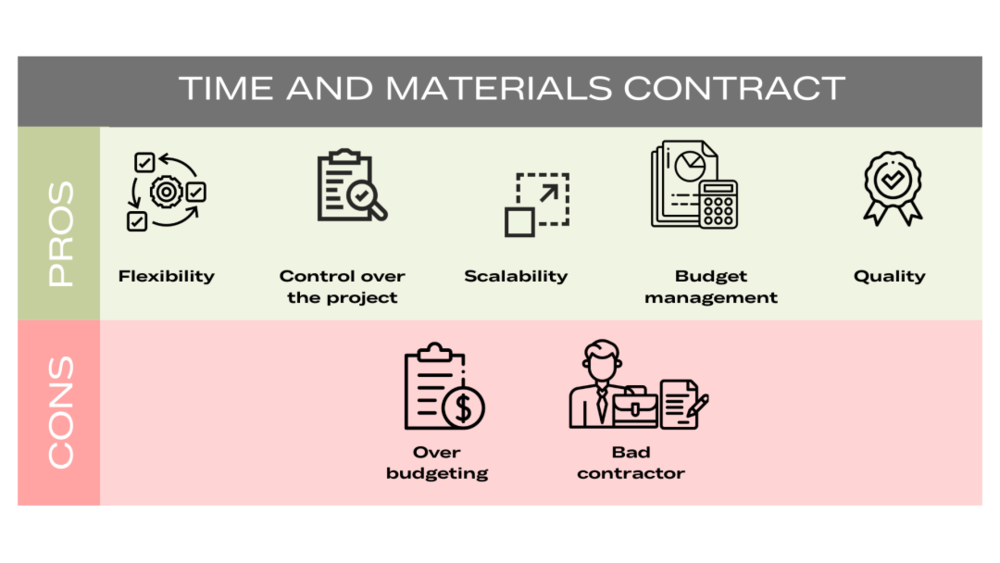
This model works in the US because of its unique commercial soil. American business and government procurement have foundational contract forms called Time and Materials and Cost Plus. Consulting firms like McKinsey, Accenture, and Deloitte all bill by the person-day (Per Diem), and clients take it for granted that consultants send experts to understand their business—and that this time must be paid for.
Accenture's consulting revenue exceeded $30 billion in fiscal 2024, with total revenue reaching $64.9 billion—consulting is a high-gross-margin business segment that can be billed independently. US government contracts even publicly list the Loading Labor Rate (fully loaded labor rate), with engineer roles at roughly $55 to over $190 per hour, increasing year by year.
Palantir writes the substantial on-site time of its FDEs into contracts for billing, and American clients don't find this strange, because it's decades of pricing inertia from the consulting industry. Bundling software with consulting is fully accepted in the US market.
In China, by contrast, fixed-price, results-oriented contracts remain the norm. Consulting is very hard to bill for separately. In ERP implementations, the consulting and research work by Yonyou, Kingdee, and Neusoft is often given away for free, with revenue ultimately coming from software licenses and ongoing operations and maintenance. Large enterprises and state-owned enterprises strongly prefer privatization and on-premises deployment, and SaaS penetration is very low.
In domestic ERP and government software projects, the consulting and research phase is essentially a role tied to the project for driving down prices—nowhere near Accenture's ability to list it as an independent, high-gross-margin revenue line.
The customer mindset is: you build the thing and sell it to me, and I pay for the finished product.
The FDE's time spent understanding the business is your own cost, unrelated to the contract price. It's absurd, but it is the reality. A concrete comparison: consulting accounts for more than half of Accenture's global revenue, all billed by the hour; whereas in the financial reports of Chinese IT service providers, implementation or consulting is almost never an independent, high-gross-margin revenue item.
This is the balance-sheet manifestation of "exploration isn't worth anything."
FDEs Can't Make Money
Palantir's profit model is itself quite unusual.
The company was founded in 2003 and didn't achieve its first full-year GAAP profit until 2023, twenty years later. During those 20 years of losses, it survived primarily on primary-market and IPO fundraising.
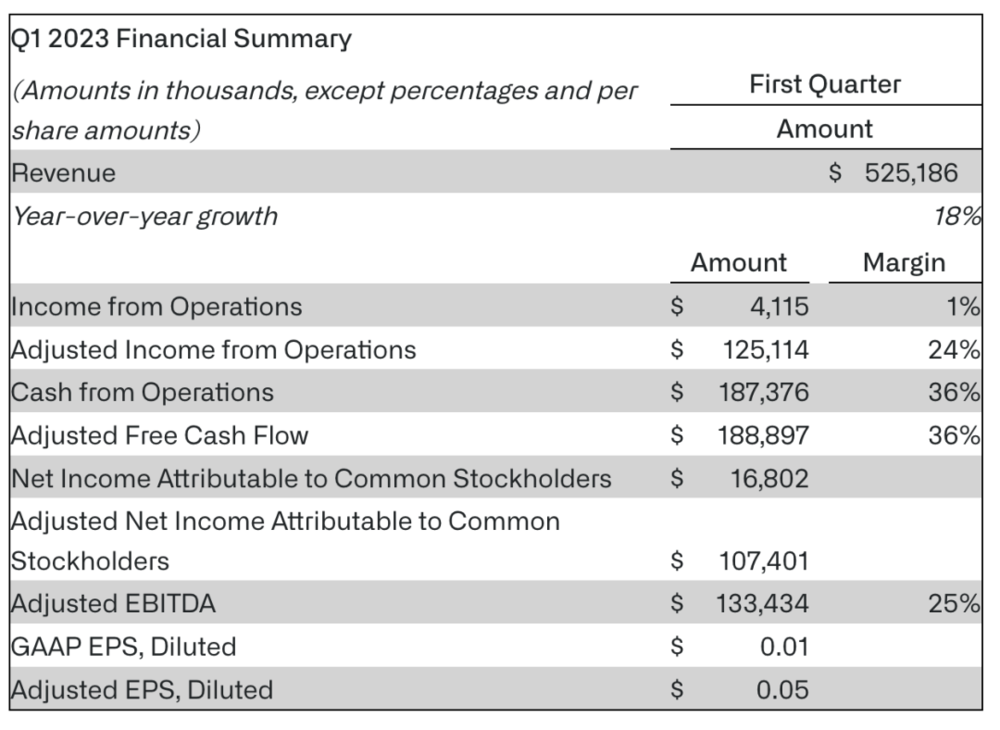
And in the AI context, it's fair to say it's already a settled conclusion that FDEs can barely make money.
Most capital markets simply don't allow a company to run long-term losses while also maintaining an expensive FDE team.
Palantir survived those 20 years and could afford its massive FDE team mainly for three reasons: high-gross-margin G-end (government) contracts, long-term subscriptions, and high renewal rates. A single FDE engineer's annual salary runs into hundreds of thousands of dollars. In China, virtually no ToB team is allowed to burn money like this to sustain a delivery team.
ERP leaders Yonyou and Kingdee have long been forced into price wars under pressure from SAP and Oracle, diluting their own gross margins—Yonyou Network posted a net loss of 2.061 billion yuan in 2024, and Kingdee International lost 142 million yuan, its fifth consecutive year of losses. So capital markets don't believe they can afford expensive FDE teams either.
Another key reason is the maturity of the American SaaS subscription model.
The industry commonly uses NRR (Net Revenue Retention) to measure company quality; high-quality SaaS companies have an NRR above 120%, meaning existing customers pay more year after year. In the US SaaS industry, a customer is an asset that can renew for many years, so vendors have the confidence to invest heavily in an FDE team in year one, knowing that money can be recouped over the following years.
Meanwhile, China's SaaS industry accounted for only 6.5% of the global market in 2024, with revenue of roughly $25.9 billion; the US enterprise software market alone had already reached $150.7 billion in the same period. China's cloud penetration rate is only 15.8%. Out of data-security concerns and inertia from existing IT investments, large enterprises and state-owned firms strongly prefer one-time license purchases and privatized deployment.
In the US, over 80% of SaaS revenue in 2024 came from subscriptions.
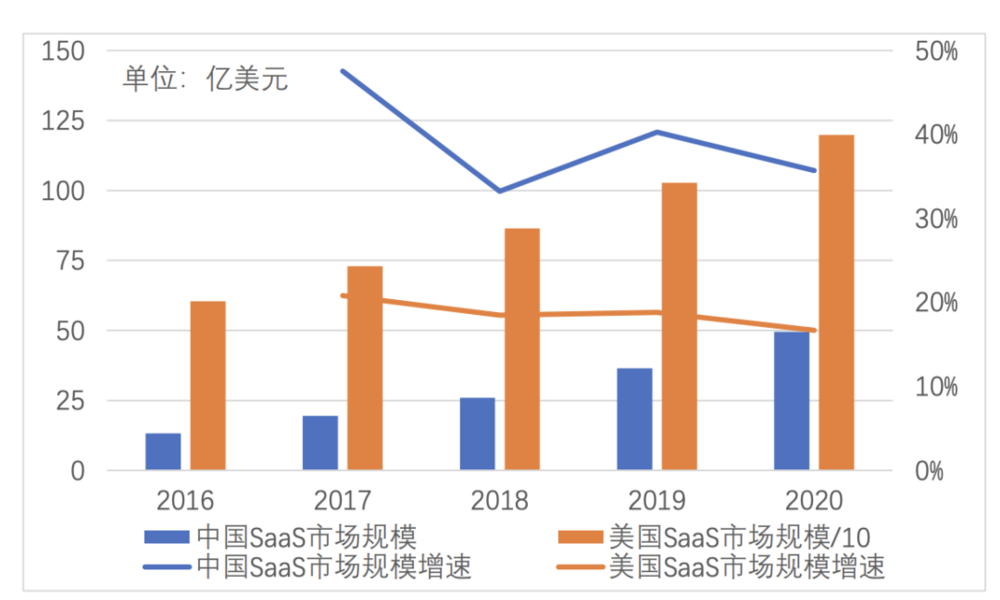
On the G-end (government) procurement side, the US Federal Acquisition Regulation (FAR) has a continuum from lowest price to best value. Among these, Best Value Tradeoff allows a technically stronger but more expensive proposal to win—when a product offers higher quality and lower risk, the government can pay a premium for it.
This is hard to imagine in the Chinese context. The US Congress even passed dedicated legislation in the FY2017 and FY2018 NDAA (National Defense Authorization Act) to steer the government toward greater use of the value tradeoff method, because it often delivers better overall value rather than just comparing prices.
A highly representative case is Palantir suing the US government. In June 2016, Palantir filed a bid protest against the US Army's DCGS-A project.

That project was a system the Army had developed in-house for 15 years at a cost of over $6 billion. Four months later, the Court of Federal Claims ruled in Palantir's favor, finding that the Army had violated the 1994 Federal Acquisition Streamlining Act by proceeding with in-house development without first conducting market research to evaluate commercially available products. The court even issued an injunction blocking the Army from continuing the procurement.
More dramatically, the government then appealed, but in 2018 the Federal Circuit Court of Appeals upheld the ruling. In 2019, Palantir went on to win the Army contract. To many, this is almost unimaginable.
In the Chinese B2B context, by contrast, lowest-price-wins and one-off-per-contract settlement are the norm. Winning a bid this year doesn't guarantee renewal next year, because next year there may be a vendor with a lower quote. Tenders can even feature 3 to 50 participating teams, nearly 80% of which are subcontracted teams from the same company, engaging in collusive low-price bidding.
Margins are so thin that vendors can barely sustain themselves.
In more extreme cases, the vendor extends an interest-free loan to the client, promising not to demand payment for five or even ten years. In such an environment, it's nearly impossible for anyone to be willing to fund an on-site engineer team that spends enormous time understanding the business without producing directly deliverable products.
Moreover, the entire performance evaluation system is completely misaligned. Revenue almost certainly follows projects, and KPIs focus mainly on signed contract value, collections, and per-head efficiency. An FDE stationed at a client site for 3 months may simply appear in the financials as pure cost with no corresponding revenue. This can even trigger internal power struggles within the client's company—the sales director can't explain the cost, and finance will never approve the budget. Using high-cost FDEs to serve low-ticket projects simply doesn't add up.
In summary, China still relies primarily on privatized deployment and one-off-per-contract settlement, SaaS payment habits are extremely weak, customers are essentially one-time buyers, and the upfront cost of doing FDE work simply cannot be recouped.
Chinese capital markets and investors demand rapid profitability from enterprise service companies, focusing mainly on signed contracts and collections—virtually no Chinese ToB team would ever be allowed to lose money for 20 years to sustain an FDE team.
Article 34 of China's Implementation Regulations of the Government Procurement Law explicitly stipulates that bid evaluation methods are divided into the lowest evaluated price method and the comprehensive scoring method, and that goods and services projects with uniform technical service standards shall use the lowest evaluated price method.
This goes beyond even the level of industry convention—it is a mandatory requirement of administrative regulation.
According to an article on Cnblogs, a 2023 special audit by the Guangdong Provincial Department of Finance showed that 72% of government software projects in the province were awarded via lowest-price bidding, with 41% of winning bids falling below the industry's reasonable cost line. This would be nearly impossible in the US.
Versatile Talent Is Almost Nonexistent
Next, let's look at the talent profile of the FDE.
The FDE is an extremely versatile hybrid talent who must also possess deep domain expertise in a vertical industry. An FDE in logistics can hardly become an FDE in content production, because without the corresponding industry know-how, they cannot produce industry-specific results.
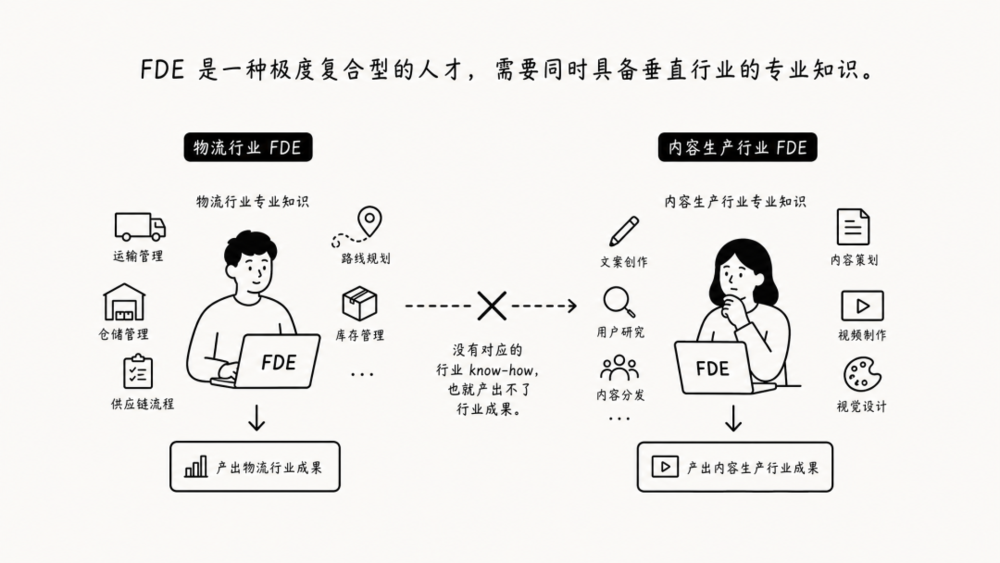
An FDE must possess multiple capabilities simultaneously: on the technical side, at minimum the ability to write code and abstract the client's business into data models; on the business side, the ability to build relationships with client staff on-site and obtain key information.
Such hybrid talent requires high-intensity cross-industry talent mobility as its foundation. The US has mature talent pipelines between consulting, the defense industry, and Silicon Valley, and for graduates of top universities, joining Palantir as an FDE is a respectable and well-paid career path.
Many of them later leave to start companies, and are known as the "Palantir Mafia."
In the US, the median total compensation for an FDE is about $210,000, and senior FDEs at Forward Deployed Engineering labs can even exceed $780,000. FDE is also the most common background among Palantir-origin founders. In each YC batch, there are more ex-Palantir founders than ex-Google employees, even though Google's headcount is roughly 50 times Palantir's.
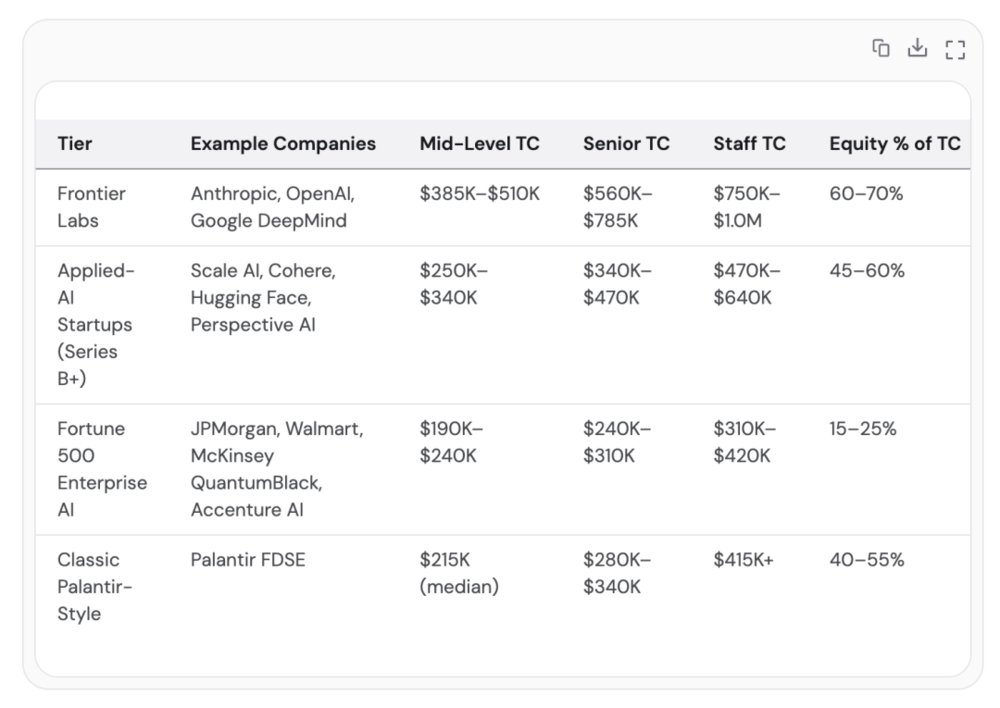
Hybrid technical and business capability is encouraged and highly valued in the US. Former Palantir employees have founded more than 100 companies, raising a cumulative $11.6 billion as of 2024.
This is why Palantir is called "the ultimate founder factory."
A few representative examples: Anduril was founded by ex-Palantir employees, raised $5 billion this May, and is valued at $61 billion; Blend in fintech, along with many other well-known companies, has founders with FDE backgrounds.
Joe Lonsdale founded 8VC, and Trae Stephens is a partner at Founders Fund. The US even has funds dedicated to investing in ex-Palantir founders, such as PalumniVC, which specifically invests in companies founded by Palantir alumni with former Palantir employees joining them.
In China, this is almost entirely untrue. Everyone has heard the domestic saying that "being a vendor is worse than being a dog."
The B2B pecking order is:
🔍Info
R&D > algorithms > product > pre-sales > implementation and delivery > on-site support.
The common understanding of "on-site support" in China, whether you're the client or the vendor, is that the vendor sends people to the client's site to suffer. The relationship is inherently unequal, and on-site work is even seen as "serving the client." Even if you give this role ten different titles and ultimately rename it FDE, in the client's eyes it's still the vendor.
Palantir's FDE is respectable precisely because it is a high-gross-margin software company that brings a powerful platform to help clients solve world-class problems, positioning itself almost like the client. But in China, delivery engineers are essentially vendors who, after losing bids at rock-bottom prices, are squeezed to deliver.
Both are on-site roles, but the power positions are completely opposite.
I looked up one case: a city hospital procuring a computerized physician order system received bids of 10 million, 8 million, and 50,000 yuan. Although the 50,000-yuan bid was ultimately ruled invalid for being below cost, this phenomenon of shoddy low-price bids crowding out quality solutions has become the underlying logic of the entire business environment.

In traditional ERP projects, software accounts for less than half the cost, with implementation taking up the vast majority. But in the client-vendor game, the client has nearly absolute power, and the vendor's implementation consultants are in a completely passive position. The industry-accepted career path is for a vendor implementation consultant's ultimate goal to be moving to the client side as an IT lead, seeking stability.
When practitioners of a role all want to escape after a few years, it can't be considered gilded at all, and carries no career premium.
As mentioned earlier, the median compensation for US FDEs is $210,000, and Forward Deployed Engineering labs can exceed $800,000. China is the complete opposite: the highest-paying directions for top engineers are algorithm R&D at big tech companies and startups going overseas, while delivery and implementation roles pay noticeably less. This is itself a market signal—the smartest young people are guided by economic incentives to do algorithms and R&D, not to be on-site doing business.
The economic incentives run completely counter to the logic of the FDE on-site model.
According to the latest industry survey data, as of September 2025, the starting salary for delivery and implementation engineers in China is about 100,000 to 150,000 yuan per year, while big tech R&D roles at the same level can reach 300,000 to 550,000 yuan per year. Senior implementation engineers with 5+ years of experience earn about 300,000 to 800,000 yuan, while the median for Alibaba P7 and ByteDance 2-2 at the same time is approaching one million.
Specifically, Yuchao—sorry, Yonyou's implementation and operations engineer position posted in June 2025 offered only 5,000 to 8,000 yuan per month with 13 months' pay; the company's overall average monthly salary is about 8,400 yuan, with the range for new hires even lower, between 6,000 and 8,000 yuan. Kingdee's ERP specialist salary is also only 5,000 to 8,000 yuan, implementation staff around 6,000 yuan, with some as low as 4,000 yuan.
The contrast is stark. In the US, FDE is the most common background among Palantir's founders, while the résumés of China's star founders are basically ex-Alibaba, ex-ByteDance, ex-Tencent, or graduates of top overseas universities—almost never "former delivery engineer at some vendor." Even in the AI context, the most common entries in founders' résumés are product leads and product managers; no one showcases vendor delivery experience as a résumé highlight.
According to ITJuzi's 2024 statistics, 90% of AI entrepreneurs come from major tech companies—Baidu, Alibaba, Tencent, Huawei, ByteDance. The template for star founders is ex-ByteDance, Baidu, or Huawei R&D; there are virtually no backgrounds from Yonyou, Kingdee, or vendor delivery roles.
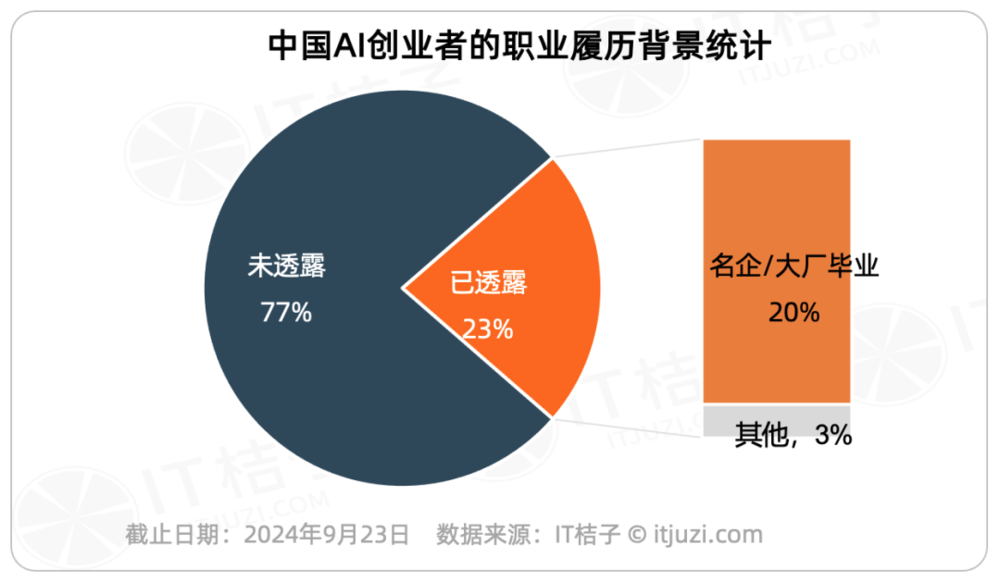
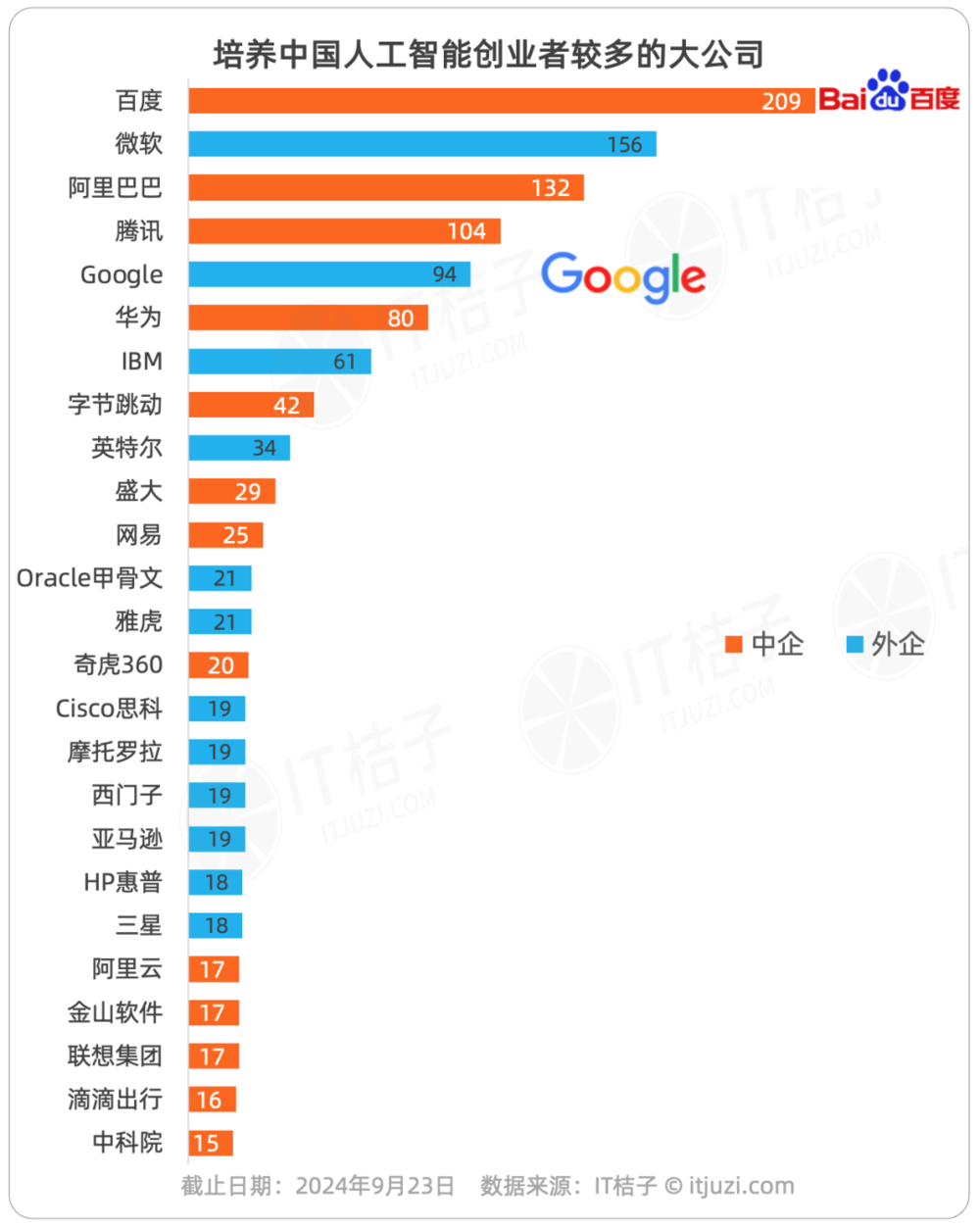
China has its own "Founder Factory" flywheel, but that flywheel spins at the big client-side tech companies, with delivery roles almost completely excluded.
FDE is essentially about quickly selling models/products and monetizing them
In the AI context, the core motivation for AI vendors to do FDE work is to quickly sell their models or products and monetize them.
They are often unwilling to share business outcomes with enterprises. Once the model is sold, how the enterprise uses it and what results it gets is basically the enterprise's own problem. This makes it easy for enterprises to quickly integrate model products yet see no results, and the overall reputation of FDE gets burned in the process.
This is clearly visible from the AI vendors' own financials.
OpenAI's 2026 report shows annualized revenue of about $20 billion, but a net loss of $17 billion, an operating margin of roughly negative 70%—losing $1.22 for every dollar earned. Internal plans call for a cumulative investment of about $115 billion before 2029 to hope to break even. So they are seeking hundreds of billions in financing while posting massive losses.
Anthropic's annualized revenue grew rapidly from $1 billion at the start of 2025 to about $4.7 billion, with gross margin improving from negative 94% to 40%. But compute costs alone run about $1.25 billion per month.
One analyst fired off directly:
🔍Info
Anthropic's $559 million operating profit, first achieved in Q2 2026, is likely just paper profit from compute costs being temporarily suppressed in May and June. Many people therefore question whether Anthropic has truly achieved profitability.
Palantir operated at a loss for nearly 20 years, and the big data market it faced was already technologically mature. By comparison, today's AI maturity is far from sufficient, and AI agent capabilities are still at an early stage.
These AI vendors cannot skip the basic revenue logic of the FDE model, nor can they expect clients to see substantial returns in the first year.
Palantir's former CFO Colin Anderson even stated explicitly that the FDE model's economics only work on large contracts. Small deals of $20,000 to $100,000 simply don't work—which proves that the core economic logic of the FDE model is not selling services by the hour.
The real payback comes from the scaled revenue of subsequent software subscriptions, which covers the upfront on-site costs.
Under these circumstances, OpenAI's DeployCo promising private equity investors a 17.5% annual return over 5 years is almost impossible to achieve. Anjor, a former Palantir FDE, recalls working on-site on the Airbus A350 final assembly line, ultimately increasing A350 deliveries by 33%. On one hand, they may burn nearly $27 billion a year rushing toward IPO; on the other, they need to live at client sites for months or even years like Palantir does.
The financial rhythm and the physical rhythm of FDE are completely at odds.
The core flywheel of the FDE model is that whenever an FDE solves a problem, the core team generalizes the solution for future customers to reuse, achieving scale. This is also why Palantir launched Foundry and Apollo—to solidify field experience so that the next customer needs less customization and pays less cost.
But AI vendors' underlying models are already extremely expensive, and on top of that they would need the ability to productize FDE field experience—something completely foreign to the DNA of today's AI labs. Asking a research-driven company to do Palantir's dirty, slow implementation work may be harder than training the models themselves.
This becomes even more obvious in the Chinese AI context.
Vendors are already exhausting their GPU and talent resources just chasing model capabilities—for example, DeepSeek now finds hiring extremely difficult. Expecting them to invest additional resources in FDE-style go-to-market implementation beyond the models is nearly impossible.
Enterprises don't trust AI
The last point: when a B2B company adopts AI, the boss often doesn't truly believe in it.
Most bosses just want to use AI as a cheap replacement for employees, not to make the whole organization more AI Native. The key to the FDE model is that when problems arise, they must be solved with industry experience—but the boss is unwilling to transform the organization from top to bottom, employees are unwilling to use new tools, and they won't even deposit their tacit knowledge into the system.
The NANDA Initiative published a report based on interviews with 150 executives, a survey of 350 employees, and 300 public AI deployment pilots. They found that the failure rate of AI pilots in enterprises is as high as 95%.
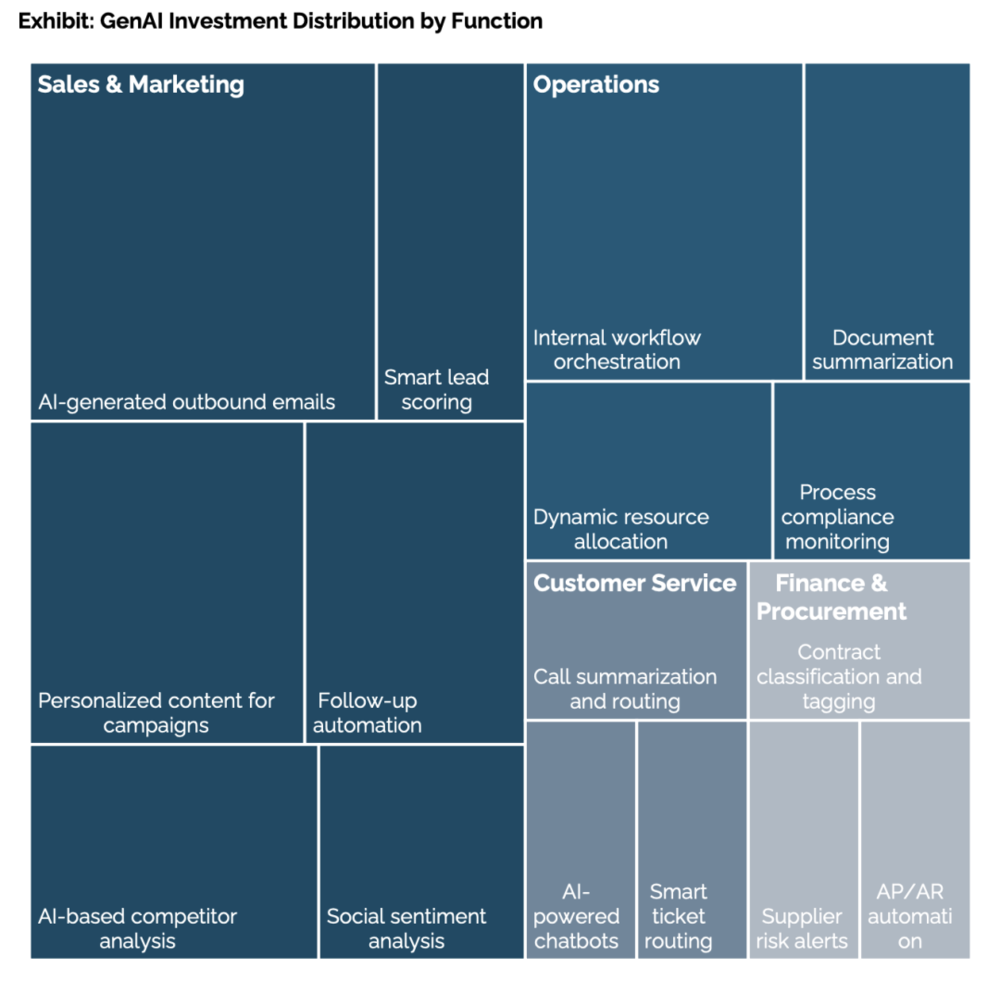
Only 5% produced measurable revenue impact; the remaining 95% had no measurable returns, even though companies had already invested $30–40 billion.
The main cause of failure is organizational—organizations are simply unwilling to make any changes for AI. Many executives admit their AI strategy is mostly for show; a considerable number of companies have no formal plan to generate revenue from AI, and half of executives believe AI implementation is basically impossible.
According to Gartner, 75% of CHROs admit that for AI investments to pay off, workflows and roles must change completely. But most organizations are entirely unprepared to manage this talent restructuring. The boss may talk about wanting AI, but actually transforming the entire organizational process from top to bottom is nearly impossible.
At the employee level, resistance is equally evident. The report shows 29% of employees admit to secretly sabotaging their company's AI strategy, with Gen Z accounting for as much as 44%. Conventional wisdom holds that Gen Z is younger and more open to new things, but even the Molotov cocktail attack on OpenAI CEO Sam Altman shows that the younger generation's resistance to AI should not be underestimated.
76% of executives consider employee resistance a serious threat to their company's AI transformation. Gartner calls this the "AI Dropout Effect"—when employees see AI as a threat to their own value and identity, they become anxious or withdraw.
The problem of depositing tacit knowledge is equally severe. A report on Shadow AI shows that only 40% of companies have official AI subscriptions—a proportion far below 40% in China. Even with an official subscription, the problem isn't solved. Take one of my previous jobs as an example: the company had a team subscription to ChatGPT, but all chat histories were essentially shared.
Privacy issues follow. Using AI involves constant learning and trial and error, and if the questions asked in the early stages are seen by the boss or an administrator, they may be taken as evidence of slacking. So many employees choose to privately pay for ChatGPT or Claude themselves—the report shows this ratio is as high as 90%.
As a result, employees would rather use AI privately than deposit their experience into the company's system-level AI.
MIT has also pointed out that a major shortcoming of current GenAI is that it completely fails to remember customer preferences and doesn't learn from previous modifications. Even if employees were willing to teach it, AI currently lacks this capability.
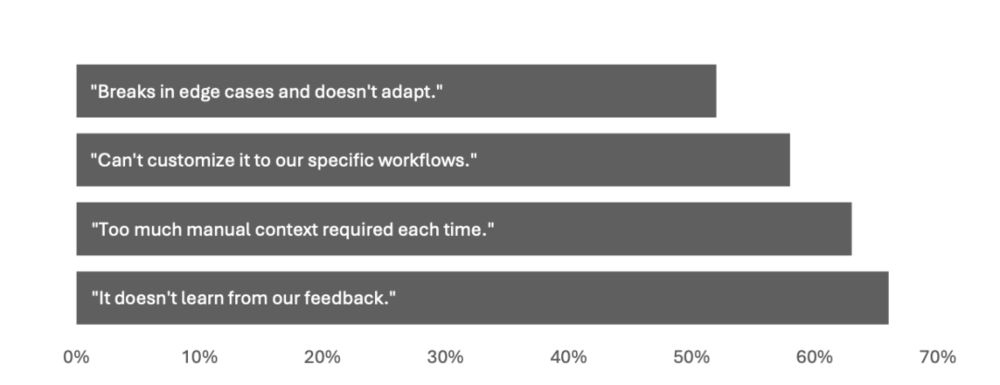
Taken together, all these arguments form a vicious cycle of mutual causation. FDE in the AI context is complete nonsense—and even more so in the Chinese environment.
Clients' tenders only look at features; vendors have no bargaining power and are forced to compete on price. Margins are too thin to support an FDE team that takes a long time to produce results. The talent sent out likely doesn't understand the business and won't accumulate knowledge. Meanwhile, clients are entangled in internal power and responsibility struggles and unwilling to pay for the exploration process.
So we're back to the starting point: clients only look at features, only at immediate results.
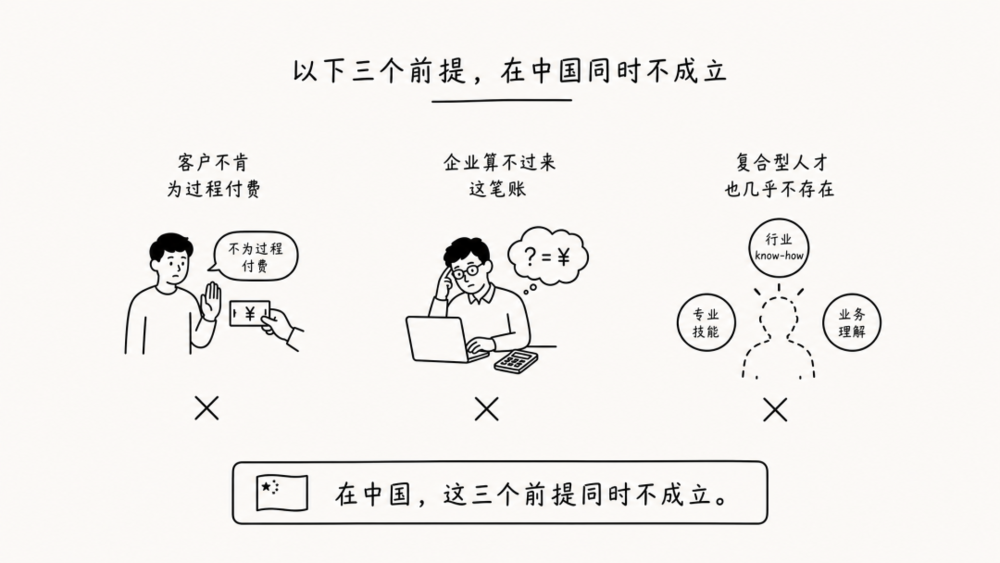
The idea that "with enough money you can hire an FDE to be stationed at the client's site" is utter nonsense. Clients won't pay for the process, companies can't make the math work, and versatile talent barely exists. All three premises fail simultaneously in China. So FDE in China is more like an idealized, almost marketing-driven new division of labor in the era of AI implementation—simply put, a fancy form of outsourcing.
Even in the US, FDE doesn't come easily. It remains an extremely hard-to-scale heavy model. Palantir endured nearly 20 years to make it work, and for most of those 20 years it didn't survive on profits from B2B private enterprises—it struggled greatly in the purely commercial market. And the supporting conditions Palantir needed to succeed are basically absent in China today.
That said, the reason Palantir gave its internal talent the FDE title back then was to give the role a stronger sense of professional identity. Criticizing FDE as merely "professional services in disguise" is, in some sense, a bit harsh.
When a new title can attract higher-caliber talent to a field, the field itself becomes more valuable.
But whether this holds true in China remains a big question mark.
What our era lacks least is buzzwords. Yesterday it was the middle platform, the day before the metaverse, and today it's FDE's turn. Every word is served up gleaming, but beneath the table sit a bunch of young people ground down by "vendors are worse than dogs," desperate to jump to the client side for some stability.
Until these problems are solved, FDE in China will forever be just outsourcing in a more expensive disguise.
Palantir endured twenty years to see its spring, while we don't even have the patience to "allow something to be built slowly."
In this era of AI nonsense, new buzzwords are never in short supply; what's scarce are people willing to grind for twenty years, and soil willing to wait twenty years for them.