How much do you know about Palantir, the mysterious Silicon Valley company? It is famous for serving government intelligence agencies and large enterprises, and renowned for its powerful data analytics platforms. Among Palantir's many engineering roles, there is one unique position—the Forward Deployed Software Engineer (FDE). They don't just write code; they are "technical scouts" who go deep into customer sites to solve the toughest problems.
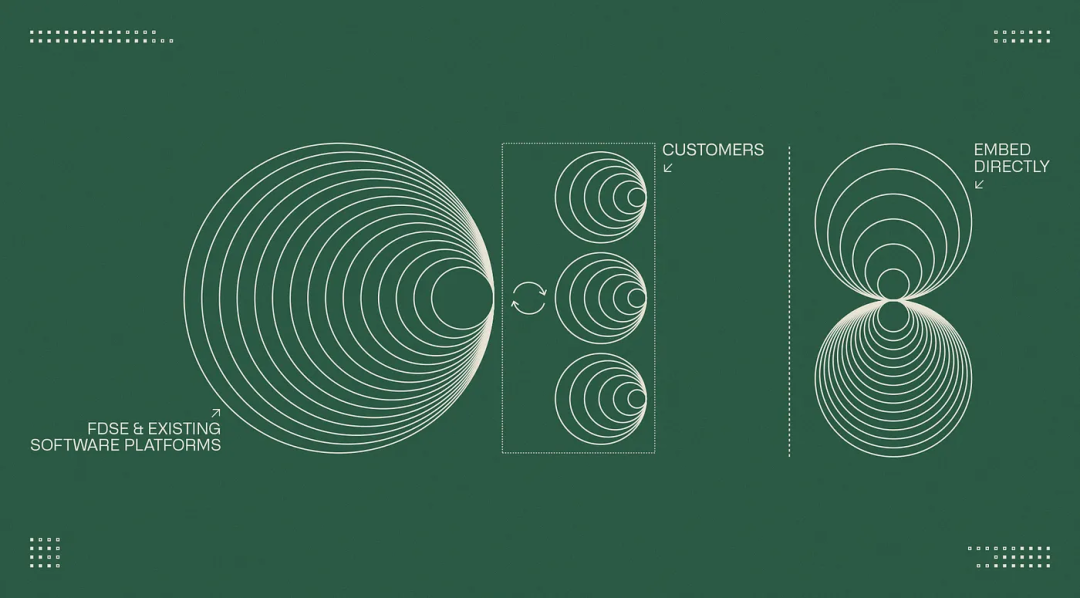
What does a day in their life actually look like? Today, we'll lift the veil on this mysterious role and see how a Palantir FDE spends a typical day.
Morning: A Quick Start, Facing Challenges Head-On
Like most engineers, an FDE's day usually starts with a cup of coffee. But unlike most, their workplace may not be a fixed office—it could be the customer's site.
At 9 a.m., the FDE's day officially begins. They first review the previous day's work and check whether there are any urgent customer issues to resolve. Their goal is clear: ensure the customer's data platform runs smoothly and efficiently supports business decisions. If the customer reports any problems, they dive in immediately, quickly locating and resolving them. This isn't just about fixing a bug—it's about safeguarding the continuity of the customer's business. For example, an FDE working on the UK's National Health Service (NHS) project doesn't start the day by opening a code editor, but by reviewing a document called the "Foundry Patient Guide." You might be surprised: as an engineer, why is his first task reading a guide meant for patients?
This is precisely the core of a Palantir FDE's work. The people they serve are human, and the data they handle concerns the health and well-being of every single life. In Palantir's collaboration with the NHS, FDEs use the Palantir Foundry platform to build the "Federated Data Platform" (FDP), which aims to help doctors better plan treatment, provide patients with better care, and free healthcare workers bogged down by tedious administrative work.
But FDEs know full well that all of this rests on "trust"—especially when handling the most sensitive personal health data. That's why Palantir worked closely with the patient advocacy group "Patients Association" to co-write this guide. In the plainest language possible, it explains to every patient:
- Who controls the data?—Without a doubt, it's the NHS. Palantir, acting only as a "data processor," strictly follows the rules set by the NHS and absolutely cannot use the data for any other purpose.
- How does the Foundry platform work?—It acts like a super translator and organizer, integrating data from different systems in various formats (such as medical records, test reports, and surgery schedules) to present doctors with a comprehensive, real-time view of each patient.
- How does it protect my privacy?—Access is strictly controlled; only authorized healthcare staff can view relevant information when needed. All operations are logged, ensuring everything is transparent and traceable.
Understanding this guide means understanding the "first principle" of FDEs' work: technology must serve people and earn their trust.
Late Morning: Going Deep with the Customer, Solving Complex Problems
The late morning is when FDEs collaborate most closely with customers. They participate in various meetings, but these are no simple "stand-ups." They need to communicate with the customer's business teams, data analysts, and leadership to deeply understand their needs.
For example, a team might need a new data dashboard to monitor key business metrics. The FDE will sit down with them and co-design the solution. They don't just passively receive requirements; they proactively offer technical advice, translating customer needs into concrete, actionable technical solutions. Using Palantir's platform, they quickly build prototypes and demonstrate them to customers in real time to ensure the solution is correct. This is like being a "technical consultant"—FDEs need strong communication skills and business acumen.
With the principles above understood, it's time to dive into the technical details. Today's challenge for the FDE: how to securely integrate Hospital A's intensive care data with the family doctor follow-up records from Community B.
This sounds like simple ETL (extract, transform, load) work, but reality is far more complex. The data models, standards, and nomenclatures on both sides can be worlds apart. The FDE's job is not to write lines of isolated code, but to build a secure, efficient data pipeline on the Foundry platform, leveraging its powerful data integration and modeling capabilities.
Throughout this process, the FDE keeps their role as "data processor" firmly in mind. They repeatedly confirm data governance rules with NHS data architects, ensuring every step complies with privacy protection regulations. This is where the Foundry platform's advantages shine: it can not only handle massive heterogeneous data, but also enforce data lineage and access control throughout. This means it's crystal clear where every piece of data came from, what processing it went through, and who accessed it.
Noon: A Short Break, Recharging Before Setting Off Again
Lunchtime is a rare moment of relaxation for FDEs. It might be in the customer company's cafeteria or a nearby restaurant. They use this opportunity to chat with colleagues, discuss technical challenges, or share amusing work stories. It's not just a break—it's also an important part of internal knowledge sharing and team bonding.
Afternoon: Coding Time, Turning Ideas into Reality
The afternoon is the FDE's "core programming" time. After communicating with the customer and finalizing the solution, they return to their computers to put all the morning's ideas into practice.
This usually involves the following aspects:
- Building new data models: Creating new datasets based on customer needs and integrating data from various sources into the Palantir platform.
- Developing new features: Using Palantir's APIs or tools to quickly develop custom applications or features that meet specific business needs.
- Optimizing existing systems: Checking platform performance, identifying bottlenecks, and optimizing to ensure the system can handle large-scale data volumes.
FDEs often need to handle a wide variety of tech stacks, from backend services to frontend interfaces. This requires broad technical knowledge and the ability to learn and adapt quickly.
So the platform is built—but if no one knows how to use it, it's just a pile of expensive code. Another core mission of FDEs is empowering frontline users. In the NHS project, there was a workshop for head nurses. The FDE showed them how, through Foundry, they could say goodbye to the old ordeal of logging into seven or eight systems and making countless phone calls just to confirm a surgery schedule or bed availability.
"Look, now you can see the real-time operating room schedule, patients' pre-surgery preparation status, and the bed occupancy map of the ward downstairs, all on this one screen."
When a head nurse exclaimed with delight, "This could save us at least two hours a day," the FDE perhaps felt the greatest value of this job. They're not just delivering software—they're optimizing a workflow that concerns lives, truly putting the power of technology into the hands of those who save lives.
Evening: Summarizing, Reporting, and Planning
The workday is coming to an end, but the FDE's thinking hasn't stopped. They spend time organizing the day's progress, writing brief reports to share with the team.
At the same time, they plan the next day's work. They prioritize urgent issues and set clear goals for upcoming tasks. This forward-looking planning ensures they always use their time efficiently and continuously create value for customers.
Late Night: Remote Support and Personal Growth
Outside of working hours, FDEs may receive urgent requests from teams in other time zones. They need to maintain a degree of flexibility and be ready to provide remote support at any time.
But the work of an FDE is not just about solving problems—it's also about continuous learning and growth. Palantir encourages engineers to stay curious and keep exploring new technologies. They can use the company's resources to learn new programming languages and frameworks, or dive deep into knowledge in a specific domain.
Reviewing the day before going to sleep, the FDE may not have produced much "show-off" code. But he read patients' concerns, understood the sensitivity of the data, broke down information silos, and personally placed the power of data into the hands of healthcare workers.
That is a day in the life of a Palantir FDE. On the front lines, facing the toughest real-world problems. They firmly believe that the most powerful technology can only unleash world-changing force when combined with the deepest industry understanding and genuine respect for people.
Summary: FDE, More Than an Engineer
After reading about this day, you'll see that a Palantir FDE is not just an engineer who writes code—they are also:
- Problem solvers: When facing complex, urgent customer problems, they are the first line of defense.
- Business consultants: They understand business needs and translate them into technical solutions.
- Communication masters: They communicate effectively with people in all kinds of roles and build trust.
They are the bridge connecting Palantir's technology with customers' businesses, and the company's front-line "technical scouts." If you aspire to grow in both technical depth and business breadth, the FDE role may be worth exploring in depth.