Teresa Torres wrote down three core habits for the product trio, and they apply almost equally well to customer projects.
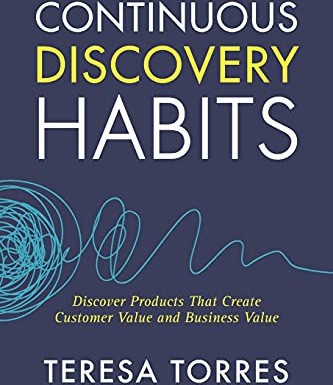
Continuous Discovery Habits · Teresa Torres ·
Key Takeaways
- Teresa Torres distilled eight years of experience coaching hundreds of product teams into a 237-page book, published in 2021.
- Her minimum bar: touch base with customers once a week, and have engineers join the group doing discovery.
- For FDEs, the book's value lies in keeping discovery on a steady rhythm throughout the entire project, rather than confining it to the first week.
Teresa Torres worked with hundreds of product teams for eight years before writing down a rule so simple it borders on redundant: at minimum, meet with customers at least once a week. On May 19, 2021, she published *Continuous Discovery Habits* through Product Talk, the culmination of those eight years.
This book was not written for Forward Deployed Engineers (FDEs). But read from an FDE's perspective, it happens to highlight a trap that's easy to fall into in customer projects: doing solid customer research in week one, then burying yourself in development until the end. By demo day, the customer's needs may have changed long ago.
If you are an FDE, or about to become one, this book is worth reading because it turns discovery into a habit with a fixed slot on the calendar. The ideas themselves aren't particularly novel.
Written for the product trio, equally useful for FDEs
The book was published in 2021 by Torres's own company, Product Talk, and runs 237 pages. In the author's words, it is a guide to help the product trio do discovery in a structured, sustainable way. The trio consists of a product manager, a designer, and a software engineer.
Notably, the engineer's place in the trio: the people writing code also belong to the group doing weekly discovery. A continuous discovery guide from Great Question puts it even more bluntly, in just three short sentences: not one researcher per week, but the whole trio, together.
For FDEs, this line is already blurry. Embedded at a customer site, you are often the listener, the designer, and the coder all at once. This book provides a process that lets you do all three well without neglecting the first.
Collect stories weekly, not opinions
The core habit is interviewing customers weekly and, in each interview, collecting stories that reveal unmet needs. Stories carry more weight than opinions because they actually happened: "How did you handle that return order last time?" is far more reliable than "Would you like feature X?"
Take a 12-week project as an example: deploying a ticket triage agent for a customer support team. If you only interview at kickoff, you have a single data point. Keep a weekly cadence, and you have 12 chances to check whether you're still solving the right problem. For some teams, a biweekly cadence also works, but weekly is the most common.
At the customer site, the first thing to do is secure a regular slot to talk with the end users themselves, separate from the people who signed the contract. The buyer and the user often tell two different stories.
Replace the requirements list with an opportunity tree
The book's core tool is the opportunity solution tree. Product Talk defines it as a way of mapping possible paths to achieve a desired outcome. Simply put, every solution on the tree must explain which path it takes toward the target outcome.
For FDEs, this tree solves a very practical problem: the customer sends over a long list of requirements, and you can't tell which ones actually drive outcomes. In the support team example above, the desired outcome might be reducing the time it takes to process a ticket. "Add an export button" only earns a place on the tree if it can show a path to that outcome.
Product Talk offers a benchmark: if you interview at least weekly, the team should review the opportunities collected roughly every three to four weeks. In a 12-week project, that means redrawing the opportunity tree three to four times. Each redraw is a good moment to explain to the customer why priorities have shifted.
Test only the riskiest assumptions
The third habit: in the early stages, resist the urge to prove the entire solution, and build small-scale tests that target the riskiest assumption directly.
Back to the ticket triage agent. The assumption "the model is accurate enough" sounds most important, but sometimes the real risk is "will employees trust the labels the agent assigns?"
Run a two-day test: show employees a few dozen pre-labeled tickets and watch whether they redo the labeling themselves. This could save you weeks of tuning a model nobody uses.
Not revolutionary; best read alongside a real project
A review on a bookstore page sums it up fairly: worth reading, but not revolutionary. If you've worked in product, many of the ideas will feel familiar. Its value lies in consolidating those ideas into a working rhythm you can sustain long term.
The most sensible way to read it is alongside a real project, following Torres's own advice: start with the smallest possible step and iterate continuously. One call a week is enough at the start; the full opportunity tree can wait.
For career development, as long as you state the frequency and the results, this skill stands out on a resume. For example, "interviewed users weekly during a 12-week deployment project, redrew the opportunity map every 3 weeks, and cut two features that couldn't be tied to the target outcome" is far more persuasive than "strong communication skills."
When browsing FDE job postings, watch for phrases like "customer discovery" or "work directly with users." This is exactly where that experience belongs.
Every FDE communicates with customers. What truly sets you apart is still holding these conversations in week ten.
Was this article helpful?
Thanks for your feedback!
6 sources
- continuous discovery habits (Product Talk) · 2021-05-19
- Y Oslo 2024: When It Comes to Discovery, Something is Better Than Nothing · 2024-12-18
- Opportunity solution tree (Product Talk) · 2023-12-06
- Continuous Discovery Habits, by Teresa Torres · 2022-10-07
- Continuous discovery guide (Great Question) · 2026-09-14
- Continuous Discovery Habits (Buresund)