HealthCare.gov had 36 contractors and still crashed on launch; Pahlka believes the root cause lies in culture and waterfall processes, not money or technology.
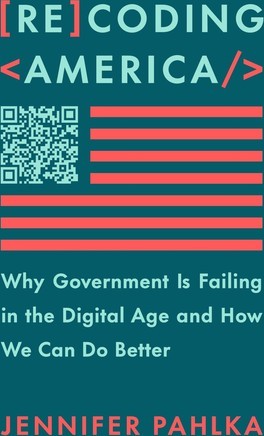
Recoding America · Jennifer Pahlka ·
Key Takeaways
- Pahlka believes government software fails because of culture and process, not a lack of money or technology.
- The root cause is the disconnect between policy and delivery: users don't see the software until acceptance testing, and contracts measure success by checklists.
- For FDEs, this book teaches you to bring users in early and to define "done" as the moment users can actually use the product.
In October 2013, HealthCare.gov launched and almost immediately crashed. This massive project was handed to 36 contractors. According to a theme running throughout Jennifer Pahlka's work, such failures are rarely due to a lack of money or technology. The real reason is that no one bridges the gap between the people writing requirements and the people actually using the product.
Pahlka devotes the entirety of *Recoding America* to explaining this divide. In her view, the problem lies in culture and process.
If you are a Forward Deployed Engineer (FDE), this divide is your workplace. Your clients may be banks, hospitals, or government agencies, but the failures Pahlka describes will be familiar: requirements written from afar, software delivered at the end of the project, and then no one able to use it.
An author who has sat on both sides
Pahlka founded Code for America, co-founded the US Digital Service, and served as US Deputy Chief Technology Officer. The book was published by Metropolitan Books, an imprint of Macmillan, on June 13, 2023, in hardcover at 336 pages; the 2025 edition adds a foreword by William Hurd.
This is not a technical book. It doesn't cover architecture or frameworks. It trains something technical documentation cannot: the ability to see why a well-resourced organization still fails to deliver software people can use. Three ideas in the book are worth remembering.
Idea one: Software meets users too late
Pahlka argues that the entire government machine operates on the waterfall model. In her interview with Santi Ruiz on Statecraft, she said that under this model, software doesn't touch users until the final user acceptance testing phase.
The root cause, she says, is the separation of policy from delivery. The people deciding what to build don't communicate with the people building the system, and the builders never see users. In her review in the Stanford Social Innovation Review, Perla Ni calls this the paralyzing gap between policymakers and service users created by outsourcing.
On-site with a client, the solution is simple: don't make real users wait until acceptance week. In the first week, find someone who will use the system every day, show them anything that runs, no matter how rough.
Idea two: Checking every box doesn't mean done
Government contracts often list requirements as checklists without requiring the software to be usable. Pahlka is explicit: even if every item is checked, if people can't use it, the work isn't done.
Imagine an online application system with 40 requirements, all met by the contractor. At acceptance, one-third of test users cannot complete the application because they can't find the step to upload documents. On paper, the project scores 100%; for the one-third of people who need this service, it is a total failure.
So FDEs should rewrite the definition of done at the start of a project. Instead of writing "the system supports document uploads," write "applicants can upload documents without calling support," then find real users to test that statement.
Idea three: Culture beats rules
The biggest obstacle isn't procurement regulations. In her conversation with ITIF, Pahlka pointed out that the real obstacle is fear of accountability, which she summarized in one phrase: culture trumps policy.
She advocates phased funding: explore first, then pilot, and only then scale. She also wants delivery teams involved when policies are being drafted, and wants government to own and be able to fix its own code rather than relying entirely on external contractors.
Another observation of hers is worth remembering: legacy systems are rarely replaced; they are only patched layer upon layer.
Pahlka also distinguishes product management from project management. In her view, product management is the art of deciding what should actually be built. This is exactly what excellent FDEs do: before writing the first line of code, they redefine what the client truly needs.
Who should read it, and how
This book is suited for FDEs entering or about to enter the public sector, banking, insurance, or healthcare—places with long contract cycles and heavy processes. Software engineers hoping to transition into an FDE role should also read it, because it gives you a vocabulary for explaining why this role exists.
Suggested order: first read Perla Ni's review in SSIR, whose HealthCare.gov case study shows what large-scale failure looks like. Then read the book, then the Statecraft interview to hear Pahlka herself discuss policy delivery.
For career development: if a job posting mentions "public sector," ask in the interview whether the team can access end users and who owns the code after handover. On your resume, record the time from project kickoff to the first real user using the product, rather than just listing the features you delivered.
This book is about the United States, but the divide it describes exists at every large client. The FDE role exists precisely to fill it.
Was this article helpful?
Thanks for your feedback!
4 sources
- Recoding America (Macmillan Academic Trade)
- Citizen Digital: How the US Government Can Do Better in the Digital Age with Jennifer Pahlka (ITIF) · 2023-06-16
- How to Actually Implement a Policy (Statecraft, Santi Ruiz interviews Jen Pahlka) · 2024-05-01
- Recoding America review by Perla Ni (Stanford Social Innovation Review) · 2023