The PR/FAQ method, broken down by two former Amazon executives in Working Backwards, uses a single page to test whether the customer's problem is truly clear.
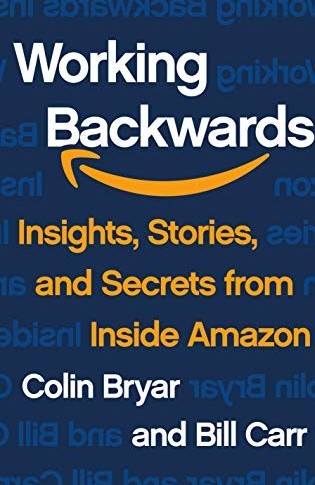
Working Backwards: Insights, Stories, and Secrets from Inside Amazon· Colin Bryar ·
Key Takeaways
- Two former Amazon executives, Colin Bryar and Bill Carr, explain how Amazon writes the press release and FAQ before developing a product.
- For FDEs, the PR/FAQ is a way to align on the problem with the customer on paper, while the cost of change is still low.
- Read the free PR/FAQ guide first, then the book; skim the personal anecdotes.
According to AWS Executive Insights, before developing a product, Amazon first writes a press release for the product it expects to launch. In other words, the ending of the story is written before any code exists. In Working Backwards, Colin Bryar and Bill Carr turn this habit into a process that people outside Amazon can learn and follow.
For Forward Deployed Engineers (FDEs), this is more than corporate culture. On-site with customers, the most costly mistake is usually not a bug, but building something that is technically correct yet not what the customer needs. The problem itself is vague, each side has its own understanding, and the divergence often only surfaces weeks later.
The PR/FAQ gets both sides reading and agreeing on the same page, at a point when changing the problem takes only a few keystrokes.
Working Backwards: Insights, Stories, and Secrets from Inside Amazon (published by St. Martin's) was written by two former Amazon executives and tells the story of Amazon's unique principles and processes from the inside. Publishers Weekly noted that organizations of any size can learn from it, though the personal anecdotes in the book repeat a bit too much.
The authors define Working Backwards as a systematic method for examining ideas and building new products. For FDEs, the most useful part is the PR/FAQ process, which contains three ideas you can use in your next project.
Idea 1: The press release forces you to state exactly what you are committing to
The authors call writing a press release a "forcing function" that keeps product builders focused on the customer. The key is the order: the press release and FAQ must be completed before anything is developed.
According to AWS, this approach is based on the idea that the customer's voice is the most important input when developing any product.
Suppose you are sent to an insurance company that wants to "use an AI agent to handle claims." That is a wish, not yet a problem statement. The moment you sit down to write the first sentence of the press release, the hard questions emerge: Who is using it? What work does it save these people? What does success look like?
If the press release needs a number, such as how much faster claims are processed, and neither you nor the customer knows how long a claim currently takes, you have found your first requirements research question. This is exactly what you should measure before touching prompts.
Idea 2: One page, written from the user's perspective
According to AWS, the press release must fit on exactly one page, a constraint that forces the writer to cut back and focus on the core idea. The authors also require accurately describing the customer and writing the "benefits" section from the customer's perspective.
Back to the insurance company example. "Insurance company" is too broad a customer. Change it to "auto insurance claims adjuster," and you are forced to ask: What does this person's day look like? Where do they get stuck? One page cannot fit three user types and five features; you have to make trade-offs.
An illustrative opening, with the full text reading: "Starting today, every new auto insurance claim that reaches an adjuster will come with a ready-made damage summary and a list of missing documents.
They no longer need to open each attachment one by one to check whether the customer has submitted everything. The time saved can go toward difficult cases, where their experience truly determines the outcome."
Note that this passage never mentions models, vector databases, or data pipelines; it only says what specific work one person no longer needs to do, and what the saved time is used for. You can apply this template directly to your own project: who, what was hard before, what they get now.
Making trade-offs early also benefits you: with a narrower scope, the project reaches production faster, and results are easier to measure.
Idea 3: The FAQ is where you test the problem
The FAQ has two parts. First the external FAQ, the questions customers would ask; then the internal FAQ, the questions the team must answer. AWS makes clear that it does not write down every question it can think of, but starts with the most important one.
In the insurance example, the most important external question might be "Who is responsible when the AI agent makes a mistake?" An illustrative answer: the AI agent only provides recommendations; the adjuster still decides whether to approve or reject, and every recommendation is logged for later review.
The most important internal question might be "Which system holds the claims data, and do we have access?" An illustrative answer: claims data is stored in the existing claims management system, and before the project starts, the customer's IT team needs to grant read-only access to the test environment.
Any question you cannot answer yet is a risk. Write it into the plan instead of letting it surface during the demo.
The authors stress that the best PR/FAQs come from multiple rounds of iteration and from gathering feedback from cross-functional teams. On-site with the customer, that team includes operations staff, IT, compliance, and your own team. Changing something on paper is far cheaper than changing it in code.
Three ways to get the PR/FAQ wrong
The most common mistake is writing the press release as a feature list: "supports OCR, API integration, real-time dashboards." Such a list violates the requirement to write from the customer's perspective, because it describes what your team built, not what work the user no longer has to do.
The second is stuffing every question you can think of into the FAQ. Thirty questions listed with equal weight leave readers on the customer side unable to tell which one could kill the project. Follow AWS's approach: put the most important question first, and the rest after.
The third is harder to spot: the draft is only being reviewed by your own team. If no one from the customer side gives feedback after several rounds, the PR/FAQ is just your guess in a nicer format, and it loses the whole point of settling the problem on paper.
In what order should you read?
First read the explanation of the PR/FAQ process on workingbackwards.com, along with the articles on product management on AWS Executive Insights. Both are free and enough to write a first draft. Then read the book to understand why the process is designed this way, skimming the repetitive anecdotes.
This book suits engineers who have just moved into an FDE role, as well as those with solid technical backgrounds who still tend to start coding as soon as they get a ticket.
If you are changing careers, you can put a PR/FAQ with customer details removed into your portfolio. When interviews turn to customer requirements research or project scoping, you can present a real document instead of speaking in generalities.
The next time a customer says "we want AI," don't open your editor first. Open a blank page and write the press release the customer most wants to read on the day the project is done.
Was this article helpful?
Thanks for your feedback!