Eric Ries's "Build-Measure-Learn" loop turns meandering pilots into experiments with hypotheses, metrics, and decision points.
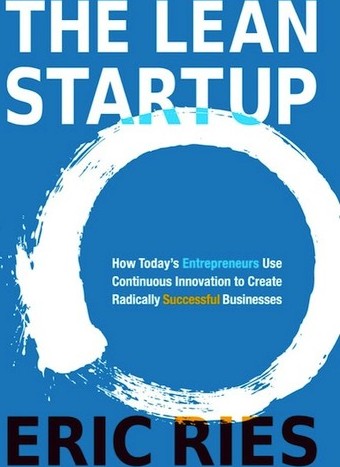
The Lean Startup· Eric Ries ·
Key Takeaways
- Eric Ries argues that progress should be measured by validated learning, not by deliverables.
- Every build-measure-learn loop ends with a decision: pivot or persevere.
- Success thresholds and failure conditions must be written down before anyone sees the data.
Picture a common scenario: the demo goes smoothly, the client nods along, and then week after week passes with no one willing to say whether the pilot actually succeeded or failed. In this situation, the problem isn't the model—it's that no one wrote down "what failure looks like" at the start.
Eric Ries wrote The Lean Startup for entrepreneurs, not for engineers deploying AI. The US edition was published by Crown Business with the subtitle "How Today's Entrepreneurs Use Continuous Innovation to Create Radically Successful Businesses"; the UK edition was released by Portfolio Penguin on October 6, 2011, with the subtitle "How Constant Innovation Creates Radically Successful Businesses".
According to Penguin, the book has sold over one million copies. But for a Forward Deployed Engineer (FDE), the reason to reread it isn't that: it trains exactly the skill most needed at customer sites—designing the pilot as an experiment, with a hypothesis, a measurement, and a stopping point.
What loop is behind this book?
At the core of the methodology is the "Build-Measure-Learn" loop. According to the principles Ries has published publicly, a startup's fundamental activity is turning ideas into products, measuring customer responses, and then deciding whether to pivot or persevere. Swap "product" for "AI pilot" and you have the FDE's workflow.
The principles page also states explicitly: you don't have to work in a garage to count as a startup. In other words, an FDE deploying an agent in an insurance company's office is doing exactly the kind of work described in the book.
First idea: progress is what's validated, not what's delivered
Ries proposes measuring progress through validated learning. For an FDE, this changes how weekly reports are written. "Completed the API integration, built the RAG pipeline" shows you were busy, but says nothing about what you learned.
Imagine an insurance company piloting an agent that triages customer service tickets. Written in terms of validated learning, the report would read: "After two weeks, out of 500 tickets in the test group, the agent correctly handled 120 without human intervention." That number tells you whether a hypothesis is true or false—something a completed task checklist cannot.
Second idea: build only what's needed to measure
Since the loop starts with "build," and the purpose of "build" is to "measure," the first build only needs to be sufficient to measure one hypothesis.
In the example above, the hypothesis worth testing is not "the LLM can read tickets"—that's almost certainly true. The real hypothesis is: the client's customer service team trusts the agent's output enough to skip the double-checking step.
So the first build might just be a triage suggestion panel next to the ticket queue, plus a metric tracking how many suggestions employees adopt. Anything more is wasted effort before you've figured out whether this is worth doing at all.
Third idea: the stopping decision must be written down in advance
Every build-measure-learn loop ends with a decision: pivot, meaning change direction; or persevere, meaning keep going. The book's official page states that the book provides a method for making this decision.
This decision is only valuable when paired with innovation accounting. Lean Startup principles call innovation accounting "the boring part": how to track progress and hold innovators accountable for results. Tristan Kromer of Kromatic makes it concrete by setting two metrics in advance: a success criterion and a failure condition.
Kromer's reasoning is that setting clear criteria before the evidence appears reduces bias after seeing the data. He also argues that this decision has four outcomes rather than two: besides pivot and persevere, there are scale and kill.
Back to the example. Before starting, you and the client agree: after two weeks, the pilot scales up only if the agent independently handles at least 40% of the tickets in the test group; below 20%, it's killed. The same two weeks pass, and the result is 120 out of 500, or 24%: not enough to scale, but not low enough to trigger the kill condition.
At this point, there's no need to argue based on gut feelings. You choose to pivot—for example, narrowing to the category of tickets the agent handles well—and then run another two-week round with the same measurement approach.
Where do stopping rules go wrong?
The most common mistake is moving the threshold after seeing the numbers. The result comes out at 24%, someone suggests "actually 20% is already pretty good," and the 40% threshold quietly disappears. This is exactly the bias Kromer wants to block: once the data is visible, everyone has an incentive to interpret it the way they want.
The second mistake is falling back to counting deliverables. When the numbers look bad, reports easily slide into "added three connectors, tuned the prompts." These statements may be true, but they don't substitute for an answer to the hypothesis—which is exactly what validated learning demands.
The third mistake is harder to spot: the measurement time window for the threshold and the results don't match. If the threshold is set for two weeks but the report covers one week of data, or vice versa, then comparing 24% against 40% becomes meaningless.
A reliable safeguard: before the pilot runs, email the client the agreed threshold, time window, and the four outcomes, so that no one can change them after the fact.
How to read it, and who should read it
This book suits engineers who have experienced at least one endless pilot. Before meeting a client, read the sections on the build-measure-learn loop and validated learning; when drafting a pilot plan, read the section on innovation accounting; before a mid-term review, read the section on pivot or persevere.
The official materials use startup language, so you'll need to translate "startup's customers" into "end users within a client company" yourself. If your client is a large company, continue with Ries's follow-up, The Startup Way (2017); according to Penguin Random House, it targets companies like GE and Toyota.
From a career perspective, this skill is easier to demonstrate than you might think. When reading FDE job descriptions, watch for whether the role requires you to own scoping pilots and setting success criteria; if so, put this skill at the very front of your resume.
A single line like "set a 40% threshold, measured 24%, narrowed the scope and ran a second round" carries more weight than ten lines listing your tech stack.
Exercise: write an experiment card for your pilot
Take a pilot you're running or just finished, and write five lines on one page. The first line is your riskiest hypothesis, stated in terms of end-user behavior. The second is the metric to measure, along with a single time window applied consistently to all numbers.
The third line is the expanded threshold, the fourth line is the termination condition. The fifth line states in advance: if the result falls between the two, which direction will you pivot toward. Send this page to the client before any data comes in; once the results are out, compare them only against this page.
A good FDE is not someone who never calls off a pilot, but someone who knows from day one when to call it off.
Was this article helpful?
Thanks for your feedback!
7 sources
- The Lean Startup (official book page)
- The Lean Startup by Eric Ries – Penguin Books UK · 2011-10-06
- Principles – The Lean Startup
- The Lean Startup (official site)
- Why the Lean Start-Up Changes Everything – Harvard Business Review · 2013-05
- Pivot or Persevere Decision: The 4 Outcomes You Need to Know · 2022-06-01
- The Startup Way by Eric Ries – Penguin Random House · 2017-10-17