This article comes from the WeChat public account: 夕小瑶科技说, author: zzy
Recently, the tech world has become increasingly polarized.
On one side, layoffs are relentless — in the first five months of this year alone, US tech companies cut more than 100,000 jobs.
But on the other side, Silicon Valley giants are collectively throwing money to snatch up a certain kind of person — people who specialize in putting AI into companies.
Their official title is FDE (Forward Deployed Engineer)
Just how hot is this role?
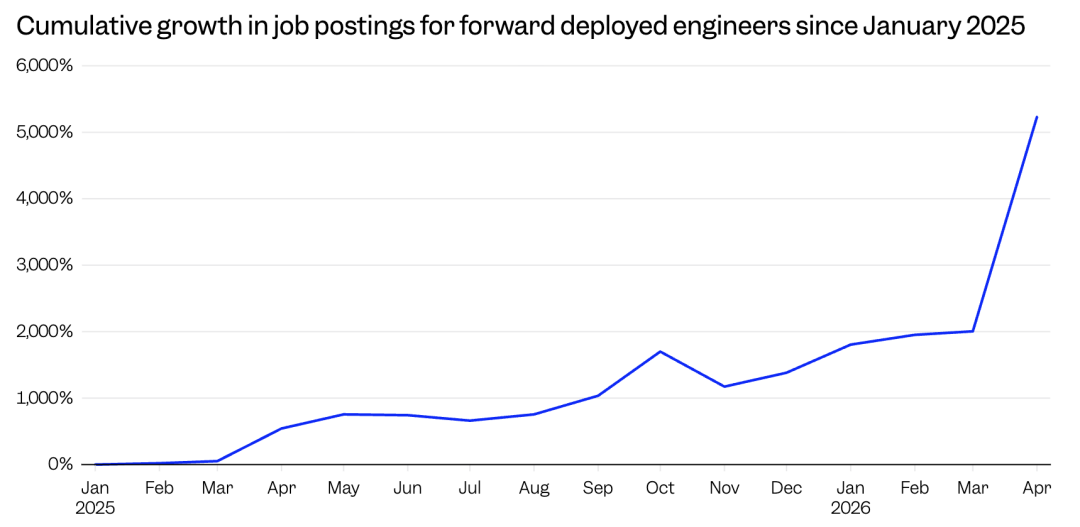
Business Insider did the math: in April 2026, demand for FDE positions rose 729% compared with April 2025.
Just these past couple of days, Andrew Ng wrote a post specifically about it, but in a rather unexpected way — Ng believes the FDE role has value, yet at the same time doesn't think it will become the mainstream of AI employment.
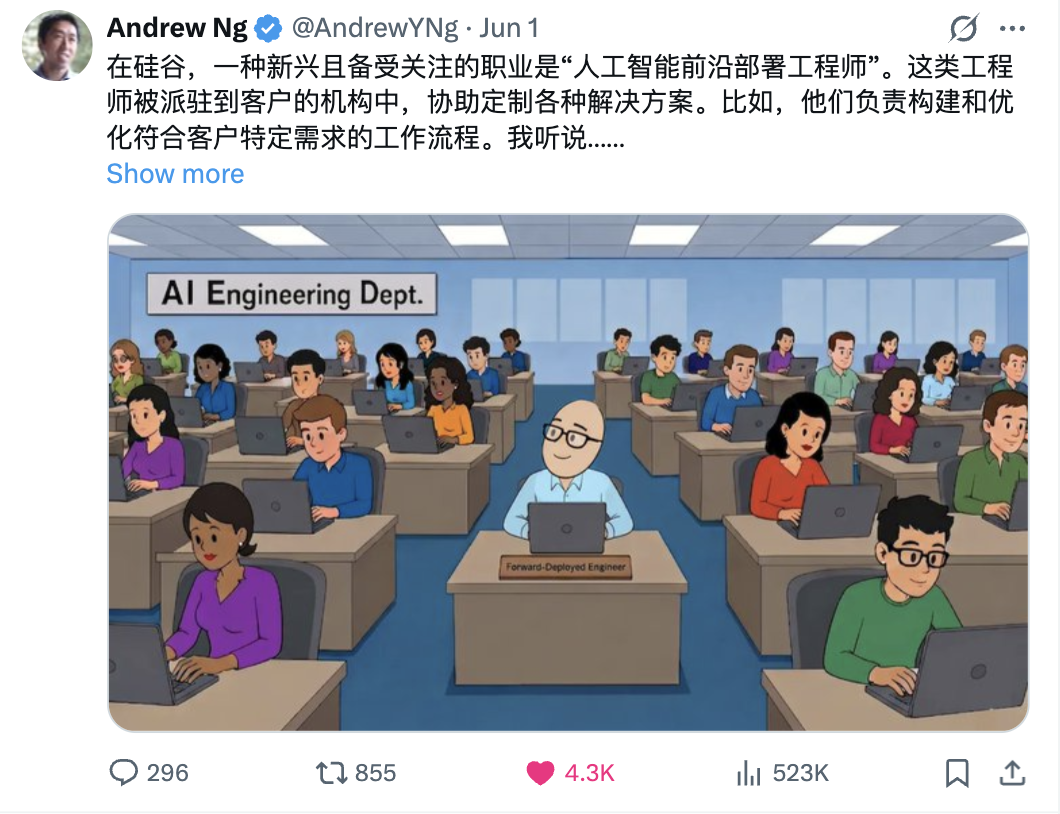
A veteran who understands AI best publicly hit the brakes on a booming new trend.
So the question arises: is the FDE role actually worth pursuing?
◈ Giants are voting with real money
Setting aside the big shot's warning, the AI giants are moving faster than anyone.
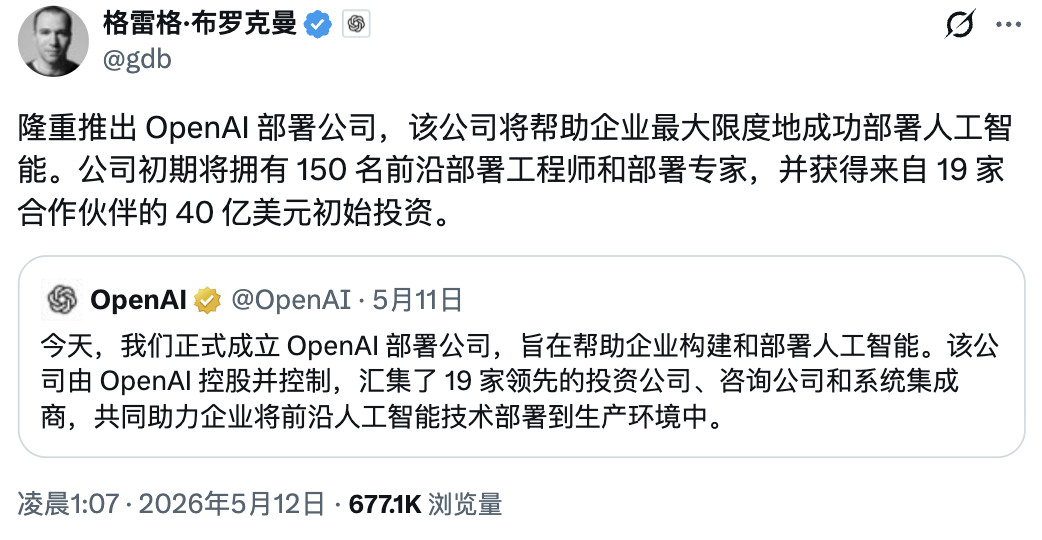
This May, the longtime rivals Anthropic and OpenAI each set up joint ventures dedicated to enterprise deployment.
Anthropic, together with Blackstone, Hellman & Friedman, and Goldman Sachs, founded an enterprise AI joint venture valued at $1.5 billion; OpenAI brought in 19 investors to launch a "deployment company" with initial funding of over $4 billion, and also acquired a 150-person team of experts along the way.
Google Cloud CEO Thomas Kurian also made it clear on LinkedIn: urgent hiring, with the interview process compressed to 2 days.
You can feel his urgency right through the screen.
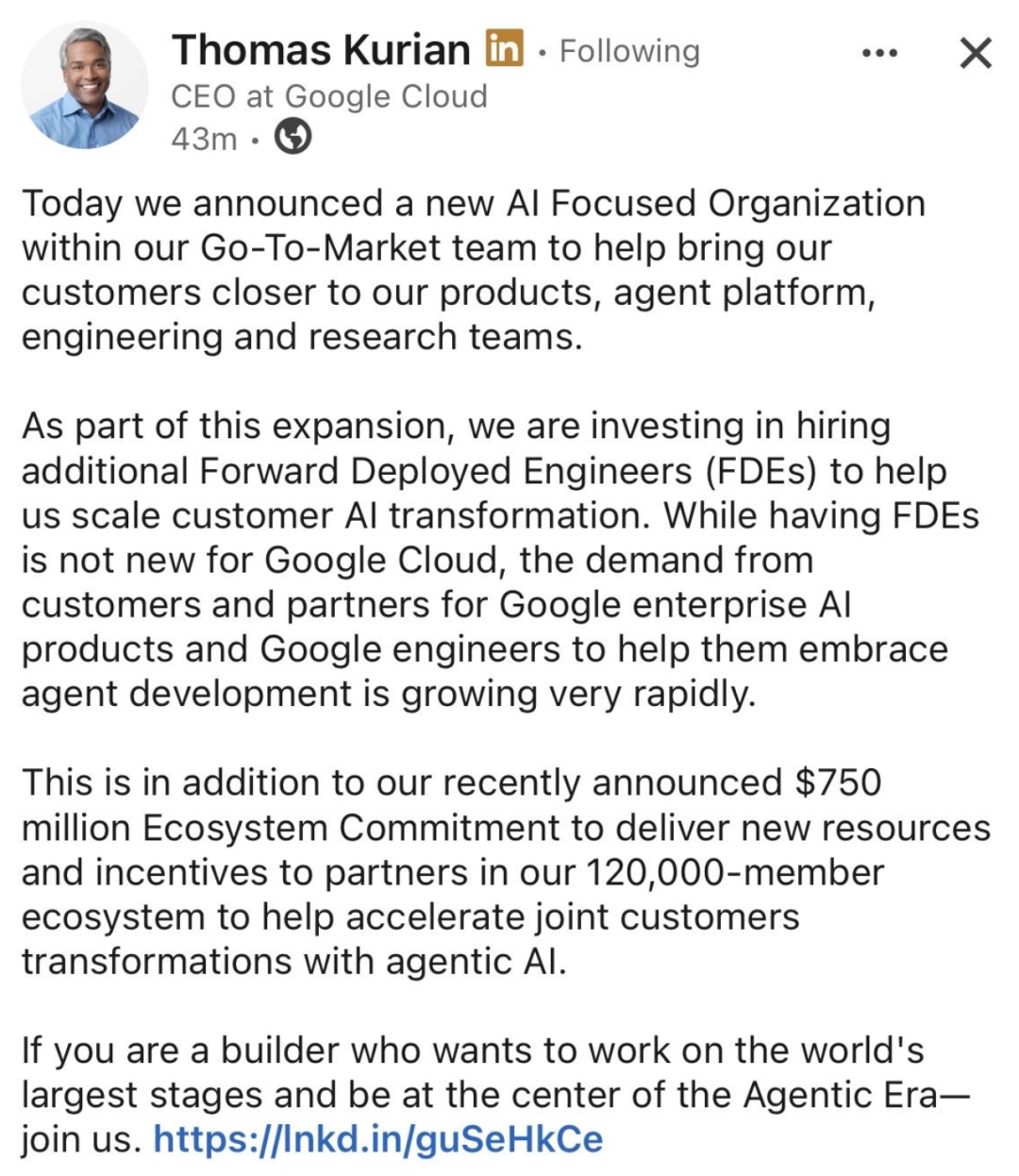
The above are just statements; the hiring market data is even more直观 — more direct.
According to Business Insider, FDE jobs on Indeed rose about 729% in April 2026 compared with a year earlier. Measured against January 2025, the surge is a staggering 5230%.
The pay is generous too. Salaries generally start at $170,000 a year, with top performers reaching $300,000 — about 2 million RMB.
Just the day before yesterday, a genuine AI Forward Deployed Engineer on Twitter shared their experience:
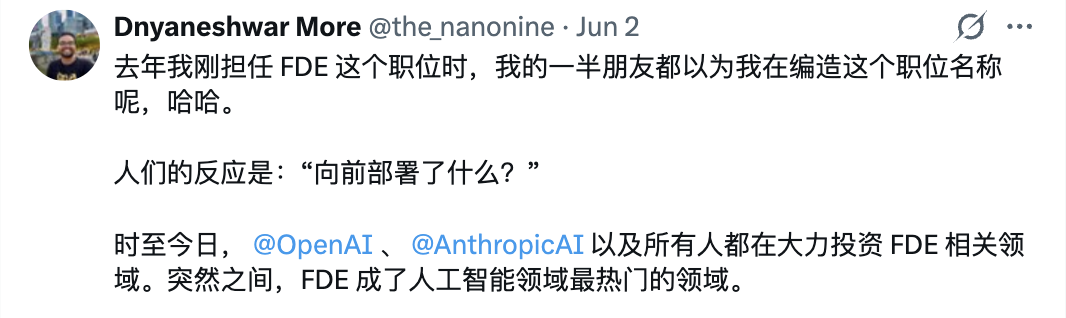
A role that, a year ago, people dismissed as "made up" has, a year later, become a super-hot commodity that Silicon Valley giants are throwing money to grab.
What exactly does the red-hot FDE do?
◈ One person is a "special forces unit"
This role is not a new invention of the AI era; to explain it clearly, we have to go back to its birthplace — Palantir.
Founded in 2003, this company serves intelligence agencies, the military, and other special departments. The clients were so unusual that it ran into a big problem from the start: the clients couldn't articulate what they wanted.
So Palantir simply sent engineers directly into the clients' organizations, stationed there for months, exploring and building in the real environment. This was the precursor of the FDE.
Twenty years later, the same problem has landed on AI's doorstep.
A while back, when everyone was raising lobsters online (OpenClaw), many people got stuck at the first step — installation. This spawned a new business: on-site "lobster installation," costing anywhere from a few hundred to over a thousand yuan, hiring someone to come to your home and walk you through getting the lobster running. And that's just the basic use case for individual users.
When it comes to enterprises, it gets even more complicated.
Faced with models they paid big money for, executives are just as dumbfounded as those lobster players stuck at step one: How do I hook this thing into my systems? What work can it actually do for me?
If you can't figure it out yourself, you have to hire a professional to come on-site. That enterprise version of the "on-site technician" is the AI Forward Deployed Engineer.
What they do is a full end-to-end service —
First, they need to embed themselves deep in the client's company, observe how things actually run, and identify pain points;
Then, they connect AI into the client's databases, permissions, and internal systems, deal with the messy data, and build the prototype;
Next, they iterate repeatedly on accuracy and stability using the client's real data, tuning the results;
Finally, they complete delivery and feedback, making sure the client actually puts AI to use, while also packaging up the lessons from the whole trip and bringing them back to headquarters.
The most valuable skill of an AI Forward Deployed Engineer has never been writing code.
It's being able to discuss strategy with executives upstairs and chat casually with frontline staff downstairs; to learn on the fly in a completely unfamiliar industry; and when facing unreasonable demands, to exercise the art of language — polite persuasion plus tactful refusal.
Being good at conversation, empathetic, able to tease out a client's real needs from a tangled mess… anyone who can do all this is practically an "all-rounder."
There's a saying in the industry that sums it up perfectly: one person is a special forces unit.
A million-yuan salary is indeed not easy to earn.
◈ Models are already powerful enough — why does deployment still need humans?
Everyone can see that models are getting stronger and stronger. But another phenomenon is becoming increasingly obvious: no matter how strong the models are, the vast majority of enterprises simply aren't using them.
On one side, there's overflowing capability — parameters, benchmarks, new features, all in a furious race. On the other side, there's a dismal deployment rate.
MIT's NANDA initiative surveyed 153 company executives and examined 300 AI projects, reaching a painful conclusion:
95% of enterprise AI pilots delivered no measurable profit.
With investments often in the hundreds of millions, most of the money went down the drain. The models aren't to blame; the report pointed to real-world problems: rigid workflows, lack of context, and misalignment with day-to-day business.
The same report shows: enterprises that bought solutions from specialized vendors had a success rate of about 67%. Those that built in-house on their own managed only about a third of that.
Just throwing money at AI yields nothing 95% of the time; but with the right professionals, AI can be made to work. The same model — some people make it shine, others use it as a paperweight. What's missing is the ability to embed the technology into one's own organization.
This is why the AI Forward Deployed Engineer exists: deploying AI technology really does require people who know the ropes.
This also echoes what Aaron Levie, CEO of cloud giant Box, said on X:
AI Forward Deployed Engineers are becoming a key force in driving the deployment of artificial intelligence.
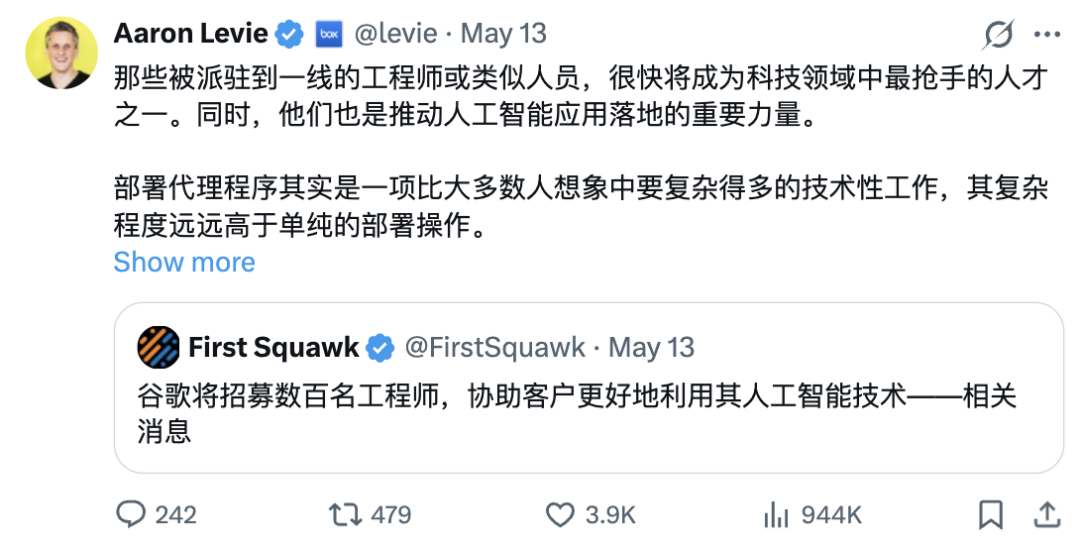
You can feel that the industry's winds are shifting too.
Silicon Valley once had an iron rule treated as gospel, called PLG (Product-Led Growth).
The core logic: a good product sells itself. Users self-register, pay online, and use it out of the box — no sales or customer service visits needed.
But AI products are too complex, and enterprises' internal data environments are messy; just tossing a model over the wall leaves them with no idea where to start. So the FDE model — sending people into offices to do the dirty, hard work for enterprises — has caught fire again.
The industry used to believe "brute-force models work miracles"; now it is shifting toward deployment.
After taking a huge detour, the industry has circled back to "people." Right now, FDEs are using humans to fill the "last mile" of model deployment.
◈ FDE, the new hot job of 2026
Is Andrew Ng's concern wrong?
Not exactly. His judgment is rigorous and his reasoning realistic. First, compared with engineers from outside, most companies would rather use their own employees for projects; second, AI Forward Deployed Engineers are backed by vendors and naturally carry a bias, which makes clients wary of being "locked in" uneasy.
This logic of "companies prefer their own people" and "fear of vendor lock-in" is a real ceiling.
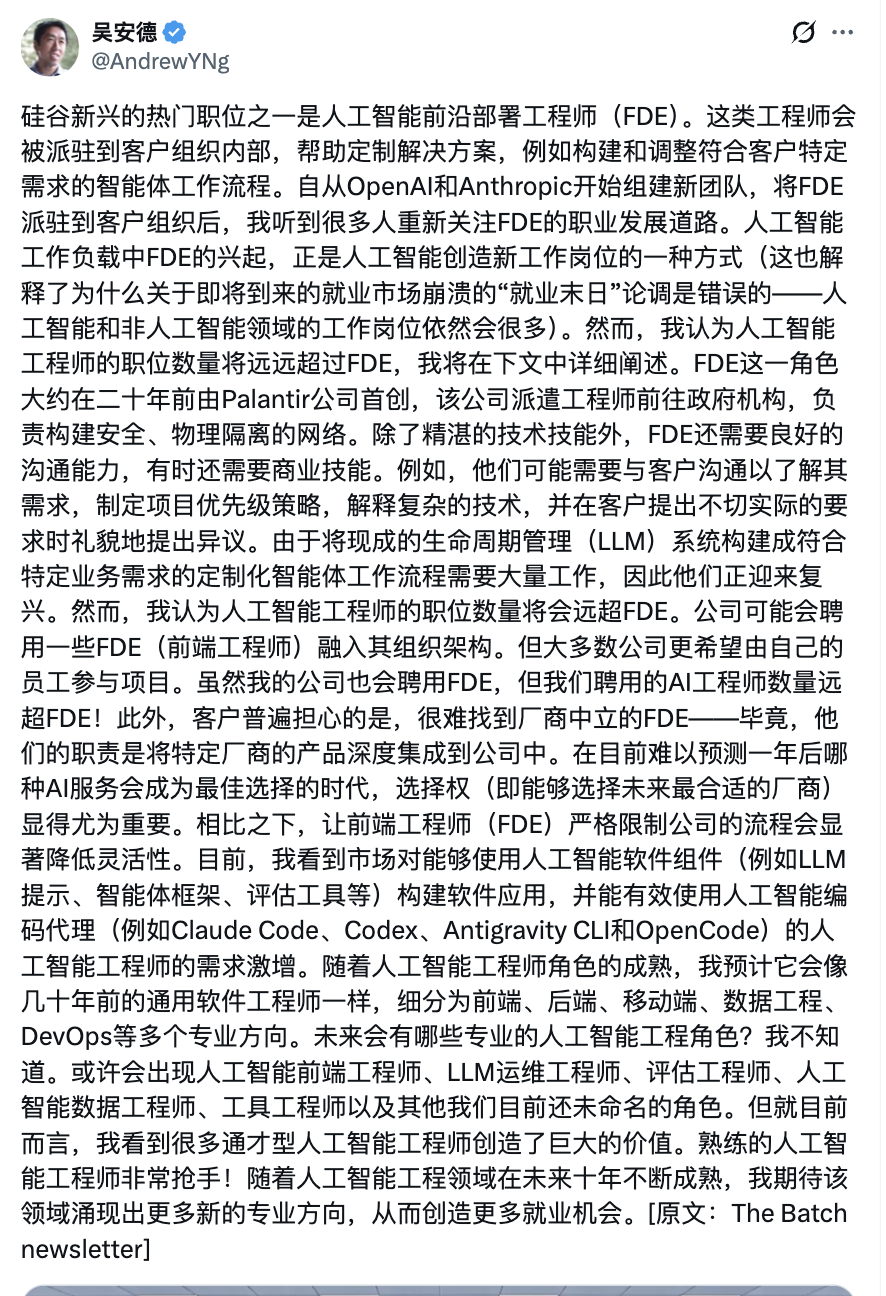
The industry shares the same concern, believing: the AI Forward Deployed Engineer is essentially a temporary bridge built for AI products that aren't mature enough yet. The implication is that once AI products mature and deployment becomes standardized, this temporary demand will shrink.
But right now, the reality is that enterprise needs are messy, hard to standardize, and different for every company. So deploying AI in enterprises today is definitely not about making a one-size-fits-all coat that everyone can wear but that may not fit anyone—it requires tailoring. As long as companies differ from one another, someone will always need to bridge that gap.
Models handle the intelligence; humans handle the deployment.
The "last mile" from intelligence to deployment is something AI can't yet walk on its own. And every step it hasn't completed is a real, tangible opportunity for anyone looking to bet on AI today.