Is the FDE a one-person all-rounder role, or a collaborative team?
The FDE is not a "super employee who can do everything," but a small on-site team with a clear division of labor. Palantir splits its field teams into three roles: Echo (understanding the customer), Delta (driving implementation), and Dev (building the platform). What makes this model work is not individual capability, but two mechanisms: experience flowing back and incentive alignment.

If you've been looking at FDE (Forward Deployed Engineer) job postings or explainer articles recently, you've probably seen descriptions like this: understands the business, can write code, can deliver. The job requirements are packed with "requirements research, product design, on-site implementation, user support, feedback and iteration"—a single role's responsibilities can fill two screens.
This easily leads to a misunderstanding: the FDE is that super employee who can do everything and has to do everything.
But that understanding is only half right.
The real question is: Does end-to-end ownership necessarily mean one person has to do everything?
No.
1. Where the "all-rounder role" misunderstanding comes from
Piling all of a role's responsibilities into one job description is a common flaw of JDs. And it's not just FDEs—other roles are like this too.
An explainer post on Xiaohongshu describes the FDE as "the connector between business, technology, and delivery," drawing a complete workflow from research to launch to iteration, accompanied by a clean infographic.
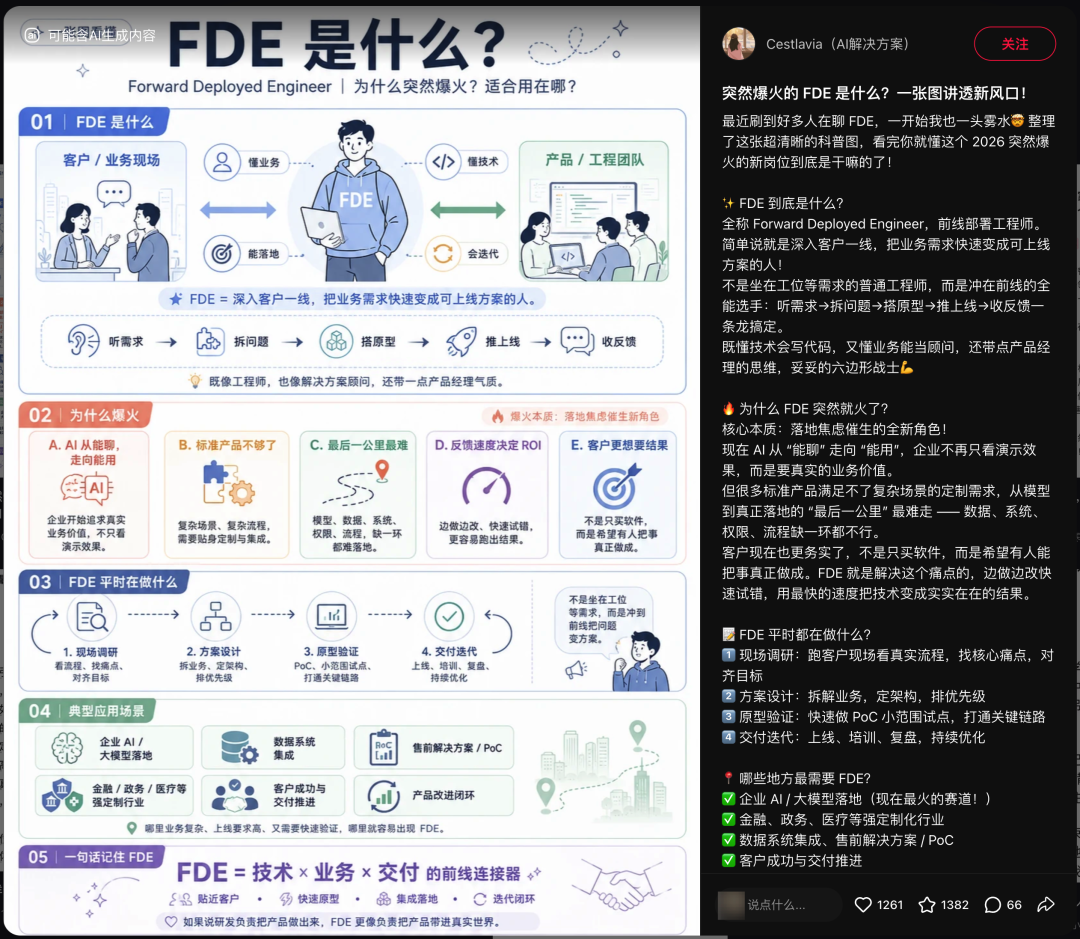
From an educational standpoint, there's nothing wrong with this graphic, but the logic is a bit off: the multifaceted nature of a role and "one person doing everything" are two different things.
As a role, the FDE does need to understand these domains, make decisions at these stages, and be accountable for the delivery outcome. But that doesn't mean all the work is done by one person. On-site problems need to be identified by them, they need to liaise with the product team and drive things forward, but the code improvements don't necessarily have to be written by them. Customer needs need to be understood by them, they need to judge feasibility and follow up, but the underlying technical solution may come from someone else.
This is exactly why the FDE can be a reliable model, rather than something only scrappy startup teams can improvise.
2. The FDE archetype is actually a team
Palantir is currently the company that talks most openly and in most detail about FDEs. On its careers page, it divides field teams into three mutually supporting roles.
Echo focuses on understanding and coordinating customer needs. They need to work harmoniously with the customer's team, understand the business context, translate requirements, and confirm there are no gaps in understanding.
Delta focuses on on-site engineering implementation. They need to solve real deployment problems, integrate systems, tune parameters, and handle complexities specific to the field. When the customer's data format doesn't match expectations, when systems behave differently in production, or when an integration pipeline gets stuck, Delta needs to be able to spot the symptoms, locate the problem, and find a way out.
Dev focuses on developing and optimizing the core platform. They need to make product improvements based on field feedback, possibly develop new features, and ensure the framework is stable and reusable.
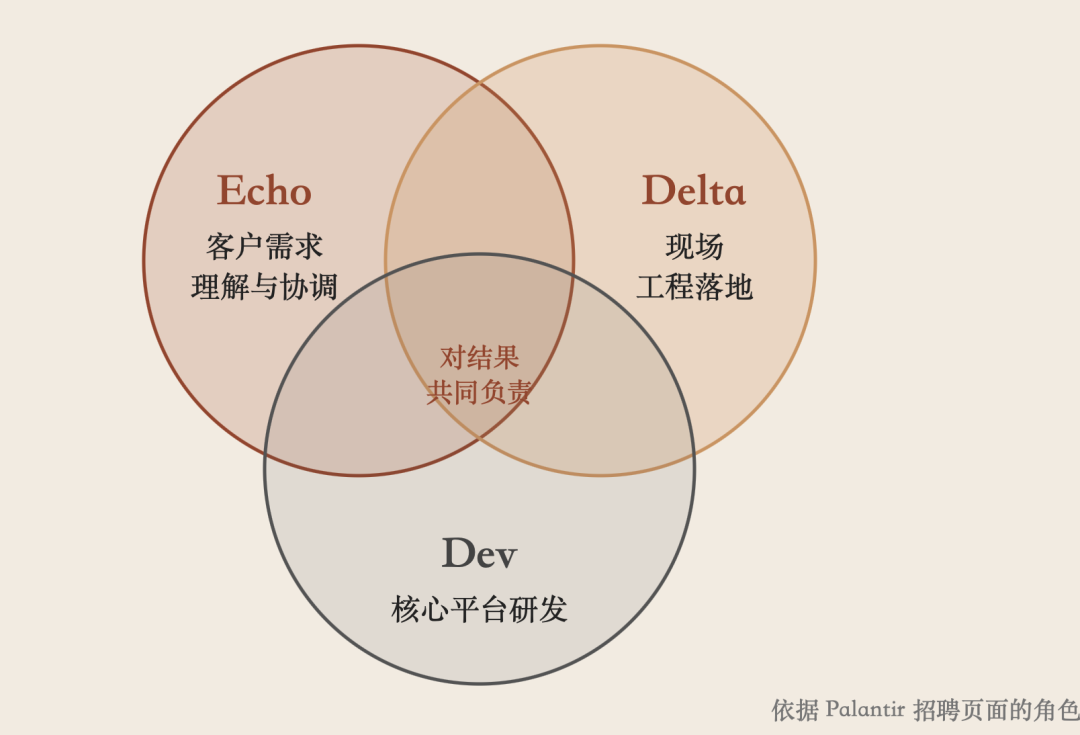
The three roles overlap, but each has its own center of gravity.
A field deployment doesn't necessarily need one Echo, one Delta, and one Dev; on smaller projects, Echo and Delta may be handled by the same person. But even when one person covers two roles, the logic of the division of labor still holds—at certain moments this person communicates with the customer in an Echo mindset, and at other moments solves technical problems as a Delta. The two ways of thinking aren't blended; they're switched between.
The beauty of this model is that what kind of person you need depends on the project stage and the customer's needs, rather than having to find an all-rounder from the start.
3. What makes the model work isn't individual capability—it's mechanisms
But the division-of-labor framework alone isn't enough. To make this model truly run within a company, two more things are needed: experience flowing back and incentive alignment.
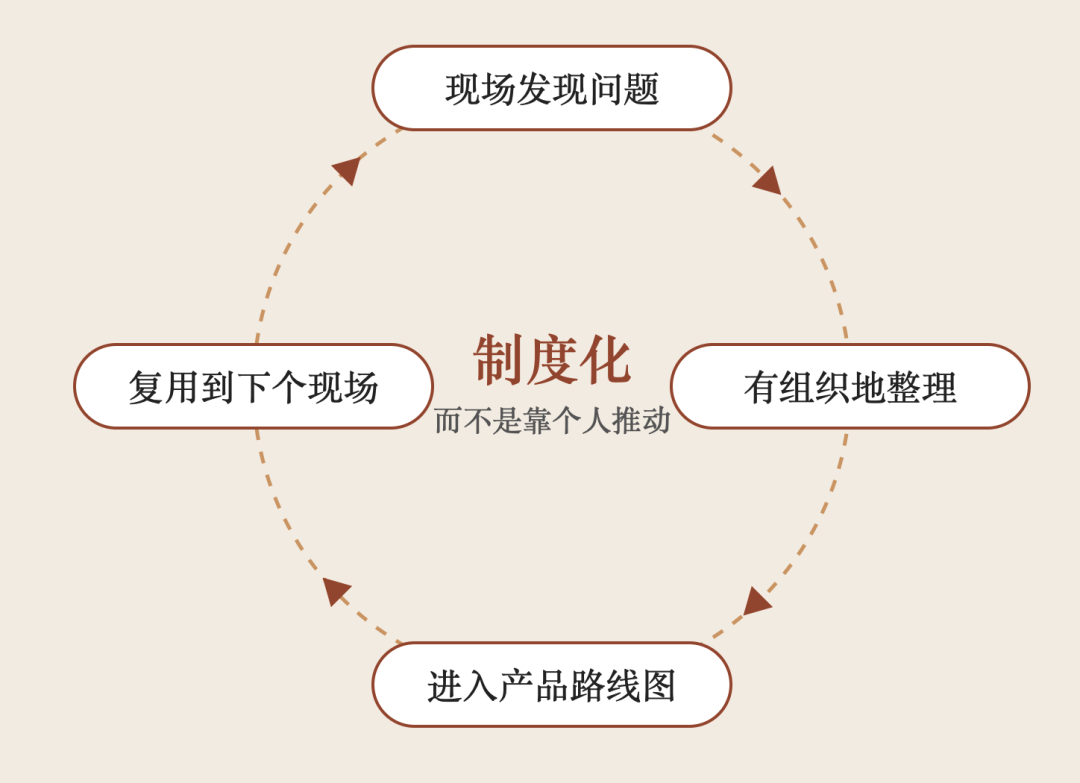
Problems discovered in the field must have a way to enter the product roadmap. Obstacles customers encounter, environmental quirks, integration pitfalls—this information can't stay in the field FDE's notes; it needs to be fed back to the backend product and engineering teams regularly and in an organized way.
A senior practitioner on Zhihu put it clearly: field delivery itself isn't a new invention; big companies have been doing it for a long time. The key difference is whether what's learned in the field is institutionalized and brought back.
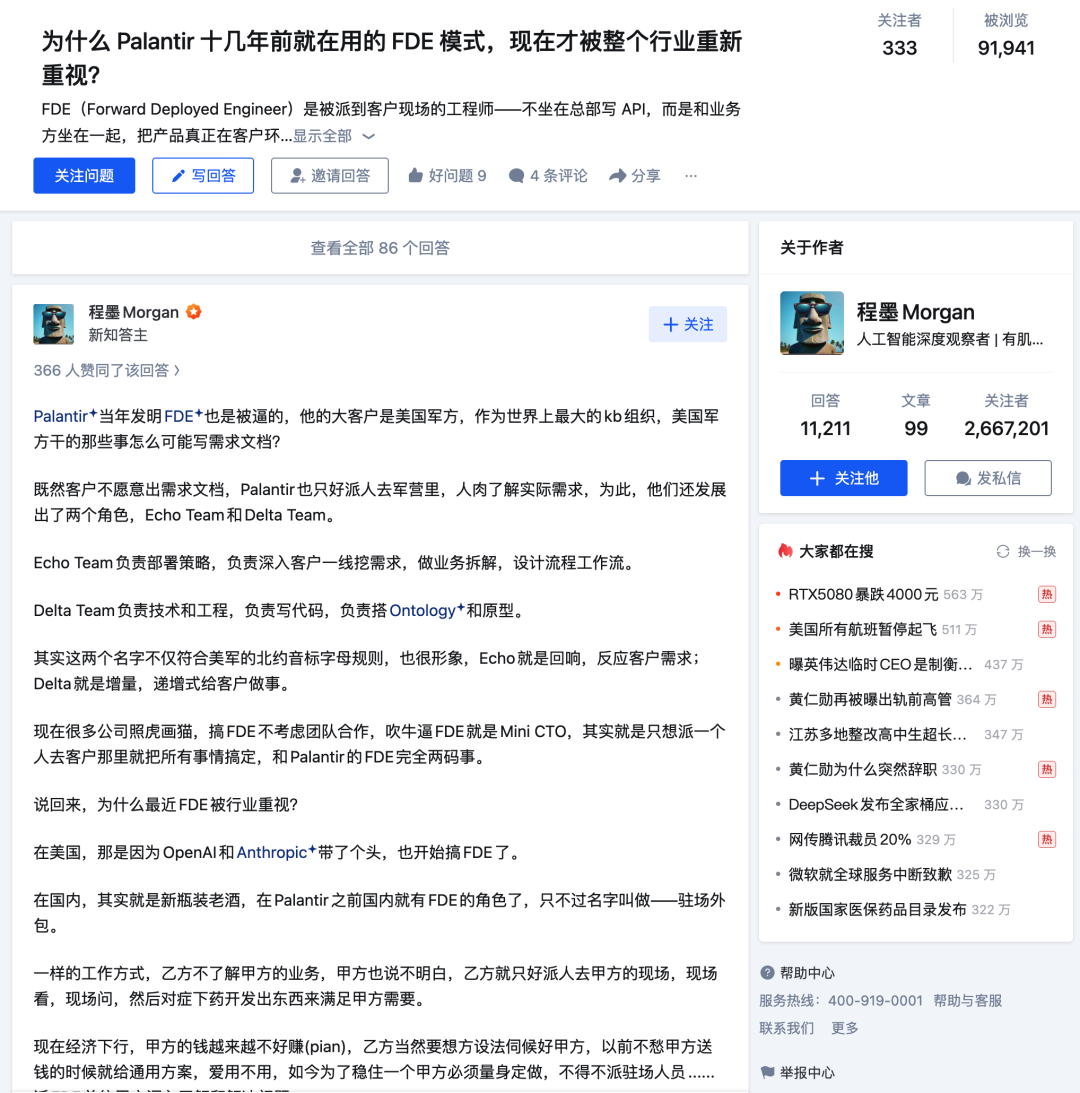
If every problem discovered in the field has to be pushed to a fix by the FDE personally, then the FDE will forever be running on fumes, and the lessons from one project can't be reused in the next.
If the company has a systematic way to organize this information and a dedicated channel for field feedback to enter product decisions, then the field FDE's job shifts from "I have to solve everything myself" to "I need to make sure the critical problems get heard." The quality of the work is completely different.
Incentive alignment means: measuring an FDE's performance can't be based solely on how much time they spent on a project or how many features they completed.
If an FDE decides to modify core code to get a field project launched quickly instead of asking the product team to build a new feature, they shouldn't be penalized for it in their evaluation. If an FDE spends time on documentation and a knowledge base to build reusable solutions, that shouldn't be seen as "no direct output." If incentives aren't aligned, even the best mechanisms will be crushed in execution.
4. To sum up
The hallmark of a good FDE team is not that everyone is an all-rounder, but rather that no one has to be one.
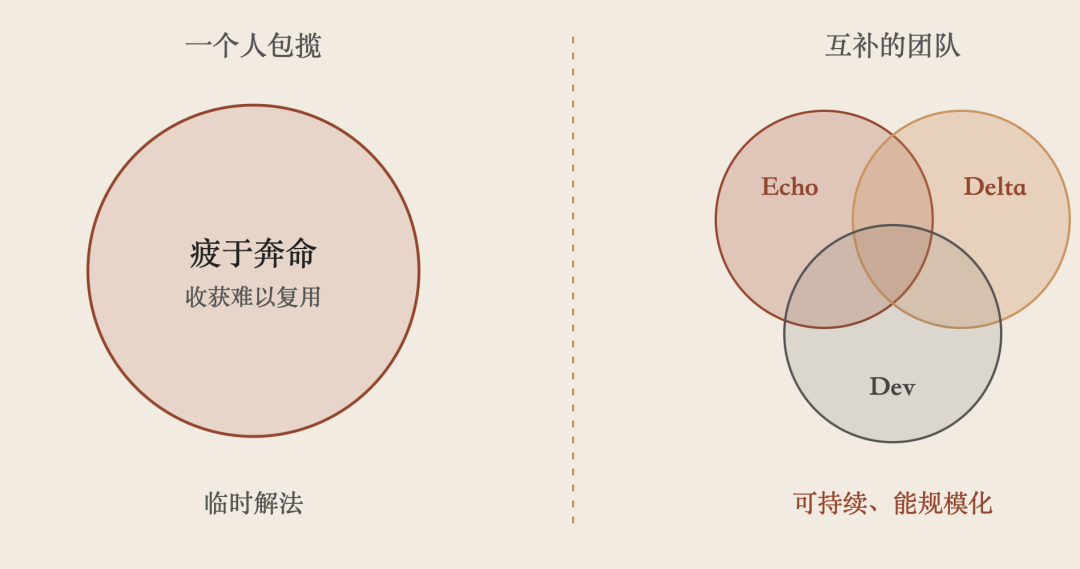
When a company can clearly delineate roles, has a way to turn field experience into product improvements, and has incentives that make everyone willing to do so, the FDE transforms from "a stopgap where you have to do everything yourself" into a sustainable, scalable business model. At that point, it doesn't matter if someone doesn't know code or doesn't know the business, because someone else will fill the gap.
No matter how strong someone is, they don't need to know everything, because the division of labor is already in place.
That is where the true power of the FDE model lies.
This article was originally published on Renren都是产品经理 (Everyone is a Product Manager) by @大王叫我来巡山. Reproduction without the author's permission is prohibited.





- No comments yet—be the first to share your thoughts!