Fable 5.2 can build an entire operating system; knowing how to use AI is just the passing grade
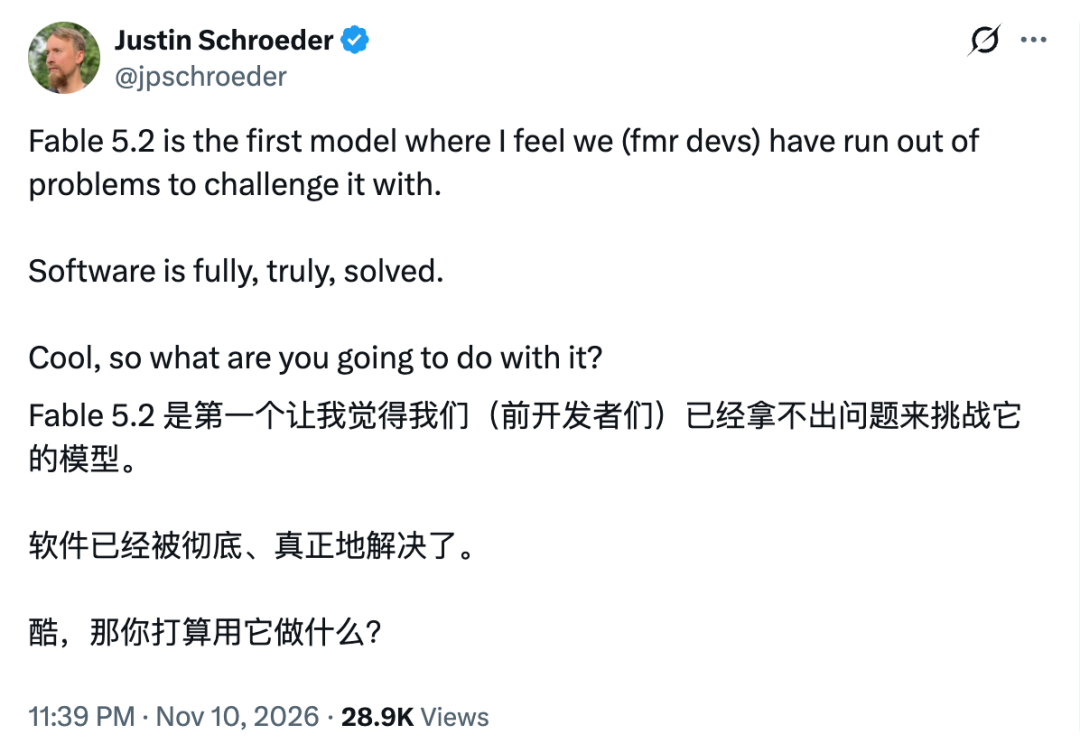
Claude Fable 5.2 can generate a shooting game from a single prompt and coordinate over a thousand sub-agents working for eight days to build an operating system prototype; over 90% of merged changes at Anthropic are now written by Claude under human guidance. But what deserves attention is not AI replacing programmers—it's that knowing how to use AI is shifting from a competitive advantage to a baseline requirement.

Claude Fable 5.2 has recently kept pushing the boundaries of what people imagine AI coding can do: it can generate a complete first-person shooter game from a single initial prompt; it coordinated over 1,000 sub-agents working continuously for 8 days to build an operating system prototype that boots on a laptop, starting from an empty folder; Anthropic also disclosed that over 90% of merged changes in its internal core codebase are now written by Claude under human guidance.
But what professionals should really pay attention to is not the grand question of "will AI replace programmers," but the fact that software teams are redistributing work. As code implementation gets faster, requirements judgment, result acceptance, customer delivery, permission governance, and security accountability become more important instead.
Knowing how to use AI is gradually shifting from a competitive advantage to a passing grade; the new scarce skill is being able to turn AI output into reliable products.
From "can it be written" to "can it be delivered"
Fable 5.2's capability demos are striking. It can generate game models, sound effects, and textures on its own, and coordinate multiple agents to complete an operating system prototype; one production service was also migrated from Python to Rust with agent assistance, improving startup speed by roughly 26x.
These cases change a default assumption: in the past, the biggest bottleneck in software projects was often implementation speed; now, "writing the first version" is no longer the hardest part. Teams will quickly run into new questions:
- Is the requirement worth doing, or is it only being done because the model can do it?
- Does the generated feature match real user paths?
- Can the code be maintained long-term, or does it only run in demos?
- Do changes made by multiple agents overwrite each other?
- When a security incident occurs, who is responsible for explaining and fixing it?
An agent that can generate code is not the same as an engineering team that can deliver results. A real production process must separate generation, testing, review, release, and rollback.
What hiring data reveals is not job disappearance, but job differentiation
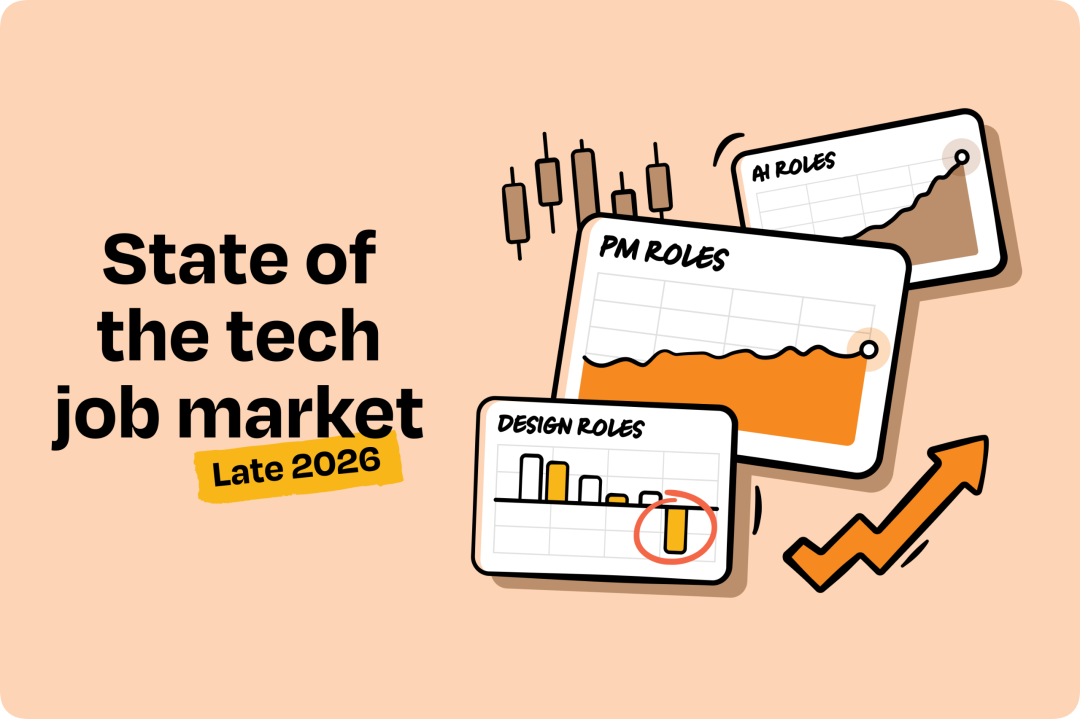
A report combining job openings from over 9,000 tech companies worldwide with roughly 124 million professional resumes reveals a contradiction: global tech companies have over 281,000 open positions, up 17% year over year, but the three core job categories—product, engineering, and design—combined grew only about 2%.
Software engineers remain the largest hiring category, but actual hires have fallen to less than half of the 2022 peak. Over the past year, the US market hired about 113,000 software engineers, compared with a peak of roughly 239,000 in 2022; engineering job openings growing while actual hires decline shows that the gap between companies posting demand and actually adding headcount has widened.
This cannot all be attributed to AI. Business cycles, cost control, hiring timelines, and organizational restructuring all affect the data. But when AI can quickly generate prototypes, frontends, tests, and some fixes, companies will indeed reassess which work needs more headcount and which can be done by one person with tools.
Why PMs, FDEs, and security engineering matter more
Product managers haven't "won big"—they've just been relatively resilient. While product design, user research, and some engineering roles have visibly shrunk, PMs' share of actual hires in related roles rose from 16% to 21%. This looks more like a structural shift in roles than a sudden surge in demand.
Future PMs will need to spend less time coordinating code and prototype production, and more time on goal judgment, result acceptance, and product delivery. AI can quickly produce ten versions, but it cannot decide for the team which version actually solves the user's problem.
FDEs (Forward Deployed Engineers) have become more important because they must enter customers' real environments. The data cited in the original article shows FDE job openings grew to roughly 4.6x over the past year, with about 1,500 currently open; FDEs need to connect to customer systems, handle non-standard processes, configure permissions, and ensure the final delivery actually works.
Security engineering will also keep growing. Agents can autonomously modify code, call tools, and access business data, so systems need finer-grained permissions, auditing, and accountability boundaries. In the future, companies won't just need people who can scan for vulnerabilities—they'll need engineers who can design security control planes for agents.
Software is now serving both humans and agents
Software used to be designed mainly around human operation: open a page, click a button, fill in a form, view the result. Once agents enter production, software must serve two kinds of users at once: agents execute tasks through APIs, MCP, and structured interfaces, while humans check results through interfaces, handle exceptions, and retain decision-making authority at critical steps.
This will change the focus of product design. An agent-facing interface cannot just return a vague piece of text; it must provide clear schemas, error codes, idempotency keys, permission scopes, and traceable task IDs. A human-facing interface cannot just show "execution succeeded"; it must also display what the agent did, which data it used, and what side effects the next step will produce.
Models that can write code are becoming more and more common; what's truly scarce is building software into systems that "can be safely called by agents and reliably taken over by humans."
Tencent's "army and navy" is essentially two different development rhythms
In an internal livestream, Tencent compared its existing core businesses to the "army" and its AI-native new businesses to the "navy": one group uses AI to boost efficiency and defend existing businesses, while the other explores new AI-native growth opportunities. The remarks once sparked rumors of "laying off half the company," which Tencent later clarified was merely a metaphor for resource reallocation, not a signal of cutting half its workforce.
The technical meaning of this metaphor is that mature businesses and new businesses cannot be measured by the same delivery metrics. Mature businesses need stability, compliance, and incremental transformation; AI-native businesses need rapid experimentation, short-cycle validation, and new product forms. Both can use AI, but their goals differ.
For individuals, the most valuable skills will also split into two categories: one is making existing work faster and more stable; the other is identifying AI-native opportunities and turning them into working products. Merely knowing how to call tools cannot replace either kind of judgment.
The next-stage skill list: from using tools to owning results
Developers don't need to become experts in every field right away, but they should gradually build up four capabilities:
- Goal decomposition: turning vague requirements into constraints, acceptance criteria, and rollback steps.
- Result verification: using tests, data, user paths, and security checks to prove the output is trustworthy.
- System delivery: handling deployment, permissions, monitoring, logging, costs, and exception recovery.
- Business communication: being able to explain why something was done, what was delivered, where the risks are, and what's still missing.
These capabilities determine whether you are "someone who can get a model to write code" or "someone who can be accountable for AI-delivered results." The stronger Fable 5.2 gets, the more visible this gap becomes.
If domestic teams want to access models like Claude and GPT via API, they can look into channels such as [Code80]https://code.ai80.vip/home; but model calls are just the tool layer—goals, verification, permissions, and delivery accountability still belong to the team.
Frequently asked questions
Fable 5.2 can develop an operating system—do programmers still need to write code?
Yes. Generating code is only one part of a project; requirements definition, architecture decisions, testing and validation, deployment and maintenance, and security accountability won't disappear automatically.
Why can't the decline in actual engineering hires be directly attributed to AI?
Hiring data is also affected by economic cycles, cost control, hiring timelines, and organizational restructuring. AI is an important variable, but not the only explanation.
Why is the FDE becoming a growth role?
Because AI software needs to enter customers' real environments, connecting internal systems, adapting to workflows, configuring permissions, and ensuring it is ultimately usable. This work goes beyond simply writing code.
What will be the most important skill for product managers in the future?
Requirement judgment, acceptance of results, and product implementation. AI can quickly generate multiple solutions, but it cannot decide for the product team which one is worth launching.
How can software serve both humans and AI agents?
Provide AI agents with stable APIs, MCP, schemas, permissions, and task states, while providing humans with auditable interfaces, exception handling, and confirmation of critical operations.
How can developers in China get started with AI coding tools?
You can reduce onboarding friction through API channels like Code80, but you still need to manage keys, permissions, auditing, costs, and delivery quality yourself.
This article was originally written/authorized by 【Yi An Talks AI】, an author on Renren都是产品经理 (Everyone is a Product Manager), and published via the WeChat official account 【Yi An Talks AI】 on Everyone is a Product Manager. Reproduction without permission is prohibited.
Cover image from Unsplash, under the CC0 license





- No comments yet. Be the first to share your thoughts!