The 2014 edition of the threat modeling classic still holds up today, and the 2027 new edition adds two chapters of LLM content for engineers deploying agents.
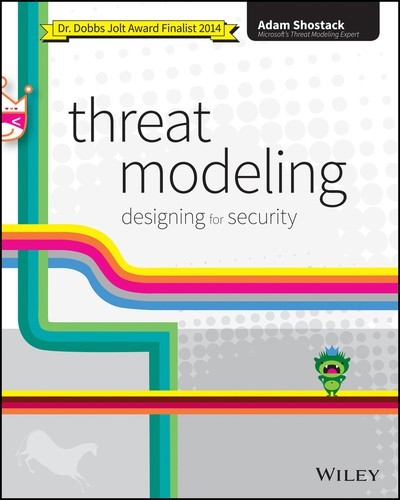
Threat Modeling: Designing for Security · Adam Shostack ·
Key Takeaways
- Adam Shostack led threat modeling at Microsoft, and this 624-page book is built around four short questions.
- The second edition will be published on February 2, 2027, with about half the content newly written or rewritten, including two chapters on LLMs.
- FDEs should draw the threat model before the security review, then discuss it item by item with the customer's security team.
The book runs 624 pages, yet its core comes down to just four questions. Adam Shostack led threat modeling within Microsoft's security development lifecycle, and he placed these four questions at the center of Threat Modeling: Designing for Security, published by Wiley in February 2014.
Sooner or later, every Forward Deployed Engineer (FDE) will face the customer's security team and be asked where the data goes, who can access it, and what happens if it leaks. Walking in with a completed model is a very different situation from answering on the spot from memory. What this book teaches is how to have the model ready before anyone else speaks up.
However, which edition to read requires some thought. The second edition, retitled Threat Modeling: Designing for Security in an AI World, is expected to be published on February 2, 2027. According to Shostack, about half of the book is newly written or substantially rewritten, including two entirely new chapters on LLMs. The 2014 edition is the one currently on sale.
From "You" to "We"
The first edition phrased the four questions in the second person. The first question quoted in a 2014 IEEE Cipher book review was "What are you building?" Shostack's 4QuestionFrame repository on GitHub now uses "we" instead: "What are we working on?", "What can go wrong?", followed by questions about how to address each threat, and finally "Did we do a good job?"
Changing one pronoun is a small edit, but it matters a great deal to FDEs. The threat model is no longer an audit brought in by outsiders to grade the product team, but work completed jointly by both sides. On-site at the customer, "we" means you and their security engineers sitting together.
Take an example: an agent deployed inside an insurance company that reads internal documents and answers employee questions. The first question forces you to draw the architecture diagram: users, chat interface, agent, document library, model API. Circle the points on the diagram where data leaves the customer's network.
The second question walks through every arrow on the diagram. An employee might trick the system into spitting out documents they are not authorized to see; the documents might contain hidden instructions telling the agent to do something else; and the logs might retain sensitive content longer than necessary.
The third question pairs each threat with a mitigation: filter by access permissions before retrieval, restrict the tools the agent can call, and set retention periods for logs. The fourth question checks the results: does every decision have an owner and a test? Does the architecture diagram still match the running system?
The two most common mistakes in this example occur at opposite ends of the loop. The first is rushing to list threats before both sides have agreed on the architecture diagram, so everyone ends up discussing a different system. The second is stopping at the third question: the list of mitigations exists, but no one goes back to verify it.
Three Ideas Worth Taking Away
First, the model must come before the threat list. If no one has agreed on what the system looks like, no one can agree on what might go wrong. The author himself values this point: the second edition adds a chapter devoted to architecture diagrams and models, expanded from roughly a dozen pages in the old edition's "strategies" chapter.
Second, "What can go wrong?" is a question that people outside the security field can also answer. This lets you bring the customer's business experts, data engineers, and product managers into the same discussion. They often know about weak spots that no architecture diagram has ever recorded.
Third, the final question closes the loop. A threat model written once and shelved becomes more outdated with every deployment. For FDEs, every time the agent connects to a new data source or new tool is an opportunity to ask "Did we do a good job?" again.
Which Edition to Read, and in What Order?
For now, start with the 4QuestionFrame repository. It is free, short, and enough to draft a first version for the project at hand. If you need to go deep right away, the 2014 edition is still worth reading. The IEEE Cipher reviewer's conclusion was that the book is "definitely a must-read".
If your main job is deploying LLMs and agents, waiting for the 2027 edition makes more sense. The two LLM chapters and the expanded architecture diagram chapter target exactly what you do on-site at customers. The book page on shostack.org includes purchase links from Wiley.
For career development, a one-page threat model with the customer's name removed is portfolio material few candidates can produce. When browsing job postings, watch for phrases like security review or client security questionnaire: they signal that this work will be part of the role's responsibilities.
In interviews, clearly explaining how you answered these four questions for a real system is usually more persuasive than listing tools.
The customer's security team will come asking sooner or later. Be the person who brings the architecture diagram into the meeting room and lets them comment on it, rather than starting from a blank page.
Was this article helpful?
Thanks for your feedback!