Start with resources rather than endpoints, then focus on the three places where customer integrations most often break: long-running operations, retries, and versioning.
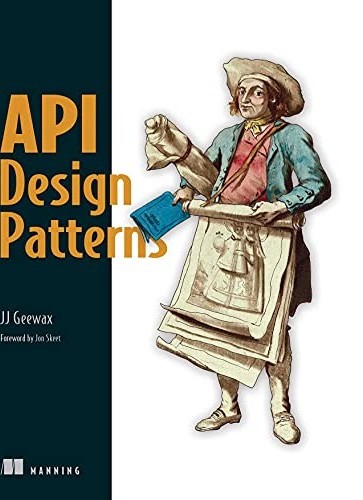
API Design Patterns · JJ Geewax ·
Key Takeaways
- Written by JJ Geewax and published by Manning in 2021, aimed at developers building web APIs and internal APIs in any language.
- Reading order for FDEs: start with Chapter 1 (resources and good APIs), then read long-running operations and safe retries, and finish with versioning and compatibility.
- Three things worth remembering: long-running operations need clear status, important write operations need idempotency keys, and API changes should be backward compatible by default.
When a Forward Deployed Engineer (FDE) leaves a customer, what survives longest is rarely the demo or the slides—it's the API contract: what the resources are called, how to call them, and how errors are reported. Customer teams will keep writing code on top of those decisions for years.
So a book from 2021 is still worth keeping on your desk. API Design Patterns by JJ Geewax was published by Manning in 2021. The publisher says it brings together a set of design principles applicable to both internal and external APIs.
Manning says the book is written for developers building web APIs and internal APIs in any language. FDEs both connect their own systems to customer systems and design endpoints for customers—this is almost a job description. The practical question is: which parts should you read before the first integration meeting.
Start with resources, not endpoints
Chapter 1, "Introduction to APIs," defines an API as a way for computer systems to interact. This chapter covers the fundamentals and why they matter: interfaces, organizing APIs around resources, and what makes an API good.
It sounds basic, but this is the layer that determines the contract. Imagine that inside a customer's internal API,
getOrder
、
fetch_customer
and
LoadInvoiceData
all exist side by side.
The API still works, but callers can't guess what the next endpoint will be called. Thinking in terms of resources first (orders, customers, invoices) lets you point out the problem without turning the discussion into a fight over personal taste.
The book summary on System Design Space opens with a set of ideas grouped under "API as product and contract." This grouping comes from the summary's author, not Manning's table of contents, but it captures the essence: once the resource layer is designed wrong, every later pattern has to patch around it.
Long-running operations are where integrations break first
Nicolas Fränkel's review on DEV Community confirms the book has a pattern specifically for methods that don't return results immediately. The System Design Space summary distills it as: separate starting the operation from retrieving the result, with clear status semantics.
Suppose you're deploying a document-processing data pipeline for an insurance company. Each batch takes several minutes to process, but the customer's gateway disconnects after 30 seconds. If the endpoint waits for processing to finish before responding, the customer sees an error even though the job is actually still running.
The pattern's approach is to immediately return an operation with a status that the client polls. Instead of a vague error, the customer gets an object they can track.
Ask about retries and versioning from day one
Fränkel also confirms the book has a chapter called "Request retrial" on how to safely retry requests using algorithms. The summary recommends using request identifiers and idempotency keys for important write operations, along with a unified structured error format.
Consider a hypothetical example: a customer's ERP sends 1,000 create-order requests. Twenty of them time out on the network, but the server has actually already written them, so the ERP resends all twenty.
Without idempotency, the customer ends up with 1,020 orders, twenty of them duplicates—and it's the finance department that discovers the problem, not you. With an idempotency key, the second call simply returns the result of the first.
The final topic is the "Versioning and compatibility" chapter, which defines what compatibility means and offers several versioning strategies. The summary lists backward-compatible changes as the default strategy. Adding an optional field leaves old clients running as before; making a field required can break every script the customer team has ever written at once.
A reading order for people with projects in hand
If you have an integration meeting next week, read Chapter 1 first, then long-running operations and safe retries, and finally versioning. The chapter names above come from a review and a summary—check the table of contents of your copy to find the corresponding sections. Save the rest for when you have spare time.
Fränkel recommends the book to all developers new to APIs, but also notes it falls short as a reference manual. For an FDE, that means don't wait for an incident to open it looking for answers. Read the sections above in advance, then draw up a list of questions to bring to the customer.
Two ways to waste this book
The first mistake is skipping Chapter 1 and jumping straight to retries or long-running operations. These patterns are all built on top of resources. If resource naming is a mess, even the best patterns will only make the contract more tangled.
The second mistake is forcing the book's patterns onto APIs the customer already runs in production. The System Design Space summary treats backward-compatible changes as the default versioning strategy. Following that logic, bulk-renaming endpoints that others already use is manufacturing your own incident.
Apply these patterns to what you're about to add, not to tearing down what already works well.
Proving this on your resume
Don't list this book on your resume. Write about the contracts you left behind and how they actually performed, for example: "Designed integration APIs with idempotency keys; no duplicate orders after the customer enabled retries." When a job posting mentions "designing APIs" or "building integrations," tell this story in the interview.
The point of reading the book isn't to memorize patterns—it's to be the first to ask at the next meeting: "What happens if this call is executed twice?"
Was this article helpful?
Thanks for your feedback!