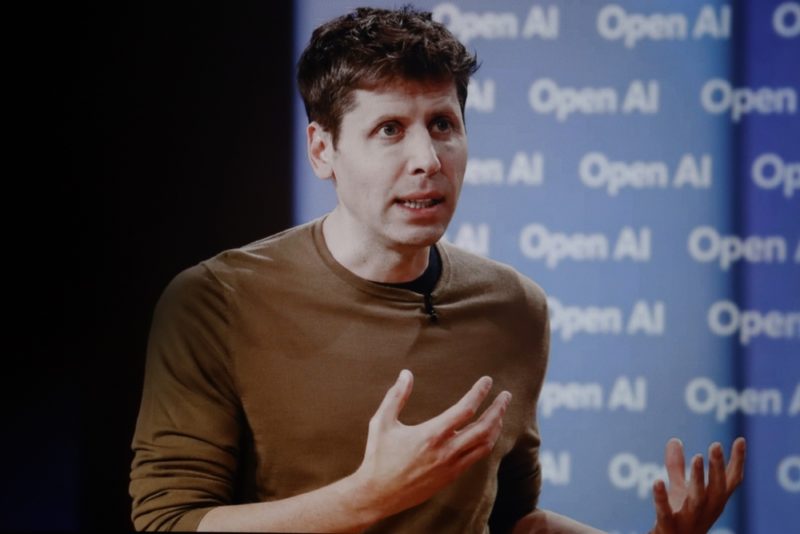
OpenAI CEO Sam Altman recently stated bluntly that AI adoption is not spreading as fast as expected, and the industry has yet to see a true "iPhone moment." This means AI is still at the stage of being an assistive tool and has not yet fundamentally transformed the way people work; he attributes this to economic and organizational inertia, as well as humans' instinctive resistance to change.
Meta's "AI workforce overhaul plan" is called off—work outside the SOP becomes the biggest obstacle
Similarly, Meta has reportedly quietly terminated an internal workforce restructuring plan called "Project OT." The plan originally envisioned AI agents taking over a large amount of day-to-day operations, with only a small group of humans retained for oversight, thereby creating an "AI-native" corporate organization. However, the plan was ultimately halted by CEO Mark Zuckerberg, showing that when large enterprises use AI to reshape their organizational structures, the resistance they actually face is far greater than what startup pitch decks depict.
The industry is gradually realizing that the real bottleneck is not that AI models aren't smart enough, but that corporate operating processes are too complex. Many daily tasks are filled with exceptions, ad-hoc improvisations, and informal cross-department collaboration that are not spelled out in standard operating procedures (SOPs). Without this tacit practical context, it is difficult for AI to take over tasks safely and accurately. According to a 2026 Harvard Business Review survey, only 6% of enterprises said they fully trust AI agents to execute core business processes, highlighting deep market skepticism about automated decision-making.
Amid this predicament, "Forward Deployed Engineers" (FDEs) have become the hottest new stars in the tech world, with related job postings surging 729% over the past year. Unlike traditional engineers who build general-purpose products, FDEs must go deep into customer sites, observe how businesses actually operate, and translate vague business requirements into deployable, verifiable AI workflows. This shows that market focus has shifted from pursuing flashy AI demos to a pressing need for practical talent who can turn chaotic processes into reliable systems.
The FDE role serves as a bridge between technology and the real business environment: they must first understand a company's actual pain points, then assess which problems are worth solving and which parts require systems integration, and distill underlying capabilities into reusable products. As AI tools and governance mechanisms mature, the hiring criteria for FDEs are expected to shift from a focus on pure machine learning engineering toward domain experts with greater emphasis on industry knowledge and business logic.
Four essential safety layers for bridging the gap from the "lab" to the "office"
On the other hand, from an AI safety perspective, for enterprises to truly put agents into production, a system needs at least four core layers: perception, decision-making, execution, and safety controls. The system must be able to capture data changes in real time, make judgments in accordance with internal corporate policies and historical decision context, and possess the ability to coordinate tasks across steps. Most critically, strict permission restrictions, complete audit logs, and emergency kill switches must be established to prevent AI from overstepping its authority or causing cascading errors.
As AI capabilities continue to evolve, the ultimate test for enterprises has shifted from simply testing "whether the model can give correct answers" to ensuring "whether AI can complete tasks safely and reliably in the intricate real-world office environment."
(Cover image source: shutterstock)
Further reading:
Follow TechNews via Google News here


Tech news, updated around the clock